




WikiLeaks and Japan
After a quick glance through the major releases of top secret government documents by WikiLeaks, one may find satisfaction in knowing some of our long-held conjectures are now positively verified.
After a quick glance through the major releases of top secret government documents by WikiLeaks, one may find satisfaction in knowing some of our long-held conjectures are now positively verified.
Last time around, the controversial releases forced the US and the British authorities onto the offensive over killings of civilians and torture of Iraqi soldiers, while further undermining the dwindling credibility of those who had wholeheartedly supported the 2003 war.
And the latest releases again expose a great deal of inconvenient truths and vindicate the concerns and worries of many: Rampant corruption that goes right up to the highest echelons of the Afghan government, the US hoping to establish a unified Korean Peninsula minus communism, Colonel Gaddafi’s lavish and flamboyant lifestyle, Beijing’s frustrations over the intransigence of its own ‘bastard’, i.e. Pyongyang, to name a few.
While spying on the United Nations leadership by the major powers
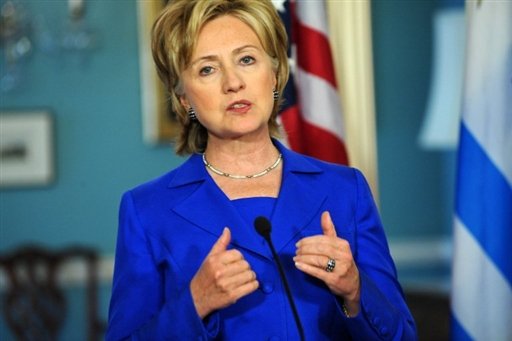 has long been an open secret, it is still rather shocking that the instruction for US diplomats to keep a close watch on Secretary-General Ban Ki-Moon had come from Hillary Clinton (
left
) herself. But I personally don’t think there is much repair work for the Secretary of State to do. After all, Ban won the top UN job with US blessings and has at times acted at the behest of Washington.
has long been an open secret, it is still rather shocking that the instruction for US diplomats to keep a close watch on Secretary-General Ban Ki-Moon had come from Hillary Clinton (
left
) herself. But I personally don’t think there is much repair work for the Secretary of State to do. After all, Ban won the top UN job with US blessings and has at times acted at the behest of Washington.
Of course, some of these documents are purely gossip and must be taken with a large pinch of salt, but huge portions of them are indeed significant. Having one’s confidential documents laid bare can be humiliating. Still, it also affirms one’s growing importance to some extent, paradoxical though this may seem.
Japan, for instance, has its strategic vitality proven in that the US embassy in Tokyo in fact sent the third largest amounts of cables, after those in Ankara and Baghdad.
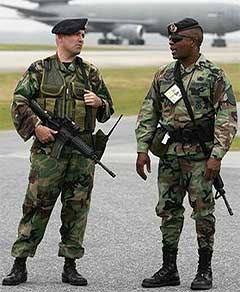 On the other hand, private remarks by Japanese leaders that are now made available are mostly related to China and the two Koreas. This is not surprising since Japan’s postwar foreign policy has been resolving around the US, its closest ally, North Korea, its official enemy, and China, its largest trade partner and a potential foe.
But it would be intriguing to read Tokyo’s comments on the disputed Senkaku/Diaoyu Islands. The Japanese government is rather heartened that Washington has made clear its obligations under the US-Japan Security Treaty to intervene should Beijing take a bellicose stance, and the combustible issue, along with the recent sabre-rattling by Pyongyang, provides a perfect pretext for continued stationing of US troops in the region.
Attitude over Kurils dispute
Lesser known were the personal attitude of Japanese leaders in regard to the equally troublesome dispute over the Kuril Islands, which the Japanese call Chishima Retto and claim sovereignty over the four southernmost islets.
Typical of other similar disputes around the world, beautiful landscape and rich mineral and biological resources drive the two countries to nearly cross swords over the islands. This issue also prevents Moscow and Tokyo from signing a peace treaty although World War II ended decades ago.
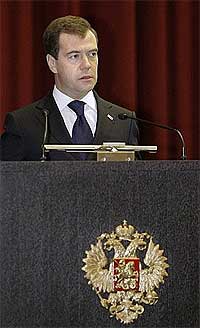 In late October, Russian President Dmitry Medvedev (
left
) visited the islands, an action described as “regrettable” by Japanese Prime Minister Naoto Kan. Tokyo was initially said to recall its ambassador to Moscow, but later toned down its tune and clarified that the Japanese envoy was only asked to return for some briefing on the issue.
In late October, Russian President Dmitry Medvedev (
left
) visited the islands, an action described as “regrettable” by Japanese Prime Minister Naoto Kan. Tokyo was initially said to recall its ambassador to Moscow, but later toned down its tune and clarified that the Japanese envoy was only asked to return for some briefing on the issue.
Japan’s volte face is understandable, because the US has snubbed Japanese leaders by refusing to step in, saying that the disputed territories are not covered by the security treaty. It was the US that signalled tacit approval for the then-Soviet Union to exert control over the islands after 1945, and the latest incident again demonstrates Japan’s inferior position and subservient role to the US.
Ironically, Japan has been refusing to face up to its past war atrocities while insisting that all ountries involved in territorial disputes with it must come clean on history. On the Senkaku/Diaoyu issue, both Japan and China appear to be twin losers as the US has seized the opportunity to make a larger presence in East and South-East Asia.
Meanwhile, Tokyo’s hysterical reactions to Medvedev’s visit to the Kurils raise concerns over the decline of rational diplomacy across the region, especially when the highly volatile Korean Peninsula is badly in need of coherent cooperation on the part of the major powers.
Would any future release of government documents by WikiLeaks show us some insight into these issues, provided that its spokesperson Julian Assange remains at large somewhere in the world?
JOSH HONG studied politics at London Metropolitan University and the School of Oriental and African Studies, University of London. A keen watcher of domestic and international politics, he longs for a day when Malaysians will learn and master the art of self-mockery, and enjoy life to the full in spite of politicians.


Are you sure you want to delete this comment?
This action cannot be undone.