




Altruistic war?
I am rather bemused to read of Peter Osbourne's dismay at the subservience of Britain's political class toward Barack Obama's London visit two days ago.
Why? For the whole world knows the empire on which the sun never set is long gone, with its remnants riding on the US' coat-tails to keep a false sense of importance afloat. It is hence bizarre that the chief political commentator of the Daily Telegraph came to his senses on this rather belatedly.
I am rather bemused to read of Peter Osbourne's dismay at the subservience of Britain's political class toward Barack Obama's London visit two days ago.
Why? For the whole world knows the empire on which the sun never set is long gone, with its remnants riding on the US' coat-tails to keep a false sense of importance afloat. It is hence bizarre that the chief political commentator of the Daily Telegraph came to his senses on this rather belatedly.
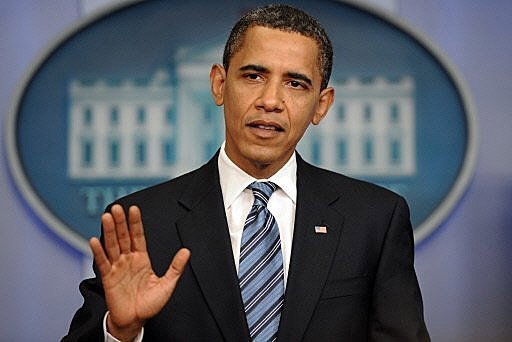 President Obama (
right
) talked about the two countries standing "squarely on the side of those who long to be free", while historical facts only confirm that not all freedoms have been worth the sweat and blood and money of the great powers. Think South Korea, Taiwan, Chile and Argentina before they democratised - and the list goes on.
President Obama (
right
) talked about the two countries standing "squarely on the side of those who long to be free", while historical facts only confirm that not all freedoms have been worth the sweat and blood and money of the great powers. Think South Korea, Taiwan, Chile and Argentina before they democratised - and the list goes on.
Excuse me for being perpetually sceptical. I never quite believe any nation - big or small - is ready to champion noble causes altruistically. China may claim it adopts a ‘prosper-thy-neighbour' approach toward the poorer countries in South-East Asia, but there is no disguising the regional giant's reaping of rewards in terms of geo-strategic alignment.
When much of Asean becomes a sort of backyard dependent on Chinese capital and technology, there would be no need to talk about goodwill and trust, as might would then become right.
'Threat to no-one'
Malaysia prides itself on being a peaceful nation that threatens no-one, although Singapore may interpret it differently. When Mahathir Mohamad was at the helm, he went around the world lecturing on Palestine's liberation and right to statehood. Mindful of the value represented by Yasser Arafat, he never lost an opportunity to have a session with the late Palestinian leader.
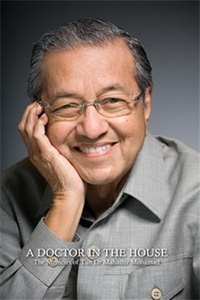 Mahathir (
left
) was also ardently opposed to the Iraq war, and used it to masquerade himself as an ambassador of peace. Today, his chief steward Matthias Chang continues to
reach out
to the needy Palestinians, to the chagrin of the Israeli authorities.
Mahathir (
left
) was also ardently opposed to the Iraq war, and used it to masquerade himself as an ambassador of peace. Today, his chief steward Matthias Chang continues to
reach out
to the needy Palestinians, to the chagrin of the Israeli authorities.
Very fine and well. But neither Mahathir nor Chang appears to be much interested in military conflicts that concern others. For the former, taking up the Palestinian cause has won him tremendous applause among Muslims worldwide, while for the latter, it is merely a job. Matthias Chang for humanitarianism and human rights? Give me a break.
Mahathir is acutely aware he commands only miniscule influence beyond the Islamic world, and has chosen to focus on issues that can keep up his "reputation" with it.
I would be intrigued to know if Mahathir would resort to brinkmanship or even an outright war to resolve bilateral disputes had Malaysia been a much bigger and militarily stronger country like, let's say, Thailand, Indonesia or Iran. Given his Machiavellian and megalomaniac character, he most probably would.
Military action in Libya not selfless
In Libya, hundreds of thousands have fled because of the airstrikes by Britain, France and the US. Death tolls are on the rise, and basic facilities ruined. It is ironic that the Lib-Con government led by David Cameron and Nick Clegg is lavish with ammunition while stingy with public spending at home.
More bewildering is the pathetic silence of the British public on the on-going war in Libya, although much noise has been made over massive spending cuts.
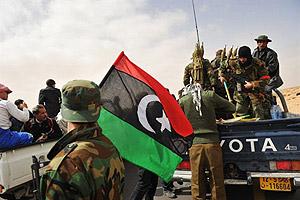 No, the military action cannot have been entirely selfless in nature. Libya has 42 billion barrels of oil reserves, much of which are also sulfur-free and of high quality.
Colonel Gaddafi, although himself a notorious bully, planned to nationalize oil two years ago, an idea that greatly worried the oil-dependent powers, especially Russia, China, the US, France, Italy and Britain. Nationalisation is never a popular move, as seen in the Suez Crisis in 1956, which was precipitated by President of Egypt Gamel Abdel Nasser's decision to nationalise the Suez Canal.
Learning from political scholars
Henry Kissinger once said, "control oil and you control nations; control food and you control the people." After four decades, his words still ring true. But not many have noticed the fact that the Central Bank of Benghazi was established recently to allow western bankers to manage funds and money that would be needed for post-war reconstruction.
Immanuel Kant and his latter-day disciple Francis Fukuyama both believed the progress of civilization would usher in peace at the global level. But developments in the last two decades only show that there must still be war before peace and democracy may descend, or they may not descend at all, as in the case of Afghanistan and Iraq.
Both Kant and Fukuyama are convinced that costs of war are so high and destructive that nations will be compelled to sue for peaceful cooperation.
What they failed to foresee - and certainly in the age of Kant - is that, in modern days, the spoils of war are so enormous that they eventually justify the costs. This is even more so if winning a war serves to enhance patriotism and reinforce national power.
President Dwight D Eisenhower warned in a 1961 speech of the threats of a coalition between defence industries, the military and all those who benefited from increased military budgets. This important reminder of a military man who understood the danger of misused power went unheeded by the successive administrations, and the rise of US military expenditure is hardly subject to democratic scrutiny nowadays.
George F Kennan made it crystal clear that the US "should dispense with the aspiration to be liked or to be regarded as the repository of a high-minded international altruism... and stop talking about unreal objectives such as human rights, the raising of the living standards, and democratization".
"The day is not far off when we are going to have to deal in straight power concepts. The less we are hampered by idealistic slogans (ideas and practices), the better," he wrote.
Had the Father of Soviet Containment been alive today, he would be more than heartened to see that his foreign policy mantra is jealously adhered to not just by the US but practically by all other powers and power-wannabes as well.
JOSH HONG studied politics at London Metropolitan University and the School of Oriental and African Studies, University of London. A keen watcher of domestic and international politics, he longs for a day when Malaysians will learn and master the art of self-mockery, and enjoy life to the full in spite of politicians.


