




The paradox of Chinese power
On Aug 18, Malaysia deported 11 Chinese nationals of Uighur origin, in accordance with Beijing's request . The Chinese government was adamant that these people had been involved in ‘criminal activities', and compliance by Putrajaya is inevitably perceived as pandering to the emerging power.
The news went largely unnoticed in Malaysia. Only a handful of Malaysians cared to protest , with the majority of the Muslim population basking in the joy of the upcoming festive season.
On Aug 18, Malaysia deported 11 Chinese nationals of Uighur origin, in accordance with Beijing's request . The Chinese government was adamant that these people had been involved in ‘criminal activities', and compliance by Putrajaya is inevitably perceived as pandering to the emerging power.
The news went largely unnoticed in Malaysia. Only a handful of Malaysians cared to protest , with the majority of the Muslim population basking in the joy of the upcoming festive season.
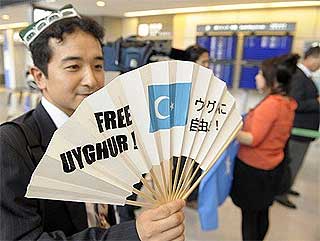 Generally, Malaysians are either completely ignorant of the presence of the Uighur in Malaysia, or convinced of the need to subject the 11 deportees to Chinese justice.
But the incident has far wider implications, not just for Malaysia, but for Southeast Asia as a whole.
In late December 2009, the Hun Sen government of Cambodia spirited 20 ethnic Uighur asylum-seekers out of the country on an unmarked charter flight following a stern demand by the Beijing leadership.
The day after the Uighur were sent to an unknown location in China, the Chinese authorities approved an unprecedented US$1.2 billion economic aid package for Phnom Penh.
Without dismissing the genuine concerns on the part of China that the separatist-minded Uighur may have links with organised crime syndicates or even terrorist groups, I would argue a modus operandi that is shrouded in secrecy and opacity, as seen in the cases of the Uighur asylum-seekers, could potentially undermine Beijing's endeavour to project itself as a responsible power.
Malaysians - indifferent as we may be - have the right to know the basis on which the charges were made against the deportees, and whether our government has adhered to proper and legal procedures.
Beijing's failure to demonstrate goodwill
If Malaysians are truly desirous of fairness, justice and integrity in our public institutions, these principles must be made equally and indiscriminately applicable to all souls found on our soil, regardless of race, creed, religion and - lest we forget - country of origin.
Of greater concern is Beijing's failure to demonstrate its goodwill and leadership. Instead of substantiating its claims of criminal activities on the part of the deportees, the Chinese leaders appear to prefer to work behind closed doors, adroitly applying their economic prowess wherever appropriate.
That two neighbouring governments now work hand-in-hand on national security issues while being shielded from public accountability and scrutiny does not bode well for the region.
One may be quick to retort by arguing that the United States, too, has its own image problem in the extraordinary rendition issue and the continued controversy over Guatanamo detainees, but it is worth reminding, time and again, that two wrongs do not make a right, especially when China is seemingly on course to becoming a global power offering an alternative set of values.
The past one year has not been particularly good for China. The stand-off between Beijing and Tokyo over the disputed Diaoyu/Senkaku Islands only served to fan up the jingoistic sentiments in the two countries, with chief cabinet secretary Yukio Edano threatening to dispatch the Japan's Self-Defence Forces to safeguard ‘territorial integrity' should China press on with naval activities.
Prior to that, the Philippines sent five congressmen and military officials to Zhongye/Pagasa Island of the contested Spratly Islands in June, with a view to reiterating Manila's sovereignty.
Philippine Defence Secretary Voltaire Gazmin even went as far as to suggest Washington should strengthen its presence in the South China Sea for the sake of US interests, which could in turn ‘help protect rights of smaller countries'.
As the Sino-Philippine dispute escalates, Vietnam has witnessed its fair share of anti-China rhetoric. Starting on June 5, ordinary Vietnamese have been gathering outside the Chinese embassy in Hanoi every Sunday morning to protest against Chinese fishing boats active in Vietnamese waters.
Seen as a 'partner in crime' with Burmese military
In a country where freedom to public assembly is severely curtailed, such tolerance by the Vietnamese authorities is indeed rare. The acquiescence is no doubt indicative of the trend among the South-East Asian countries to exploit territorial issues for diplomatic as well as domestic gains.
 Even in Burma, where Chinese influence is popularly believed to be enormous, the local population has become rather antagonistic.
The joint venture between the Burmese military and China's state-owned Chinese Power Investment Corporation to build a gigantic dam - the largest in Burma - at Myitsone in Kachin State has generated considerable anger.
The Kachin people - living under oppression - now consider Beijing a ‘partner in crime' to the Burmese military.
In 2007, a hit-and-run gunshot attack at the Chinese consulate in Mandalay was attributed to the growing discontent of the locals towards Beijing's staunch support for the junta.
The influx of Chinese nationals - up to two million - into Kachin State and Shan State also gives rise to sporadic brawls. Armed with investment opportunities and steeped in cash, the Chinese consider themselves as embodying the prosper-thy-neighbour spirit, whereas the Kachin and the Shan tend to see them as exploiters of natural resources.
All this clearly does not reflect well on China's efforts to implement its ‘good neighbour policy' and the latest whisking of Uighur asylum-seekers back to China again calls into question Beijing's aspiration to be a transparent and respectable giant in the region.
It also exposes the paradox of Chinese power: strong on economic resilience but weak on leadership credibility.
It is high time Beijing takes a deep look at its Asia policy, while the regional governments work harder at institutional capacity building to enhance future cooperation with China and other powers.
JOSH HONG studied politics at London Metropolitan University and the School of Oriental and African Studies, University of London. A keen watcher of domestic and international politics, he longs for a day when Malaysians will learn and master the art of self-mockery, and enjoy life to the full in spite of politicians.


Are you sure you want to delete this comment?
This action cannot be undone.