




A changing SEA
It is a picture that is worth a thousand words: a smartly dressed US Secretary of State Hillary Clinton is greeted by Thein Sein - the first civilian President of Burma in nearly half a century - in national costume. A courteous, albeit long overdue, welcome, but the message cannot be lost on Clinton: never take Burma for granted.
It is a picture that is worth a thousand words: a smartly dressed US Secretary of State Hillary Clinton is greeted by Thein Sein - the first civilian President of Burma in nearly half a century - in national costume. A courteous, albeit long overdue, welcome, but the message cannot be lost on Clinton: never take Burma for granted.
Contrast this with other 'modern' Asian nations such as South Korea, Taiwan, Japan and even China, whose leaders are almost always more than eager to impress their American counterparts with symbols of modernism: western suits, metal glasses and what not.
Observing the historic moments in Burma, I cannot help thinking of Malaysian government leaders who at times go overboard to present the country as 'progressive', 'moderate' and 'democratic', but fail to even surpass Burma in enacting a simple law that would permit greater freedom to street protest.
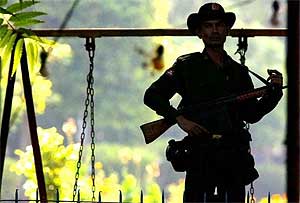 Never look down at the poorer neighbour. Burma used to be a more promising and prosperous economy in the immediate post-World War II years. Unlike Malaysia and Thailand, the country also boasts a proud history of anti-colonial resistance. Given the right opportunity and strategy, it can surge ahead again.
I am of course mindful of the annual bashing season for Umno, as its delegates gather at the Putra World Trade Centre in downtown Kuala Lumpur for series of chest-beating sessions, vowing to defend the Malays while family members of government ministers, such as Shahrizat Abdul Jalil, are eating high on the hog.
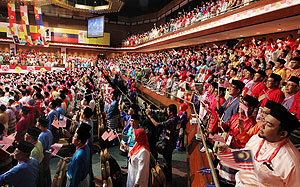 The world around us is changing fast and geopolitics is developing at lightning speed. Umno warlords are however oblivious to the realities, indulging in the never-ending cries for more largesse, contracts and privileges.
Yet where were those first-generation Umno leaders when their contemporaries in Burma were shedding blood for national liberation?
Sheer humbuggery, I would say.
Southeast Asia is now the next region to watch. The rivalry between one superpower - the US - and a quasi-superpower - China - is adding more variants to regional dynamics by the day. At the Apec summit in Hawaii just two weeks ago, President Barack Obama kicked off the negotiations on the Trans-Pacific Strategic Economic Partnership that would exclude Beijing.
The economic pact with the Asean countries would also potentially undermine China-dominated Asean + 3 initiative.
Moreover, Obama has declared US return to Southeast Asia by stationing 2,500 troops in Darwin, northern Australia, Washington's first military expansion in the region since the end of Vietnam War. Indonesia, already enjoying close military cooperation with the US, is quietly assured, although President Susilo Bambang Yudhoyono was rather displeased that the Bali Summit was dominated by military issues.
Still, for the regional giant and other smaller nations such as Singapore and Malaysia, US presence not far off the South China Sea will have China think twice before Beijing allows reckless and jingoistic sentiments to get out of hand over the Spratly Islands dispute.
Greater leverage for Canberra
Canberra, meanwhile, is more than pleased with the prospects that the heightened military profile may give it greater leverage vis a vis Asian countries.
In Bali, Obama met with Filipino President Benigno Aquino III and publicly backed the Philippines in its stand-off with China over the Spratlys, praising also the 60-year-old ties between the two allies.
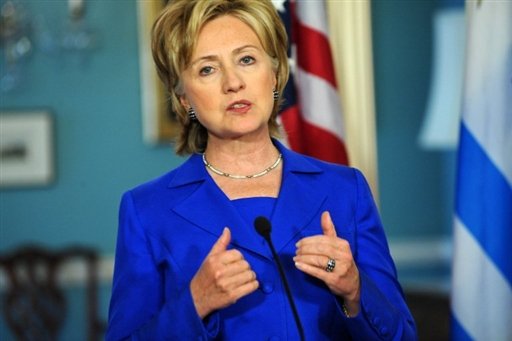 Together with the vastly improved ties between the US and Vietnam, and Clinton’s (
left
) visit to Burma, China has every reason to feel itself under siege and contained.
Together with the vastly improved ties between the US and Vietnam, and Clinton’s (
left
) visit to Burma, China has every reason to feel itself under siege and contained.
In his latest book Where China Meets India: Myanmar and the New Crossroads of Asia, Thant Myint-U , a grandson of the first UN Secretary-General U Thant, argues forcefully how Burma should take into consideration the strategic importance of its border areas with the two powerful neighbours for its long-term benefits.
In fact, Rangoon has adroitly applied its geostrategic advantage between Beijing, New Delhi and Washington in achieving its foreign policy goals in the past two decades. On the other hand, the Chinese leadership had been so overconfident and conceited that it failed to notice the slow yet steadfast alterations in Burma's strategic moves.
From the 1990s onwards, China's state enterprises had been plundering the natural resources - ranging from timber, gems, jade stones to other minerals - in Shan State and Kachin State, generating massive resentment of the local populace along the way.
The Chinese government may not have intended it, but the arrogant and smug behaviour of Chinese businessmen in cities like Mandalay, Lashio and Myitkyina have made occasional brawls between them and the local residents an issue of national attention.
When President Thein Sein called off the massive dam construction at Myitsone in Kachin State, Beijing was naturally furious. Deceived by the false sense of comradeship with the military junta, the Chinese government had it coming.
Clinton’s visit could also be meant to engage Burma in order to prevent the ‘pariah state’ from developing its nuclear capacities further. North Korea has been lurking behind for some years. It was no coincidence that the US secretary of state had met with Lee Myung-bak, South Korean president, before she arrived in Naypidaw.
A nuclear-armed Burma would be an ultimate nightmare for Asean as a whole. If the Americans can do something to divert it, all the better. But a confidence-building mechanism has to be in place so that the Sino-US engagement in this region will not turn malign.
On the territorial disputes in particular, it is high time Asean leaders forego their unrealistic pride and come up with a concerted plan of action for a region that is becoming increasingly strategic in the next decade.
However, looking at the Umno leadership that has not even a semblance of diplomatic finesse and insight, I truly wonder what role Malaysia will play in all this. We are, as always, too consumed in the narrow-mindedness of national politics. Good luck.
JOSH HONG studied politics at London Metropolitan University and the School of Oriental and African Studies, University of London. A keen watcher of domestic and international politics, he longs for a day when Malaysians will learn and master the art of self-mockery, and enjoy life to the full in spite of politicians.


Are you sure you want to delete this comment?
This action cannot be undone.