


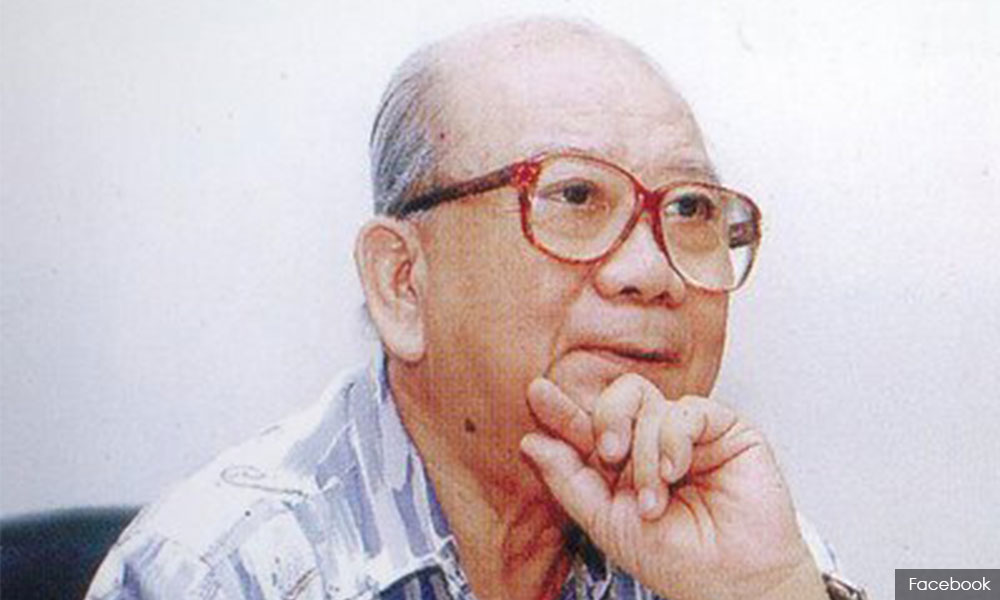

Chin Peng speaks in death
In his memoirs From Armed Struggle To Peace, former central committee member of the Communist Party of Malaya (CPM) Rashid Maidin dedicated a chapter to sharing his feelings of home visits to Malaysia following the conclusion of the Hatyai Peace Accords in 1989.
In his memoirs From Armed Struggle To Peace, former central committee member of the Communist Party of Malaya (CPM) Rashid Maidin dedicated a chapter to sharing his feelings of home visits to Malaysia following the conclusion of the Hatyai Peace Accords in 1989.
Megat Junid Megat Ayub, the deputy home minister in the early 1990s and a right-hand man of Mahathir Mohamad, took Rashid to Bukit Aman to meet with senior officers who had been involved in reaching the peace agreement with the CPM, followed by a brief chat with Mahathir. Rashid did not hesitate to acknowledge his appreciation of Mahathir for the latter’s ‘anti-imperialist spirit’ as compared to the previous prime ministers.
Later on, Rashid, also the first Malay to join the largely Chinese CPM, went on a pilgrimage to Mecca on the sponsorship of the Malaysian government. Given that the CPM was (and still is) popularly perceived as an atheist party and that the religious faith of the Muslim party members was seriously questioned if not dismissed, the goodwill shown upon him by the Malaysian state was significant.
Other than Rashid, other prominent Malay CPM members had either come home from southern Thailand and China to settle down or for social visits. Abdullah CD, for one, visited Malaysia twice with his wife Suriani Abdullah, a Chinese Malayan converted to Islam.
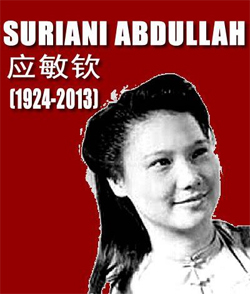 Suriani included in her memoirs the fact that the couple were granted an audience with Sultan Azlan Shah of Perak. Considering that Abdullah had been the founder and leader of the predominantly Malay 10th Regiment of the CPM, the meeting between him and the ruler of his native state of Perak is of paramount importance.
This aside, Shamsiah Fakeh, a well-known left-wing woman activist of the 1940s who also joined the CPM and took up arms later on, returned from China to reside in Malaysia in 1994.
In October 2007, the Utusan-owned Malay monthly Mastika featured her as a Malay nationalist, while she talked candidly about the CPM’s contributions in fighting against first the Japanese invaders and then the British colonialists. She also explained she had not chosen Umno as a platform due to unbridgeable ideological differences.
It is hence obvious that the Umno-dominant media and state are not invariably dismissive of CPM members per se. In fact, another CPM leader of Malay origin, Abu Samah Mohd Kassim, has revealed that Rahim Noor, who represented Malaysia in signing the accords, had stated that the government did acknowledge the CPM’s positive role in resisting British colonial rule, albeit not being able to do so publicly.
However, Rahim made it clear that the government would not stop scholars and historians from researching the topic and reaching their own conclusions thereon.
Why is Chin Peng’s case so different?
The peace accords state unambiguously that all former CPM members who have laid down arms are entitled to return home and settle down in Malaysia, and quite a number of them have done so without a problem. Then why is Chin Peng’s case so different from others?
The Guardian’s obituary mentions that the Malaysian government has not honoured its promise in regard to the late CPM general-secretary’s wishes to die in his homeland .
I would go a step further by saying that, not only has the Umno-led government shown its bad faith in breaching the spirit of the peace accords, it has also violated Article 13(2) of the Universal Declaration of Human Rights which says that “everyone has the right to leave any country, including his own, and to return to his country”.
But Umno has been using all kinds of flimsy excuses to deny Chin Peng such a right, and the courts have not helped by interpreting the relevant law in accordance with the government’s wishes. The man eventually died in Bangkok, betrayed by the country whose independence he had fought for and with his will unfulfilled.
Now the police and the government may warn Malaysians against glorifying Chin Peng. But I will not budge from my view that the government has a duty to adhere to the peace agreements, the conclusion of which demonstrates only that the conflict has long been over and it is time for full reconciliation.
I don’t believe in communism, but once a promise is made in the aftermath of peace, it must be honoured. This is not about glorifying a dead hero, but simply to point out the plain fact that governments must not be allowed to go back on their own words.
Everywhere in the world, communism is approached, handled, debated or even fought from an ideological point of view. Only in Malaysia has it been reduced to a racial or religious contention, which serves Umno’s political agenda, no doubt.
In caving in to the so-called ‘Malay sentiments’, Umno has again proven that it is first and foremost an ultra Malay party. In extending its generosity towards the former Malay CPM leaders while making the ‘intransigent’ Chin Peng an outcast, Umno has strengthened the prevailing impression that the Malays had once been misled by a great Chinese conspirator.
In other words, Umno has again played on the memories of Malay victimhood for its own gains. Had Chin Peng been born Malay, all his sins - however crimson - would likely have been forgiven.
Be that as it may, the controversy surrounding Chin Peng's life and death has opened up an opportunity for Malaysians eager to find out more about the nation’s chequered past. As Malaysians dig out more about what happened between the Japanese, British, Umno and the CPM, Chin Peng continues to speak even in death.
JOSH HONG studied politics at London Metropolitan University and the School of Oriental and African Studies, University of London. A keen watcher of domestic and international politics, he longs for a day when Malaysians will learn and master the art of self-mockery, and enjoy life to the full in spite of politicians.


