




Mandela's legacy for Malaysia
I woke up this morning to the news that Nelson Mandela, or Madiba Mandela as known in his native culture, had just passed on. Strangely, I did not feel sad but an immense sense of celebration, safe in the knowledge that the wonderful man has fought a very good fight on earth and is now reunited with his maker. It is no doubt a job well done.
I woke up this morning to the news that Nelson Mandela, or Madiba Mandela as known in his native culture, had just passed on. Strangely, I did not feel sad but an immense sense of celebration, safe in the knowledge that the wonderful man has fought a very good fight on earth and is now reunited with his maker. It is no doubt a job well done.
It would not be too exaggerating to state that, in a continent that is constantly struck by corruption, poverty and autocracies exemplified by the likes of Robert Mugabe and Omar al Bashir, Mandela has shone like a beacon of hope and done the Africans proud.
Indeed, Mandela towered above the evil of apartheid to give the Rainbow Nation a soul, and his fame and stature are hard to be surpassed by any other world leaders, perhaps for generations to come.
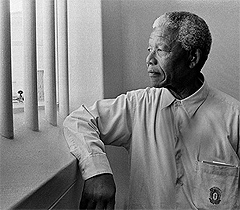 What sets Mandela apart from others is the fact that he went through 27 years of jail as the apartheid regime was seeking to erase him from public memory, but came back with the crowds cheering on. He then tasted power in 1994 as the first democratically elected president of South Africa, only to retire gracefully five years later.
Most preciously, Mandela kept to his promise of not interfering in the running of the country to enable his successor Thabo Mbeki to have a free hand, while he took up the role of a statesman by championing other noble causes such as combating HIV/AIDS and poverty eradication.
Internationally, Mandela used his huge influence wisely and continued to speak against neo-
colonialism in any form, particular the invasion of Iraq led by the United States in 2003. Most extraordinarily, he became one of the very few African leaders, and no doubt the one with the strongest moral authority, to advise Mugabe in public to step down over human rights abuses in Zimbabwe.
But it is the message of peace, forgiveness and reconciliation that Mandela had consistently preached while alive that earns him most respect.
Born in a country racked by colonialism, racism, wars and even genocides, Mandela had every reason to be resentful and vengeful. Still, he opted for reconciliation and harboured no bitterness towards the former white leaders who had mercilessly persecuted him and his people. Instead, he sued for peace, mutual understanding and forgiveness in order for the nation to move forward.
Healing process
At the widely broadcast Truth and Reconciliation Committee hearings during his presidency, the world witnessed how black and white South Africans came forward to tell their tragic tales. These sessions were often full of acrimonies and tears, but would almost always end with both sides hugging each other for forgiveness. The healing process has since made it possible for the country to rebuild itself based on the spirit of Mandela.
Globally, Mandela raised his moral stature by forging close ties with the United Kingdom and the US, despite that both Margaret Thatcher and Ronald Reagan were opposed to sanctions against the apartheid regime and considered the National Party of South Africa as a strategic Cold War ally.
Throughout his presidency between 1994 and 1999, Mandela preached only about democracy, human rights and justice internationally, and one detects no virulent attack on the former imperial powers that had brought much suffering to the African continent. His generosity and willingness to move on indeed make attempts by certain western leaders, no less so Tony Blair, to boost up their own image all the more shameful and hypocritical.
Similarly in Malaysia, Mahathir Mohamad has always been keen to glean some of the glory from Mandela’s successes, but he never truly believes in what the great man stands for: freedom, liberty, integrity, intellectual honesty and reconciliation.
Mandela chose to live a blissful and quiet life after retirement with his conscience clear, while Mahathir, deeply tainted by scandals, is still fighting to preserve his ignominious legacy. If anything, Mahathir is the complete opposite to what Mandela embodies. Thankfully, this shameless approach of ‘glory by association’ has now come to an end.
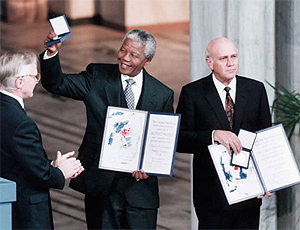 Many pundits had predicted bloodshed after the collapse of the apartheid regime in the 1990s, but Mandela single-handedly held the Rainbow Nation together. As he said after his release from jail in 1990: “We come from a people who, because they would not accept to be treated as subhuman, redeemed the dignity of all humanity everywhere.”
It is this powerful message that all other leaders who ostensibly aspire to build up a nation must bear in mind. If there are valuable lessons that Mandela has left behind for Malaysia, it has to be tolerance, mutual respect, understanding, forgiveness, reconciliation, humanity and generosity. It is fine and well for all Malaysians to mourn the passing of a great man, but history would not be kind to our country if we fail to emulate his noble spirits.
JOSH HONG studied politics at London Metropolitan University and the School of Oriental and African Studies, University of London. A keen watcher of domestic and international politics, he longs for a day when Malaysians will learn and master the art of self-mockery, and enjoy life to the full in spite of politicians.


