




Curbing ideological extremism
I have written before that Umno under the leadership of Prime Minister Najib Abdul Razak has turned out not only to be weaker than that led by former prime minister Abdullah Ahmad Badawi, but also to be more prone to sending wrong messages to the radical forces that are out to achieve their political aims at the expense of others.
I have written before that Umno under the leadership of Prime Minister Najib Abdul Razak has turned out not only to be weaker than that led by former prime minister Abdullah Ahmad Badawi, but also to be more prone to sending wrong messages to the radical forces that are out to achieve their political aims at the expense of others.
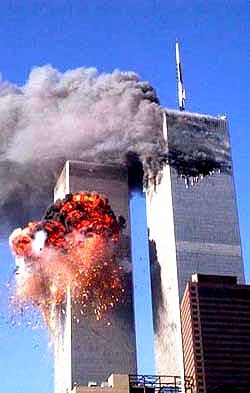 When the whole world was caught in an immense (but often misguided) fear of an Islamic threat following the Sept 11 attacks in New York more than a decade ago, former premier Mahathir Mohamad seized the opportunity to portray himself as a voice of rationality amidst the roaring sea of violence, as he lost no time in cracking down on the many fringe groups working within Malaysia on further terrorist plots.
Of course, he also earned himself a rare audience with President George W Bush in the White House, but not before a sum of US$1.2 million was paid to one lobbyist by the name of Jack Abramoff.
Then came Abdullah, who sought to realign Malaysia’s position towards the west by promulgating Islam Hadhari.
One may deride Abdullah’s for his sleep apnea, but I would give credit to him for recognising that the real threat to Malaysian society lay not with a frightening scenario of massive numbers of Malaysians joining the radical groups in fighting in Afghanistan, Iraq or Chechnya in the Caucasus, but what many a scholar has identified as ‘ideological extremism’.
Ideology is important for terrorists of various roots. In the 1970s, the Japanese Red Army and the Red Army Faction terrorised both Japanese and German societies as their leaders were adherents of leftist militancy bent on destroying the existing financial structures that were regarded as exploitative and unjust.
In the United States, pro-life extremists continue to target abortion clinics and doctors out of their religious or ‘ethical’ convictions.
Back in South-East Asia, al-Qaeda and Jemaah Islamiah have both provided ideological basis to their terrorist acts by playing on the perceived ‘victimhood’ that is pervasive among the Muslim populations in the region.
Victimhood-based ideology
In the context of Malaysia, the Malays have been indoctrinated to believe that their race and religion are both under threat from others, as can be seen in the sorrowful experiences of the Malays in southern Thailand (a Buddhist state) and the Muslims in southern Philippines (a Catholic state).
For decades, Umno (and PAS to some extent) has been closely involved in the conflicts in these two territories, sometimes to help mediate, other times to provide a sanctuary to the separatists and refugees, both of which I do not consider entirely inappropriate for humanitarian reasons.
However, there is no denying that Umno has also been exploiting the fate of the Thai Malays and southern Filipinos for its own political purposes, as it relishes in reminding (or scaring) the Malays that, if not careful enough, the Malays could lose political power in their homeland also.
Beyond the region, the Malay psyche is also made all the more vulnerable through the repeated images of the suffering of the Palestinians (oppressed by the Jews), Afghans (bullied by the west) and Chechens (‘colonized’ by the Russians). As a result, while Malaysia may stop short of providing logistical support to the terrorists, public sympathies are plenty nonetheless.
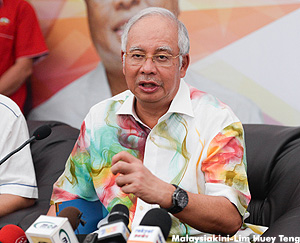 This largely explains why the Najib government has failed to condemn the
Volgograd bombings
last December. The attackers were based in Dagestan, another Muslim majority republic within Russia.
This largely explains why the Najib government has failed to condemn the
Volgograd bombings
last December. The attackers were based in Dagestan, another Muslim majority republic within Russia.
If Najib has remained silent in the face of the host of religious disputes within the country, it would be a luxury to expect his administration to say a word or two against terrorist acts done in the name of Islam.
But inertia could lead to a greater danger as the victimhood-based ideology further radicalises the Muslim communities, resulting in a radical interpretation of Islam dominated by a handful of so-called religious professionals. It also gives the radical forces a greater voice in defining Islam as a religion which will invariably tarnish the image of the faith in the long run.
Failure to lead
Today, we can see how Malay rights group Perkasa and Islamic NGO Ikatan Muslimin Malaysia (Isma) work hand in hand in arousing the sentiments of the Malay electorate, while certain individuals are seeking to provoke confrontations in other ways, including shedding the innocent blood of the chickens and tossing a slab of pork.
It is precisely because of Najib’s failure in providing leadership when it is needed that the fringe groups and irresponsible individuals are rushing to claim the power vacuum for themselves.
One may ask: where are the Muslim masses who disagree with their actions? Some of them may quietly agree, others feel confused. Sadly, too few of those who honestly think it is wrong are bold enough to come out and say no to these religious clowns.
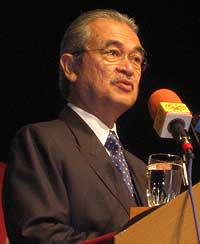 When Islam Hadhari was announced 10 years ago, many did not take it seriously. As we all know, Abdullah (
left
) stepped down gracefully into a happy retirement, and the ideology died with him.
When Islam Hadhari was announced 10 years ago, many did not take it seriously. As we all know, Abdullah (
left
) stepped down gracefully into a happy retirement, and the ideology died with him.
What we did not know at the time was the Najib administration that came after him would be so bereft of an ideology that the public is practically standing helplessly as the country is going to the dogs.
A response to ideological extremism and terrorism would be high on the agenda in the upcoming G8 Summit in Sochi, Russia, during which prohibition of extremist or terrorist propaganda – including the use of social networks and other internet platforms for this purpose – would be discussed.
A firm believer in freedom of expression and information myself, I am not inclined to see the authorities do nothing about websites that propagate violence against others (it is worth reminding here that Malaysia has hosted a good number of al-Qaeda-linked websites in the past).
While Malaysia is not represented at the Summit, Wisma Putra must nevertheless support an initiative as such, although the chances are bleak judging from the government’s inaction in many issues.
JOSH HONG studied politics at London Metropolitan University and the School of Oriental and African Studies, University of London. A keen watcher of domestic and international politics, he longs for a day when Malaysians will learn and master the art of self-mockery, and enjoy life to the full in spite of politicians.


