




Coming to grips with the interfaith commission
It was never going to be easy to get Malaysians of different creeds to clearly define the objectives and structure of the proposed interfaith commission (IFC), as a recently concluded national conference revealed.
Much of the conflict, real or perceived, between the proponents and opponents of the IFC draft bill appear to boil down to gaps in understanding the crux of the matter.
 This was epitomised by a boycott of the proceedings by several mainstream Muslim groups, on grounds that Islam should not be subjected to the IFC's jurisdiction.
However, as one participant captured it neatly: "Religion is not on trial (here)."
What was 'on trial' were issues linked to administration of Islamic law, within the context of the constitutional freedom to profess one's chosen faith.
It was never going to be easy to get Malaysians of different creeds to clearly define the objectives and structure of the proposed interfaith commission (IFC), as a recently concluded national conference revealed.
Much of the conflict, real or perceived, between the proponents and opponents of the IFC draft bill appear to boil down to gaps in understanding the crux of the matter.
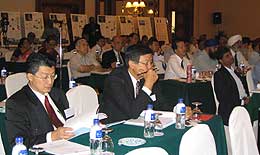 This was epitomised by a boycott of the proceedings by several mainstream Muslim groups, on grounds that Islam should not be subjected to the IFC's jurisdiction.
However, as one participant captured it neatly: "Religion is not on trial (here)."
What was 'on trial' were issues linked to administration of Islamic law, within the context of the constitutional freedom to profess one's chosen faith.
Accordingly, one delegate pointed out the need for space for legitimate criticism of "persons, authorities or bodies tasked with carrying out (certain) duties...not to criticise any religion".
This is especially in view of the sufferings of affected persons facing the day-to-day realities of living with religious plurality in Malaysia.
Muslim converts
In its memorandum, the Malaysian Consultative Council for Buddhism, Christianity, Hinduism and Sikhism cites, among other things, the situation of Muslim converts who wish to return to their previous faith.
The Islamic law as practiced in Malaysia prohibits non-Muslim converts from reverting to their previous faith even if the reason for their conversion no longer exists - for example, marriage (that has since failed).
One delegate suggested that Syariah judges should stick to the laws when deliberating cases, and not play the role of moral police.
"They should not be theologians... or be concerned with morality. They should just follow the law," the delegate noted.
IFC steering committee head Malik Imtiaz Sarwar argues that one way out of these dilemmas is for all parties to sit together and discuss how to handle the situation, given the realities of Malaysia's plural society.
He believes this is possible only if parties set aside their differences and prejudices in order to facilitate positive discourse based on a common ground.
'Too legalistic'
For all the accord found on submitting the draft bill to the government, there was a niggling feeling that delegates could have arrived at a greater degree of understanding if they had understood what was expected of them and had come prepared for the conference.
Most had expected to receive a full explanation of the implications, repercussions and consequences of the draft proposal, both in its original form and after changes. However, this did not happen.
As a result, their confusion was apparent throughout the first day. A number of them expressed dissatisfaction over the way the proceedings were conducted, which was generally described as "too legalistic".
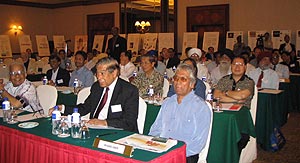 "It seems to be a debate between lawyers. We can't follow everything that is being said," said one, during the first of four briefing sessions on various provisions of the draft bill.
Those without a legal background said they felt overwhelmed and left out, when the deliberations focused on minute details of terminology and scope of the proposed IFC.
"Since many of us are not legally-qualified, why don't we just capture the spirit of the proposal? The drafters can later make the necessary amendments," suggested a delegate.
"It would be much better than labouring over legalities since we are all here to discuss and decide on how to present the government with a draft bill that addresses our mutual concerns."
The steering committee has since taken responsibility for this failure, with Malik Imtiaz apologising for the oversight.
He said the fact that lawyers had worked on the draft bill may have led to the presentation being seen as exclusive.
Prolonged debate
Participants were also uncomfortable with being rushed into voting on several contentious provisions, when they are - as yet - unable to fathom the outcome of their decisions.
As such, they were absorbed in the lengthy debates over whether to leave a certain word, phrase or legal provision intact in the draft bill , or reproduce each in full or in part, or remove it altogether.
Another over-riding concern throughout the conference was worry over limiting the application of provisions or the commission's jurisdiction too early in the drafting process.
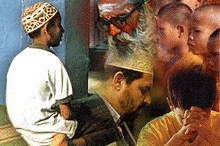 Deliberations were therefore prolonged over the significance of certain provisions. Some felt the wording was wide enough to cover all possible situations, while others felt that it was limiting and would lead to legal technicalities as well as problems with interpretation later.
The diversity of groups represented proved to be both a strength and weakness of the conference. While this helped widen perspectives on the basis of age and gender, there was a sense that niche needs were not being given equal attention.
Sensing a generational gap, a participant noted that younger Malaysians want "a generic representation of Bangsa Malaysia, but religious leaders want the status quo to remain... in terms of being male-oriented, as well as retaining the structure of religious or faith organisations".
Critics absent
Concerns over disproportionate representation was expressed by some delegates, who noted the absence of critics of the IFC proposal.
This affected the objective of communicating ideas to an audience of all Malaysians, religious groups and those involved in interfaith efforts. However, the organisers pointed out that invitations had repeatedly been issued and rejected.
Among those who did not attend the conference was the Allied Co-ordinating Committee of Islamic NGOs, a coalition of 13 groups, and opposition party PAS. The groups vehemently object to the IFC, saying this would gradually weaken the practice of Islam in Malaysia.
 "Maybe the steering committee should have engaged the opposing parties when stating their stand. That way, there would be full participation instead of (merely) extending an invitation (to them)," remarked Kuthubul Zaman Bukhari at the opening of the conference.
Another shortcoming was that the conference material and deliberations were in English.
When asked why these were not in Bahasa Malaysia, given the purported inclusiveness of the initiative, Malik Imtiaz conceded the point.
He gave an assurance that post-conference materials and discussions would include Bahasa Malaysia "in order to build trust, confidence and to move forward" with the initiative among all Malaysians.


Are you sure you want to delete this comment?
This action cannot be undone.