



Whether you're king or pauper, two and two is four
COMMENT | Two truths - first, in a constitutional monarchy, a monarch’s role is to stay above politics. Second, hypocrisy is when someone’s words do not match their actions, regardless of who that person is.
The invention of constitutional monarchy has helped keep monarchies around the world extant as the concept of allowing some family to arbitrarily maintain absolute rule and control over their subjects has certainly fallen out of favour around the world.
A constitutional monarchy is a compromise that achieves a number of objectives. For one, it allows a sense of continuity and tradition for some extremely old institutions.
More significantly, in many cases, constitutional monarchies have performed a practical, useful function by being a government institution that provides a check and balance by virtue of being above politics.
There are many countries without monarchies that still have an office that performs a similar function, notably parliamentary republics which elect a largely ceremonial president alongside the prime minister which functions as the head of state. Germany, India and Singapore are among the examples that fall into this category.
Such parliamentary republics also recognise the value of having an office and institution that is part of the government, but apart from the more partisan nature of electoral politics.
In most constitutional monarchies, the rule of non-interference in politics is treated as something sacred.
One gets the sense that any member of most royal families around the world commenting in any way that could possibly be construed as partial is a taboo of the highest order...
COMMENT | Two truths - first, in a constitutional monarchy, a monarch’s role is to stay above politics. Second, hypocrisy is when someone’s words do not match their actions, regardless of who that person is.
The invention of constitutional monarchy has helped keep monarchies around the world extant as the concept of allowing some family to arbitrarily maintain absolute rule and control over their subjects has certainly fallen out of favour around the world.
A constitutional monarchy is a compromise that achieves a number of objectives. For one, it allows a sense of continuity and tradition for some extremely old institutions.
More significantly, in many cases, constitutional monarchies have performed a practical, useful function by being a government institution that provides a check and balance by virtue of being above politics.
There are many countries without monarchies that still have an office that performs a similar function, notably parliamentary republics which elect a largely ceremonial president alongside the prime minister which functions as the head of state. Germany, India and Singapore are among the examples that fall into this category.
Such parliamentary republics also recognise the value of having an office and institution that is part of the government, but apart from the more partisan nature of electoral politics.
In most constitutional monarchies, the rule of non-interference in politics is treated as something sacred.
One gets the sense that any member of most royal families around the world commenting in any way that could possibly be construed as partial is a taboo of the highest order.
Has a line been crossed?
Not long after one Malaysian royal passed some strong comments regarding Dr Mahathir Mohamed, I wrote about how constitutional monarchies are supposed to work, and I quoted one particular scene from Netflix’s “The Crown” that articulated one interpretation of how British royals prioritise impartiality.
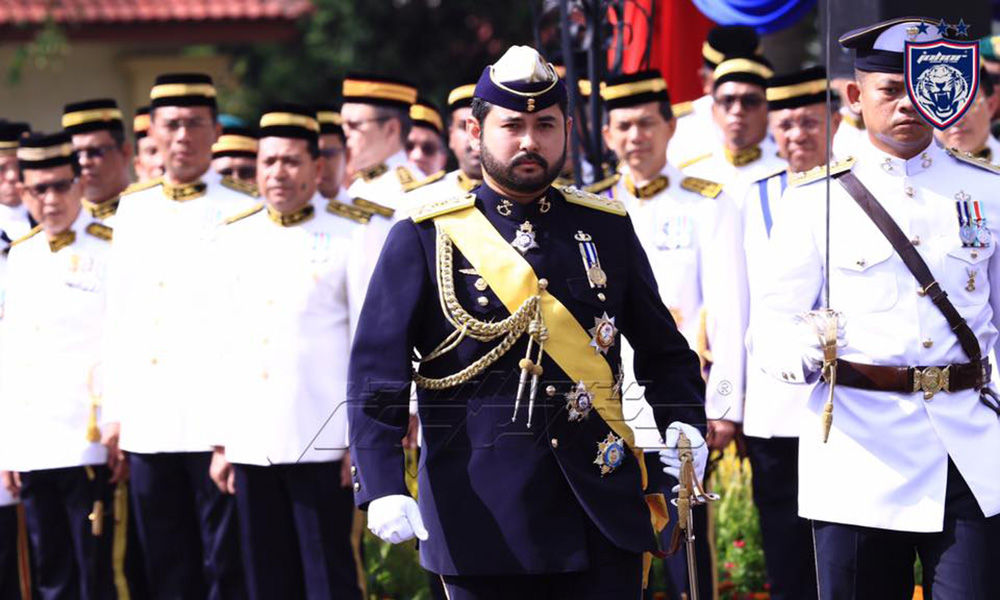
Four months later, we are again faced with more comments emerging from royalty, immediately following the dissolution of Parliament, that seem to raise some eyebrows regarding whether or not this crosses the line of propriety in the context of a constitutional monarchy.
The royal in question does not believe so, proclaiming in a follow up to his original post (I have been unable to access the original Facebook post in which this appears, so please rely on the translation by Malaysiakini):
“I gave my sincerest opinion for what I think is best for my state. It was my personal opinion and being in my position, I do not support any political party or individual. I did not say I support Mahathir Mohamad, Najib Abdul Razak or anyone else.”
These statements suggest that the royal in question is laudably well aware that his responsibilities as a constitutional monarch preclude him from exerting undue influence in the elections, as this would be wrong and inappropriate.
Those same claims, however, need to be viewed in light of the original statements themselves, to ascertain whether or not they did, in fact, indicate support for any political party.
A close examination
Let us examine a few quotes from the original statement in particular:
“I do not (support) any political party, but in order to change a country's fate and improve the system, it is not by bringing down a government. We need to change it from the inside.
“Our neighbouring countries and I believe that if a ship has been sailing fine for many years but has an issue due to its skipper, do not fix it with a new engine. We stay on the same ship and guide the skipper to where we want to go.
“This is the time to restore the orders and implement systems that have been damaged by individuals who are dreaming of becoming prime minister.
“Don't change the boat if the engine is not broken, don't even change the skipper but allow HM the Sultan of Johor and I guide the skipper for you.”
There is also an anecdote regarding the story of one Private Adam, in which Mahathir is explicitly mentioned by name, and which is followed by the quote below:
“This is how low the highest government’s leadership then is willing to go to have absolute power in this nation.
I hope the people are not easily fooled by a forked tongue individual. At the moment he is not trying to save the country, he is more worried about what will happen to his children in the future. Even the wealthiest person on earth would not be able to give birth to three "billionaires".”
Impartial?
A popular saying among people in power is “I leave it to the people to judge” while a popular attitude among people in power is to say one thing and do the complete opposite.
I suppose I will leave it to the people to judge whether the latter is what has occurred, and whether or not the speaker in question is being genuine with regards to the claims of not supporting any side.
I think this is something we should be concerned with, regardless of our political preferences. It is perilous to cheer the monarchy only when their political commentary favours who we support.
For the record, I, too, believe that back in the day, Mahathir curbed the powers of the monarchy for selfish reasons rather than for any genuine commitment to democracy. I can certainly understand how some people took it personally and maintained a long-standing grudge.
Two wrongs, however, do not make a right. Excess and undemocratically curbed powers of the monarchy back then do not justify excessive and inappropriate comments by the royalty in the here and now.
Two and two
One other quote from the same individual that was quite jarring goes as follows: “Whatever happens to Malaysia is your problem […] whatever happens to the country, it involves other people, not me.”
The last time I checked, Johor was still part of Malaysia. If some would prefer to secede, it is their right to pursue that goal and the noble manner in which to do so openly.
I personally believe that within the Malaysian family (and the family of all humanity, really), all of us have a right to be concerned about each other.
Steven Gan recently quoted George Orwell’s bit about two and two being four.
If anyone from anywhere in our nation is trying to make us believe it is three or five instead, then it is our responsibility to disagree, for no one is an “outsider” as far as the truth is concerned.
In closing, I would like to take some time to remember Douglas Gomez, a brave Johorean hockey coach, who by unrelated coincidence happened to father a son who would go on to write the funniest (and probably best) Malaysian book I have ever read.
NATHANIEL TAN believes that copies of Devil’s Place by Brian Gomez are probably still available for sale, perhaps at Merdekarya, which is a fun place you should visit.
The views expressed here are those of the author/contributor and do not necessarily represent the views of Malaysiakini.


Are you sure you want to delete this comment?
This action cannot be undone.