



In defence of Mat Sabu’s ‘18-wheeler’ diplomacy
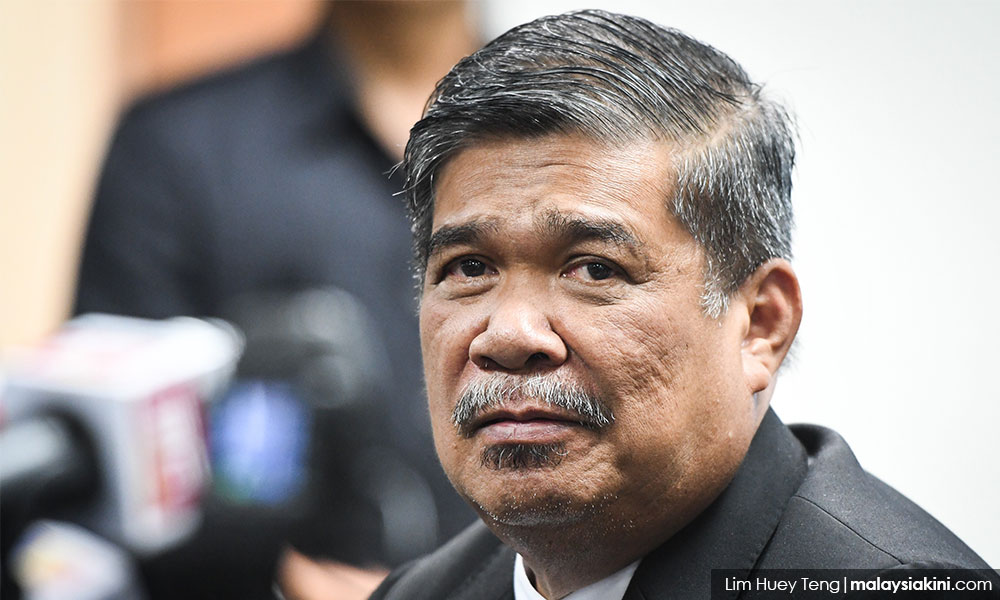
COMMENT | Mohamad Sabu has reached a small milestone. He was in New York City between Sept 23-29, one of the longest trips ever by a Malaysian defence minister, and among the few to attend the United Nations General Assembly so soon after his appointment to cabinet.
The length and the early trip to the United States are key, even if it is his 10th visit in the last four months, from the Shangri-La Dialogue in Singapore – during which he emphasised the centrality of Asean and the importance of the ‘Mahathir doctrine’ – to his visit to Lebanon in June.
To those not in the know, southern Lebanon is one of those delicate areas where conflicts could erupt at any given time. Malaysian peacekeepers are there to help maintain some semblance of order as part of the UN Interim Force in Lebanon (Unifil).
Malaysians blue helmets have always been deeply respected. Be it in Congo in 1962 or Somalia in 1989, Malaysian soldiers have always been at the forefront of peacekeeping efforts.
Infamously, the book and movie Black Hawk Down got its details wrong. It wasn't just the Pakistani blue helmets who retrieved the American rangers trapped in the fire fights in the centre of Mogadishu, Malaysians also saved the day.
Tariq Chaudhry, a UN diplomat, has always tipped his hat to the bravery of the Malaysian soldiers.
His doctorate thesis on the Organisation of Islamic Cooperation at Cambridge went as far as accrediting the Malaysian armed forces in maintaining the peace in Bosnia after the Dayton Agreement in 1995.
Mat Sabu is aware of this glowing legacy. He celebrates them, and is able to hit it off with Dr Mahathir Mohamed precisely because both agree peace is something which Malaysia can do and has done the world over.
Mohamad also believes that wars are a blight on humanity. One should avoid such aggressive behaviours. This is again a position not unlike the view of Mahathir, who also hates wars.
Just yesterday, Mahathir hinted that Malaysia is looking into following Japan’s constitution which prevents the country from entering armed conflicts....
COMMENT | Mohamad Sabu has reached a small milestone. He was in New York City between Sept 23-29, one of the longest trips ever by a Malaysian defence minister, and among the few to attend the United Nations General Assembly so soon after his appointment to cabinet.
The length and the early trip to the United States are key, even if it is his 10th visit in the last four months, from the Shangri-La Dialogue in Singapore – during which he emphasised the centrality of Asean and the importance of the ‘Mahathir doctrine’ – to his visit to Lebanon in June.
To those not in the know, southern Lebanon is one of those delicate areas where conflicts could erupt at any given time. Malaysian peacekeepers are there to help maintain some semblance of order as part of the UN Interim Force in Lebanon (Unifil).
Malaysians blue helmets have always been deeply respected. Be it in Congo in 1962 or Somalia in 1989, Malaysian soldiers have always been at the forefront of peacekeeping efforts.
Infamously, the book and movie Black Hawk Down got its details wrong. It wasn't just the Pakistani blue helmets who retrieved the American rangers trapped in the fire fights in the centre of Mogadishu, Malaysians also saved the day.
Tariq Chaudhry, a UN diplomat, has always tipped his hat to the bravery of the Malaysian soldiers.
His doctorate thesis on the Organisation of Islamic Cooperation at Cambridge went as far as accrediting the Malaysian armed forces in maintaining the peace in Bosnia after the Dayton Agreement in 1995.
Mat Sabu is aware of this glowing legacy. He celebrates them, and is able to hit it off with Dr Mahathir Mohamed precisely because both agree peace is something which Malaysia can do and has done the world over.
Mohamad also believes that wars are a blight on humanity. One should avoid such aggressive behaviours. This is again a position not unlike the view of Mahathir, who also hates wars.
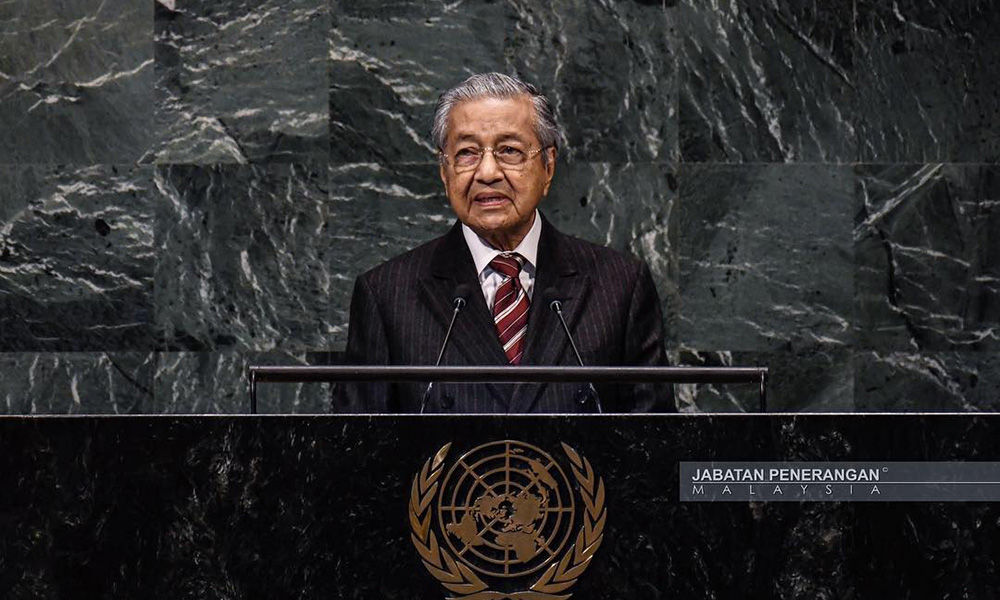
Just yesterday, Mahathir (photo) hinted that Malaysia is looking into following Japan’s constitution which prevents the country from entering armed conflicts.
Thus Malaysia has pulled out of the conflict in Yemen – which has now degenerated into a complex humanitarian emergency, where tens of thousands of people have died from dysentery, lack of clean water and medical services. The numbers are greater than the combatants who actually perished armed conflict between the Houthi rebels and Saudi-led coalition.
Preventive diplomacy
Since Malaysia has always had a policy of "active" neutrality starting from the 1960s – a concept enshrined by Malaysia's participation in Non-Aligned Movement (NAM), further reinforced by the late Ghazali Shafie's concept of the Zone of Peace, Freedom and Neutrality (Zopfan) – our foreign policy has always focused on maintaining peace.
In the same month that Mohamad participated in the Shangri-La Dialogue, he hosted the Malaysia-Australia High Level Committee on Defence Cooperation in Butterworth. Australia is one of the members of the Five Power Defence Arrangements (FPDA) which Malaysian navy and armed forces still treasure deeply.
The next month in July, Mohamad visited the Farnborough Airshow in the UK, an event which typically hosts the amazing acrobatic Red Arrows. The UK is also a member of the FPDA.
GIven the insistence of the UK of remaining a vital and active player in maintaining freedom of navigation in South China Sea, Mohamad’s trip reassured them that their role in FPDA is deeply cherished.
In July 2018, the minister also made it a point to visit Bangladesh in light of the country’s growing tensions with Myanmar over the influx and mistreatment of Rohingya Muslims, which neither side seems to acknowledge is facing one of the worst humanitarian disasters.
With his trip to Cox’s Bazar, Mohamad is engaging in preventive diplomacy. He is trying to prevent the issue from further enlarging into an explosive issue that can drag Asean and South Asia into a structural conflict over the millions of Rohingya facing near-certain death.
Indeed, having strengthened all the necessary pillars in FPDA – by visiting Singapore, hosting the Australia and later the New Zealand delegation, in addition his UK trip – it seems Mohamad is emphasising the backbone of Malaysian defence diplomacy through FDPA.
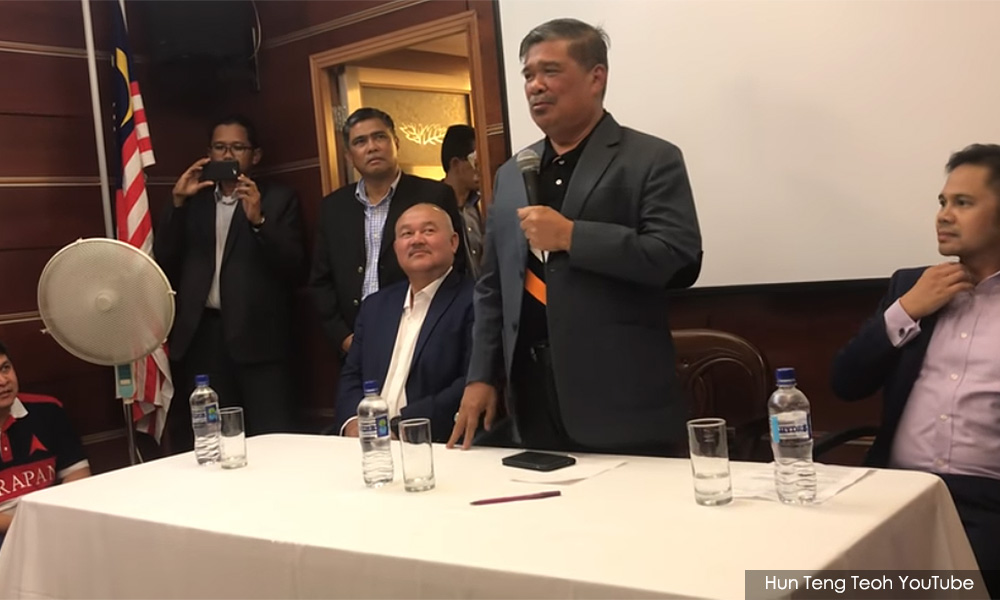
This is why the trip to Bangladesh happened in August. In that month, Mohamad strengthened the confidence of the Malaysian peacekeepers in Lebanon, and sent a powerful signal to Myanmar that peace and freedom to all must be of paramount importance.
The following month, Mohamad went one step further: he visited the Asean Defence Ministers' Meeting-Plus with Japan. Japan is critical precisely because the country in 1994, under then foreign minister Taro Nakayama, created the Asean Regional Forum from the Asean Post Ministerial Conference.
In this particular trip to Nagoya, Mohamad signed an MOU with Japan to enhance mutual humanitarian assistance, civil military cooperation, in addition to strengthening the Malaysian peacekeeping operations in Port Dickson, which has been ongoing since 2005.
It should be added Japan immediately pledged a donation of USD1 million to reinforce peacekeeping facilities. These are all major achievements, as they reflect a strategic continuation of the dialogue and method of cooperation with Japan. How? It was Nakayama who suggested a multilateral forum where all countries in Southeast Asia and Northeast Asia could hold annual defence dialogues.
By 2005, the Asean Defence Ministers' Meeting-Plus took place in Kuala Lumpur, with a goal of consolidating the defence diplomacy of Asean member states and expanding the ambit of Asean's defence collaboration with external dialogue partners, including China, Japan, South Korea, the United States.
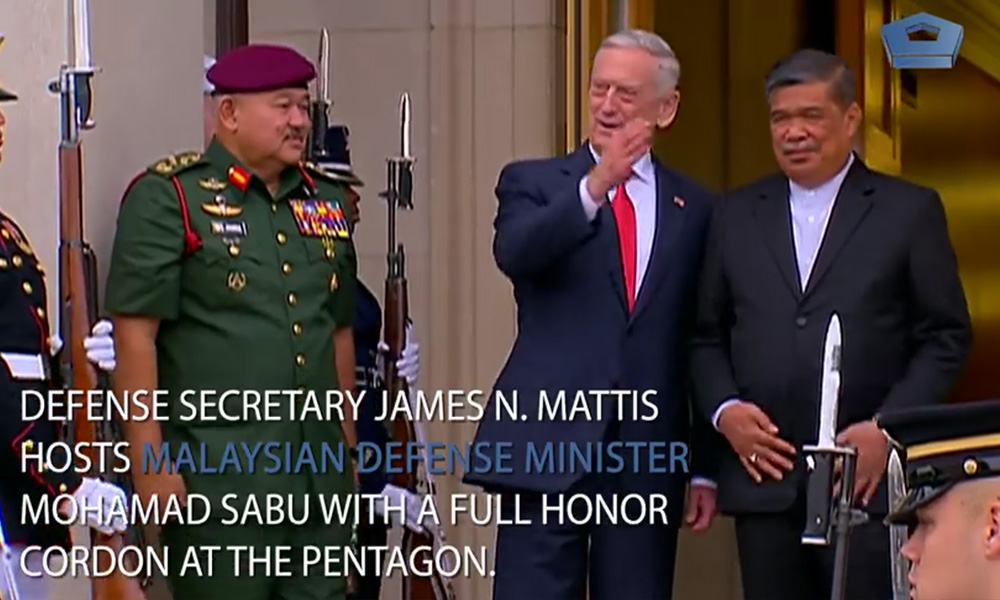
If one observes all of Mohamad’s frenzied activities and trips, including the current one to the US, it is clear that he knows how intricate the defence portfolio has been since the 1960s.
This is why every single trip can be related to either Asean, FPDA, Asean Defence Ministers' Meeting-Plus, and the UN.
The '18-wheeler' strategy
I would term this Mohamad’s 18-wheeler defence diplomacy, the metaphorical large truck that he drives taking the previous cargo forward. The precious cargo is of course Malaysian sovereignty, regional equilibrium, and international peace.
And, this is all done in a way to further the parameters of the ‘Mahathir doctrine’, where battle ships should not linger in any parts of the South China Sea unless the goal is to jointly address the effects of piracy.
In this sense, Mohamad’s upcoming meetings with his counterparts in Manila and Malawi deserves more commendations.
Mohamad is trying to stabilise one of the world's oldest conflicts that go all the way back to 16th century, when the Spanish conquistadors first arrived to upend the religious and racial balance of Mindanao and Manila.
One should remember that Mohamad is a humanitarian at heart. He knows that Philippines and Mindanao Autonomous Region are constantly hammered by natural disasters.
Unless Malaysia and Philippines can work together, complex humanitarian emergencies can lead to endemic poverty, and hopelessness, all of which are fuel of terrorism and kidnap for ransom groups, that can spill over into Sabah and Sarawak.
So to his critics in Umno and PAS who said that Mohamad hasn't been doing his homework, they must realise that it is they who have been sleeping on the job as the opposition.
PHAR KIM BENG was a multiple award-winning head teaching fellow on China and the Cultural Revolution in Harvard University.
The views expressed here are those of the author/contributor and do not necessarily represent the views of Malaysiakini.


Are you sure you want to delete this comment?
This action cannot be undone.