




Of Science, God and Santa Claus
A snippet of news report on CNN caught my attention. The board of a small school in the US had rejected an attempt by a parent to introduce the idea of 'intelligent design' into the school curriculum.
The idea is nothing new. I learnt it in my catechism class in a catholic secondary school in Kuching. Much later on, poring through ancient texts in my philosophy study in the frozen landscape of Winnipeg in Canada, I discovered the argument in the theological writing of St. Thomas Aquinas. In his monumental work Summa Contra Gentiles , it is given as one of the five proofs for the existence of God.
To put it crudely, if you look at the world around us, you must be amazed at the order and harmony that makes the universe work so well. You can only conclude that there must be a perfect intelligent Supreme Being responsible for its creation. Therefore, God exists.
A snippet of news report on CNN caught my attention. The board of a small school in the US had rejected an attempt by a parent to introduce the idea of 'intelligent design' into the school curriculum.
The idea is nothing new. I learnt it in my catechism class in a catholic secondary school in Kuching. Much later on, poring through ancient texts in my philosophy study in the frozen landscape of Winnipeg in Canada, I discovered the argument in the theological writing of St. Thomas Aquinas. In his monumental work Summa Contra Gentiles , it is given as one of the five proofs for the existence of God.
To put it crudely, if you look at the world around us, you must be amazed at the order and harmony that makes the universe work so well. You can only conclude that there must be a perfect intelligent Supreme Being responsible for its creation. Therefore, God exists.
An alternative version runs on a similar vein. If you find a garden in the middle of a wild jungle, you are left with the only conclusion that there is a gardener somewhere. Or, if you come across a clock there, you would know there is a clock maker. And so on.
It seems like a pretty harmless bit of information. One would think that school children in the US ought to know something that is as basic to their civilisation as the ancient proof for the existence of God, just as they ought to learn that Mount Everest is the highest peak in the world.
There is a difference of course.That Mount Everest is the highest peak in the world is a fact, whereas it is debatable that God's existence is a fact. But surely it is a fact that Christians believe in the existence of an Almighty God. Surely it is a good thing for children of all faiths to learn about how Christians try to prove God's existence, without having to be convinced by such proofs and end up getting converted to the Christian faith?
I am being unreasonable in asking these rhetorical questions. My idea of education will never work out in "real life" (as if there is an unreal life!) Can you imagine what would happen if, in Malaysia, the school authorities should decide that Islamic theology be taught to all school children?
In Malaysia, Islam is the official religion, whatever "official" means. Here, we have our usual problems with multi-religious co-existence. Last year, during the Christmas season, a little storm brewed over the banning of Christmas carols that contain the name Jesus in them, because the King was present at the function.
Politics and religion
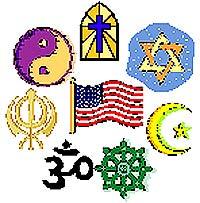 In the United States, things are very different. There, their constitution has proclaimed the country to be a secular state, and freedom of religion seems to include also the freedom not to believe in any religion. Hence, the inclusion of religious symbols and teaching of theological doctrines in schools may be construed as an infringement of the citizen's freedom of religious belief or non-belief.
It has not always been so. Decades ago, Darwin's Theory of Evolution was banned from biology classes in certain schools in Tennessee. A teacher, John T Scopes ignored the ban, and was disciplined. He went to court in the famous 'monkey trial' and defended by the famous lawyer Clarence Darrow - won his case.
In short, the separation of politics from religion in the US is not as clear cut as people like to think. The ethos of the kind of religious piety that drove the founding fathers to the New World a few centuries ago has persisted. Many commentators on American politics have since observed that president Bush' speeches are packed with rhetoric that is drawn from the language of Christian morality.
Obviously, the tension between secular aspirations and religious impulse is very much alive to-day in American public life, colouring debate on many of their political and social issues.
Why should the religious dispute in a country half way round the world interest us?
Well, this is Christmas after all. What I really want to do is to comment on religion in Malaysia. But I am a coward. I know Malaysians are very sensitive about their faith, and they get offended easily. So it is safer to talk about other people's religious sentiments. Except for those who choose to eat hot chillies, my adverse comments would not cause anybody any discomfort.
In a democracy like America, everybody takes a stand on an issue. Then they vote on it. I am not so much interested in the stand they take on any public issue, as the presuppositions behind their belief system. One can expect that many of those unexamined presuppositions are shared by more than a few Malaysians.
When interviewed by CNN, the parent in the American school mentioned at the beginning explained why he objected to the teaching of the theory of divine grand design of the universe. "It is simply not science," he said.
That is a sobering thought.Television interview gives you one-dimensional pictures without context, so one can only speculate. That particular parent probably did not mean that only science should be taught to school children. Perhaps he meant that religious accounts of the origin of the universe and of man are not scientific, and therefore, not true.
This is a common sentiment, even among many of my educated Malaysian friends. To them, many religious beliefs and practices are near superstitions. The various stories of creation are myths, nothing more. Myths, they say, are creations of human imagination, to explain things that they do not understand. Myths are not facts, just as Santa Claus is not a factual entity.
In contrast, science is the study of what philosopher Alfred North Whitehead calls the "stubborn facts" of the natural world. Unlike myths, facts cannot be denied. Therefore, science is the paradigm of knowledge, of the most reliable, objective, and useful kind. Science is "real" knowledge. Anything that is not scientific is not true, and has less value.
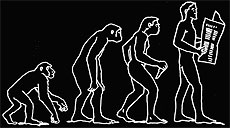
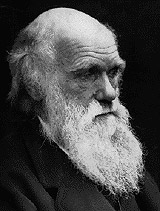 In astrophysics and cosmology, it is now widely accepted that the universe began with a "Big Bang", without any divine intervention. In the biological sciences, it is now accepted as gospel truth that according to that great prophet Charles Darwin human beings and the other great apes share the same ancestor.
This optimistic belief in the credibility and potency of science is of course the heritage of the European Enlightenment, which has led to the decline (some would call it demise) of the influence of the Church in the West. It has now spread all over the world through globalised modernity.
The trouble with this view is that nobody really knows what science is, exactly. Scientists doing scientific research are too busy to care, and the world is too mesmerised by their achievement to question what they are doing.
Conceptual scheme
The late Harvard philosopher of science, W V O Quine, was one of the few thinkers who had the audacity to declare that science, as a "conceptual scheme", is just another body of myths. It is no more factual than the Greek myths, the Christian or Islamic myths. The only reason why he prefers scientific myths over Greek or other religious myths in some aspect of our daily life is because they are useful.
In short, the Big Bang Theory and the Theory of Evolution are hypothesis and postulates about our universe, which may or may not be completely true. (We really have yet to clarify what we mean by "theory" and "true".) Scientific theories simply seek to explain our life experiences in a way that is different from religious myths.
Why, I can even try to arbitrate between the seemly contradictory claims put forth by scientific and religious accounts, to demonstrate that they need not be incompatible with each other, that they in fact complement each other. But that would probably satisfy nobody and offend everybody.
 Once people are fixated on their belief in the name of faith and salvation, in both religious and scientific circles, they would not tolerate any perceived distortion of their orthodox doctrines.
On the other side of the coin, there is this American big-time evangelical charismatic preacher who was also interviewed by the CNN. Obviously appalled by the godlessness of those parents who refuse to have the intelligent design theory taught to their kids, he warned them not to pray for help when some misfortune should strike them. God would forsake them, he said, as if he is in constant touch with his God through e-mail.
Actually, I begun this article to comment on this preacher and his strange concept of God. Now that I have run out of space as usual, it suffices to conclude that preachers like that repel people away from religiosity.
Meanwhile, the fun-loving people of Kuala Lumpur will have their festive holiday season, eating, drinking and merry-making as if having a good time is the good news brought by the birth of Christ.
Allow me this blasphemous thought. If Jesus was to be born again before his second coming, would he be crucified once again?
Merry Christmas and a Happy New Year!


