




Slavery by any other name
'We are well to cook (sic) we are good to keep your house clean (sic) ... cleaning sofa as well ... we prepare a good dinner every night ...keep your bedroom neat & tidy....we also professional to iron your clothes (sic) ..."
Certainly does not sound like a normal eight-hour job. The above are rumblings on a Flash-enabled website of a maid agency based in Kuala Lumpur, which includes various details of their 'products' - height and weight, marital status, husband's age, educational background (the lower the better) and smiling photographs of them in their aprons. They are classified into various stocks: Single, Married, Divorced/Separated, Christian. In small font, it even says: 'There is no additional fee for Christian maids. Call us up now to enjoy this special deal!'
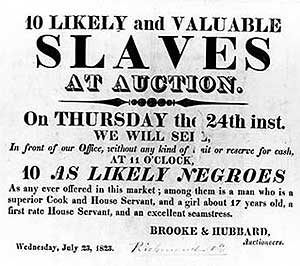
Outside cyberspace, an advertisement in The Star newspaper screams: 'Value Price!!! Special promotion!' Reminds me of the much-loved P Ramlee comedy, 'Tiga Abdul', where a pair of greedy brothers were finally sold off in a 'lelong' (auction). But why not, after all, this agency even offers a one-year warranty for replacement just in case their 'product' 'runs away'.
Welcome to 21st century Malaysia, fourteen years away from the doorstep of the First World, and taking along with her one of the evils of the First World's engine of growth - slavery. Call it whatever you like, the fact is that slavery still exists in various forms in modern society. Like in the United Arab Emirates where millions of migrant workers are treated as second class non- citizens, or in Indonesia where sweatshops prepare goods to be sold in pound sterling at Marks & Spencer or in our own country where even the average income earner family household can be spotted with a maid in the backseat of a second-hand Proton Wira.
'We are well to cook (sic) we are good to keep your house clean (sic) ... cleaning sofa as well ... we prepare a good dinner every night ...keep your bedroom neat & tidy....we also professional to iron your clothes (sic) ..."
Certainly does not sound like a normal eight-hour job. The above are rumblings on a Flash-enabled website of a maid agency based in Kuala Lumpur, which includes various details of their 'products' - height and weight, marital status, husband's age, educational background (the lower the better) and smiling photographs of them in their aprons. They are classified into various stocks: Single, Married, Divorced/Separated, Christian. In small font, it even says: 'There is no additional fee for Christian maids. Call us up now to enjoy this special deal!'
Outside cyberspace, an advertisement in The Star newspaper screams: 'Value Price!!! Special promotion!' Reminds me of the much-loved P Ramlee comedy, 'Tiga Abdul', where a pair of greedy brothers were finally sold off in a 'lelong' (auction). But why not, after all, this agency even offers a one-year warranty for replacement just in case their 'product' 'runs away'.
Welcome to 21st century Malaysia, fourteen years away from the doorstep of the First World, and taking along with her one of the evils of the First World's engine of growth - slavery. Call it whatever you like, the fact is that slavery still exists in various forms in modern society. Like in the United Arab Emirates where millions of migrant workers are treated as second class non- citizens, or in Indonesia where sweatshops prepare goods to be sold in pound sterling at Marks & Spencer or in our own country where even the average income earner family household can be spotted with a maid in the backseat of a second-hand Proton Wira.
Having a maid has ceased to be a status symbol of the rich. Today in Malaysia, a maid can be 'acquired' for 24-hours a day for one's home for as little as RM370 a month (in the case of Indonesian maids). This makes the demand for maids not subject to social and financial status, and therefore contributing to a mushrooming of maid agencies with all the abuses that come with them.
Today, it is not an uncommon sight to see a scrawny, teenage-looking maid tending the gardens of Malaysian homes, carrying shopping bags or the small child of a family out on a weekend trip, or even washing cars almost every morning before her employer leaves for work. If the employer has an incapacitated elderly in the house, the maid would do all the dirty work. All this thanks to the training she underwent from her agent, which among others, has taught her to bow respectfully when walking by in front of her 'majikan'. She also feels obliged to get up early before the break of dawn to prepare breakfast or mop the house. Because she is confined to the home, it comes as no surprise that a maid normally works sixteen to eighteen hours a day.
Women are 'advertised'
The situation does not raise an eyebrow except for a concerned few, thanks to the indirect indoctrination that a 'maid' is someone who is expected to serve another, not one who does work to be compensated with a salary, or be treated as part of the family. We now see an increasing acceptance of servant-master relationship among Malaysians.
The prevalence of such a psyche is no surprise when members of a society are sensitised into thinking that these ladies who help their households are commodities to be traded, bought for a fee from agents, and made to work for few months without wages in order to repay the agents' and employers' cost of bringing them in. Then, young Malaysians, themselves nursed by these women, grow up accepting the normality of such a phenomenon where women are 'advertised' on brochures and in newspapers and are brought home by their parents to work at all sorts of domestic chores.
The presence, and demand for, foreign maids in Malaysia has given birth to an industry dealing in 'servants' and 'maids', not unlike the slave trade of past centuries. According to statistics, Indonesian women in Malaysia, who mostly work as domestic helpers, now number more than 300,000, or 70 per cent of foreign maids in the country.
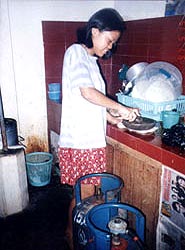 They became subject of a memorandum signed in Jakarta on May 13 by leaders of Indonesia and Malaysia. This memorandum was ostensibly to protect the hundred of thousands of Indonesian women working as domestic helpers, on in the current parlance, 'maids', in Malaysia.
But what did the memorandum, hailed by officials as a step forward towards protecting maids who are the most vulnerable migrant workers in the country, achieve? For a start, it fails to address the basic inhuman premise characterising the trade itself - transit, treatment and marketing of these young ladies.
They are still not entitled to full rights under the country's Employment Act, and no constructive change is being done to address the abuses of these women from the stage of trafficking right through to their welfare when they are held at agencies' premises and then in the houses where they work where they are likely to be shut out from outsiders, in the private domain of their new 'madams' or 'tuan majikan'.
The case of domestic helpers has largely been ignored. Their predicament is different from the normal employee-employer relationship, and hidden from public eye due to the nature of their workplace. Their sad plight begins the moment middlemen and employment agents start to recruit them in the remote and poor villages of Indonesia right to their time of their return, many times after unpleasant, or even traumatic, experiences.
In July 2004, Human Rights Watch issued a damning 110-page report on domestic workers, documenting the abuse and exploitation that Indonesian female domestic workers experience at each step of the employment process. HRW's Women's Rights Division director, LaShawn Jefferson, could not have put it better, saying that Indonesian domestic workers were treated like 'second-class humans'.
Local human rights group as well as politicians are partly guilty for the lack of publicity with regards to the rights for migrants, now probably numbering two million, including those who do not carry documents and are thus 'illegal'. Public apathy to such a blatant abuse of human dignity renders such a cause to be politically not trendy, especially for the many foreign-funded NGOs which prefer to champion issues such as the need to maintain a 'secular' federal constitution, the right to kiss in public and other agendas which do not achieve anything other than score points in a cycle of theological and political acrobatics.
Having said that, not all hope is not lost. Tenaganita is one organisation that puts in enormous efforts to highlight abuses of migrant workers, especially females.
Xenophobic voices
As a Muslim living in a country calling itself a model Muslim nation, it is sickening to see such abuses blatantly taking place. As far as Muslim maids, who are the majority, are concerned, there is no law strictly spelling out their rights in the event they are employed in a non-Muslim home. Many cases have been reported of Muslim maids being forced to handle pork and dogs, or prevented from performing daily prayers.
That, however, does not mean that she is usually secure in a Muslim home as there have been countless cases of maid abuse, whether emotionally, physically or financially, that involve Muslim culprits. Muslim-based NGOs as well as the self-proclaimed 'Islamist' politicians and muftis, for that matter, have been guilty of shying away from highlighting, let alone championing, the rights of their abused sisters, preferring instead, like their equally self-proclaimed 'secular' counterparts, to harp on issues bordering on the peripheral, reactionary and rhetorical.
 Filipino maids can now depend on their government, thanks to pressure from Filipino lobby groups and their decades-old experience in dealing with the abuse of their citizens in the Middle East. But who does the Indonesian maid turn to?
She is deliberately not informed of her rights by her recruitment agents, and coming from an utterly poor family and in many cases without any formal education, she is usually reluctant to make any complaint that could complicate the problems she faces in a foreign land.
There are various degrees of abuses. Those 'majikan' who are in the 'kind-hearted' group would usually deny her freedom of movement and to socialise, often telling her politely so. Others may inflict mental and physical abuse, torture, malnutrition and starvation, or even commit rape. When the abuse case is out in the open, it is usually the stage when the maid's life has already been destroyed.
Even then, voices of xenophobia, whether coming from the authorities or independent writers some whose parents and grandparents were once 'illegal immigrants', would chip in citing isolated cases of maids who abuse their employers or who commit crimes besides whining about how their 'healthy lifestyle' is now threatened by diseases brought by migrants.
To give it the maximum benefit of the doubt, the latest memorandum signed on May 13 may be the first step towards eliminating abuse of maids. Employers are required to sign personal contracts with their maids stipulating the wages agreed upon by the two parties.
However, the memorandum does not recognise the minimum wage of RM500 and fails to address other inhuman issues such as the non-payment of salaries for maids during their first four months. Their salaries will now still be deducted by three-quarters, this sum going to their agents to cover the cost of bringing them in. Such a medieval practice of making someone repay their debt with their sweat is shockingly not eliminated.
An artificial result?
That aside, what is more important is the task of effecting a paradigm shift in the general perception of domestic workers as a commodity and 'servant'. This is going to be a herculean task. All religions, until they became distorted by man's whims, view with contempt the unjust treatment of fellow humans. As if to symbolise God's contempt for the perennial evil of slavery, Prophet Abraham the grandfather of the Muslim, Christian and Jewish faiths was married to Hagar, a black Ethiopian slave lady, before his prophethood began in earnest.
Thousands of years later, Prophet Muhammad, upon whom be peace, was born in the midst of a society which had looked upon slavery as normal. He was sent with the message of tawhid that no man shall serve another except to God a task he had to undertake in the face of powerful slave masters among the Arabs.
Clearly, 1,400 years after that, such a paradigm shift is still wanting. Slavery stubbornly lingers in modern society, whether cleverly disguised as is the case of the outsourcing of jobs by Western multinationals to poor countries, or in the open such as in the treatment of millions of Indian subcontinent workers in the oil-rich Gulf states.
 Like many developing countries inching out of its Third World hole, Malaysia has a booming economy. The nature of the impact of this boom is not far off from that of the West's industrialisation era when more job opportunities meant more women being forced to leave their houses, obliged in most cases to work eight hours a day away from home by virtue of their high school and tertiary education.
This means their children and day-to-day maintenance of the household would now have to be under the care of maids, fueling the influx of thousands of foreign women - mothers, teens, daughters and single women who leave their families thousands of miles away to work and bring home much needed cash.
Changing the slave-master psyche is a task complicated by the need for such workers amid rapid economic growth and a situation where thousands of jobs have emerged to salivate the 'jobless' educated housewives and transform them into 'working ladies'.
The question remains whether the need for domestic workers is an artificial result of a spoilt society, unable to appreciate that all human beings are created by God as free and equal no matter what terminologies are used by slave traders to disguise their business in the modern age.
Read again the local newspaper advertisements for 'foreign maids'. Few years from now, will we, like a civilised nation, look back at them and react with horror at such antique documents?
As Harriet Jacob, a Philadelphia slave, concluded in her 1861 slave narrative, Incidents in the Life of a Slave Girl : 'The bill of sale! Those words struck me like a blow. So I was sold at last! A human being sold in the free city of New York! The bill of sale is on record, and future generations will learn from it that women were articles of traffic in New York, late in the nineteenth century of the Christian religion. It may hereafter prove a useful document to antiquaries, who are seeking to measure the progress of civilization in the United States."
ABDAR RAHMAN KOYA, in his early 30s, is an editor at a local publication firm and writes occasionally for a London-based Muslim political newsmagazine.


Report this comment
Are you sure you want to delete this comment?
This action cannot be undone.