




Neglecting our rich heritage
When diving off the Terengganu coast a few years back, I was saddened to see our beautiful coral reefs destroyed by careless anchoring and reckless pollution. While this devastation of our reefs and other invaluable national heritage is obvious, the non-recording of our history is equally a loss that is both irretrievable and immeasurable.
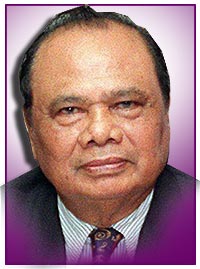
I felt this deeply when Tun Ismail Ali died a few years ago. I did not know this distinguished Malaysian except that he was the first Malay Queen's scholar, an eminent banker, and a dedicated public servant. He gave much to the nation, but we hardly knew him, except through few mushy and not so eloquent obituaries. The man did not leave his memoirs, and our historians and intellectuals have not deemed that his considerable contributions merit proper recognition.
When diving off the Terengganu coast a few years back, I was saddened to see our beautiful coral reefs destroyed by careless anchoring and reckless pollution. While this devastation of our reefs and other invaluable national heritage is obvious, the non-recording of our history is equally a loss that is both irretrievable and immeasurable.
I felt this deeply when Tun Ismail Ali died a few years ago. I did not know this distinguished Malaysian except that he was the first Malay Queen's scholar, an eminent banker, and a dedicated public servant. He gave much to the nation, but we hardly knew him, except through few mushy and not so eloquent obituaries. The man did not leave his memoirs, and our historians and intellectuals have not deemed that his considerable contributions merit proper recognition.
 Many years ago I read
Looking Back
, a collection of essays by our first prime minister, Tunku Abdul Rahman. Here was a leader who brought our nation to independence peacefully, through shrewd negotiation and skillful diplomacy. It was an achievement sufficiently rare and unique; there were no lives lost through armed confrontations or glorified wars of independence. A truly grateful nation duly anointed him Bapak Malaysia (Father of Malaysia).
Many years ago I read
Looking Back
, a collection of essays by our first prime minister, Tunku Abdul Rahman. Here was a leader who brought our nation to independence peacefully, through shrewd negotiation and skillful diplomacy. It was an achievement sufficiently rare and unique; there were no lives lost through armed confrontations or glorified wars of independence. A truly grateful nation duly anointed him Bapak Malaysia (Father of Malaysia).
A few years later following the 1969 race riots, the nation quickly soured on him. He was literally hounded out of office, and then ignominiously ignored. In Looking Back , the old man bitterly lamented that even the country's history books did not mention his name in retracing the nation's struggle for independence. He ventured whether the many honours heaped upon him earlier had not been a cruel joke.
When the Tunku died, a significant part of our history went with him, never to be recovered. We will never know, for example, what prompted him to accept the invitation to head Umno when its first leader, Onn Jaafar, sulked and abandoned it. Or how were the British leaders Anthony Eden and Harold MacMillan in the pivotal negotiations for independence?
We now know how Lee Kuan Yew feels about Tunku, but what was Tunku's take on Lee? Tunku must have intuitively sensed something about Lee to decide that Malaysia was better off without him. What went through Tunku's mind when his beloved nation went on wild rampages that May of 69? What were his dreams for the nation? These and a host of other questions will now forever remain unanswered.
Seize opportunity
Tunku did leave some written records of his reflections. On his retirement, The Star was kind enough to hire him as a columnist. His columns were indeed very revealing. As expected, most were self-serving. Perhaps out of respect for the man or simply that the paper's editing standards were then non-existent, the essays were rambling and lacked discipline. Nonetheless they were useful historical documents.
 As for the Tunku's voluminous personal papers, their whereabouts are not known. Our National Archives, universities, and other official custodians are curiously not interested in finding out, much less try to acquire them.
Tun Ghafar Baba, another prominent player, died recently. Again, no one sought to document his views when he was alive, apart from a few trashy books.
We are still fortunate to have a few of the original participants in the birth of our nation still alive. Khir Johari is one. He was Tunku's stalwart and served in his first cabinet. Our historians and journalists should seize this opportunity while we still have him. I am no fan of his, but he was a participant in many of the seminal events of our nation's history.
I remember Khir Johari as minister of education visiting my school in the 1950s. Even then, I was unimpressed with him. Compared to my Oxford-trained headmaster, Khir was clearly out of the league. I shuddered to think that he was in charge of such an important portfolio. But he was, and we should record his impressions.
 It is unfortunate that few of our leaders saw it fit to write and document their experiences. Even if they were too busy, they should have at least authorised someone to write their biographies, or simply hire talented ghost writers.
The distinguished legal scholar and public servant Ahmad Ibrahim too, died a few years ago. Although he had written extensively on scholarly legal issues, he did not see fit to pen his autobiography. The same could be said of Tun Suffian Hashim, another legal luminary.
Living heritage
The chronicles of these giants would inspire the younger set. At the very least, such accounts would help counter the ugly stereotype of Malay leadership and talent so shamelessly demonstrated by those currently in Umno and PAS.
In this regard, Tun Dr Mahathir Mohamad is a refreshing departure. Not only has he written many books, he is now busy compiling his memoirs. Mahathir is also the rare leader who writes his own speeches and books; he takes prides in his own authorship. His style is also uniquely his - blunt and to the point.
Our hot humid climate is not kind to documents and personal papers. They must be carefully and professionally handled to maintain their physical integrity. Papers, photographs and other documents can rot quickly in our climate, be eaten by moths or be bleached by the bright light. There are immense historical, esthetic and other values to these original artifacts. I would have loved to see the original scores of P Ramlee's many compositions.
 Just as important as maintaining the documents' physical integrity is respecting their confidentiality and owners' wishes. The late Tun Ismail Abdul Rahman, a long time member of the Tunku's cabinet, left his papers to an institution in Singapore. Apparently he did not trust Malaysian institutions to execute his instructions.
Many of these distinguished personalities have well educated children. It is surprising that few of them feel compelled to record their impressions of or pay tribute to their famous fathers and grandfathers. I would have loved to read what Hishamuddin Huseein Onn remembers of his famous father and grandfather, both great figures in our history. I am, of course, assuming that Hishamuddin can write.
The widows of Tun Razak and Hussein Onn are still alive. More than any other person, they have spent more time with these illustrious men than anyone else. These women are valuable resources; they are our national heritage in their own right. Yet, like the hitherto beautiful corral reefs off Pulau Perhentian, these two dignified daughters of Malaysia remain ignored and not valued.


