


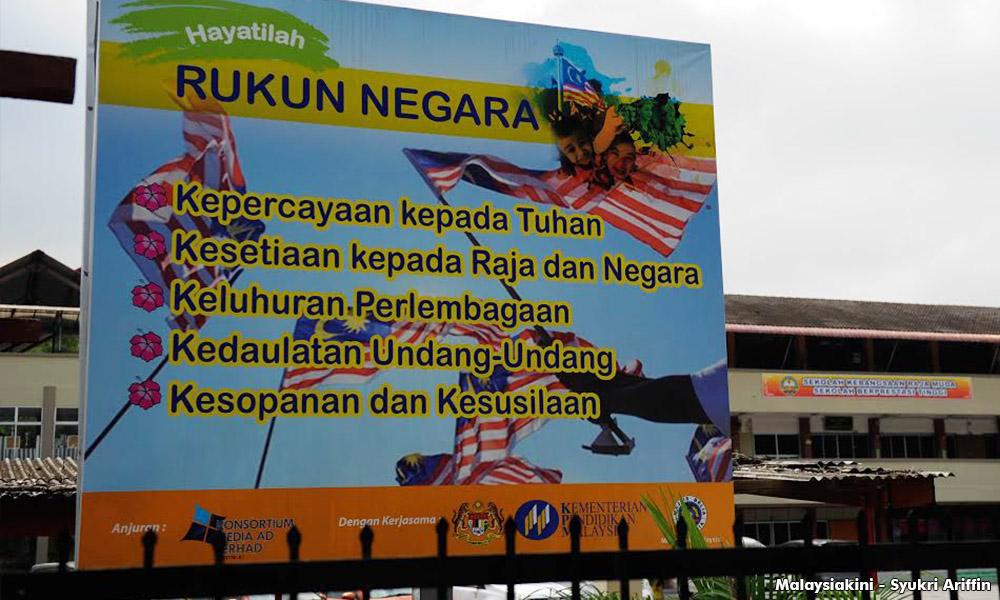

COMMENT | Rukun Negara in need of a democratic makeover
COMMENT | This year marks the 50th anniversary of the Rukun Negara, the supposed "National Principles" which was declared on Merdeka Day in 1970, in response to the traumatic May 13th racial riots that had taken place just a year before.
Prior to looking at these national principles to see how appropriate and inclusive they are, we must first consider the democratic legitimacy of the Rukun Negara’s existence.
The formulation of the Rukun Negara was from the effort of the National Consultative Council (Majlis Perundingan Negara or MAPEN) which incorporated a few non-Malay academics. It is important to bear in mind that the country at the time was under the emergency rule of the National Operations Council (NOC), announced on 15 May 1969 and it was not until 1971 that the Malaysian Parliament was restored.
The attempt at fostering harmony and unity among the various communities in Malaysia in 1970 was...
COMMENT | This year marks the 50th anniversary of the Rukun Negara, the supposed "National Principles" which was declared on Merdeka Day in 1970, in response to the traumatic May 13th racial riots that had taken place just a year before.
Prior to looking at these national principles to see how appropriate and inclusive they are, we must first consider the democratic legitimacy of the Rukun Negara’s existence.
The formulation of the Rukun Negara was from the effort of the National Consultative Council (Majlis Perundingan Negara or MAPEN) which incorporated a few non-Malay academics. It is important to bear in mind that the country at the time was under the emergency rule of the National Operations Council (NOC), announced on 15 May 1969 and it was not until 1971 that the Malaysian Parliament was restored.
The attempt at fostering harmony and unity among the various communities in Malaysia in 1970 was certainly laudable although there was no attempt at legitimizing these supposed “national principles” once parliament had been restored in 1971. In other words, rather surprisingly, the Rukun Negara has never been legislated by a democratically elected government.
Not only that, but the views of organisations from all ethnic communities were not sought nor taken into consideration at the time. Likewise, the ill-fated “National Cultural Policy” of 1971 which also incorporated a token number of non-Malay academics, has never been accepted by all ethnic communities in the country to the present day.
Why were these important steps not taken? The Rukun Negara has been taken for granted for too long. After 50 years, is it not a good time to first have a national debate to seek a consensus on what should constitute our national principles? And shouldn’t the representative organisations of all ethnic communities be given the opportunity to participate in the re-drafting of our “National Principles”?
Inclusivity is an intrinsic part of democracy
When we look at the first principle of the Rukun Negara itself - belief in God - we realise that this is not only contrary to the secular principle of the Malaysian Constitution, it also excludes all Malaysians who do not believe in a monotheistic God.
They include such beliefs as Buddhism, Hinduism, Taoism, ancestral worship, and animism which are practiced by many Malaysian Chinese and Indians, as well as most indigenous peoples.
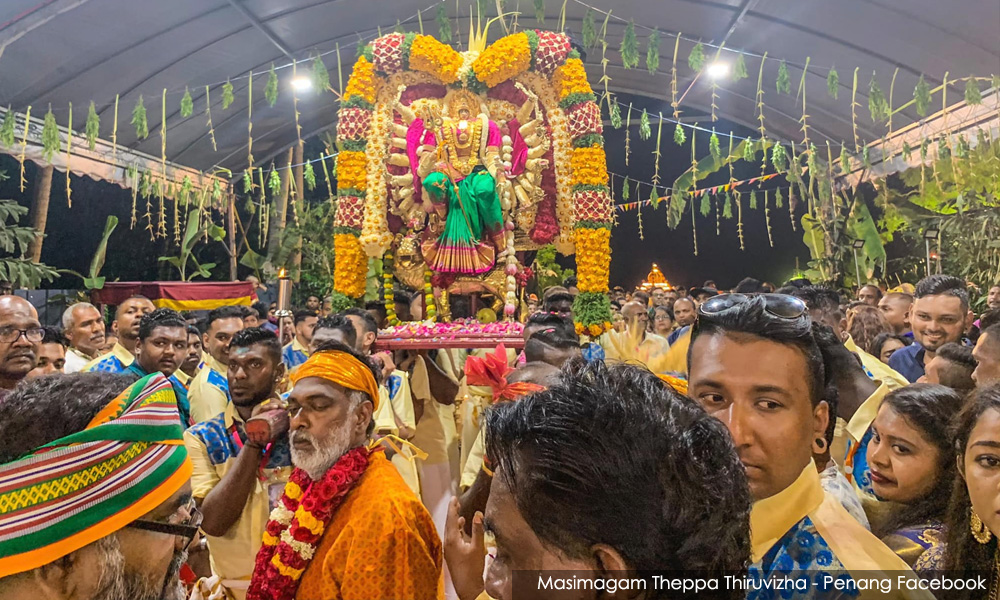
Yes, our spiritually diverse world has always included pantheists (who do not believe in a distinct anthropomorphic god) and atheists (who do not believe in any god or gods).
For thousands of years, humans viewed the Earth as a sacred place and divinity was seen to reside everywhere. Most indigenous peoples, including our Orang Asli, are animists who hold a holistic interdependent belief of living in harmony with the natural world in which spiritual essence exists in animals, plants, inanimate objects, and all phenomena.
With the wanton destruction of our environment and toxic industries which are often perpetrated by those who say they believe in God, who can say that the indigenous animistic perspective is backward?
As a pantheistic animist whose rituals include ancestor worship, bird watching, and gardening, I find this imposition of a monotheistic "Belief in God" not only reflective of a colonial attitude but also a jarring contradiction with our Federal Constitution.
The Malaysian Federal Constitution has inclusive principles
It matters little whether prime ministers who have little legal understanding opine that Malaysia is an Islamic state. The fact remains that “Malaysia’s greatest judicial figure” (in the words of the Malaysian Bar), the late Mohamed Suffian Hashim, pronounced that:
“Though Islam is the religion of the Federation, Article 11 provides that every person has the right to profess and practice his religion.” (“An introduction to the Constitution of Malaysia”, 1972:183)
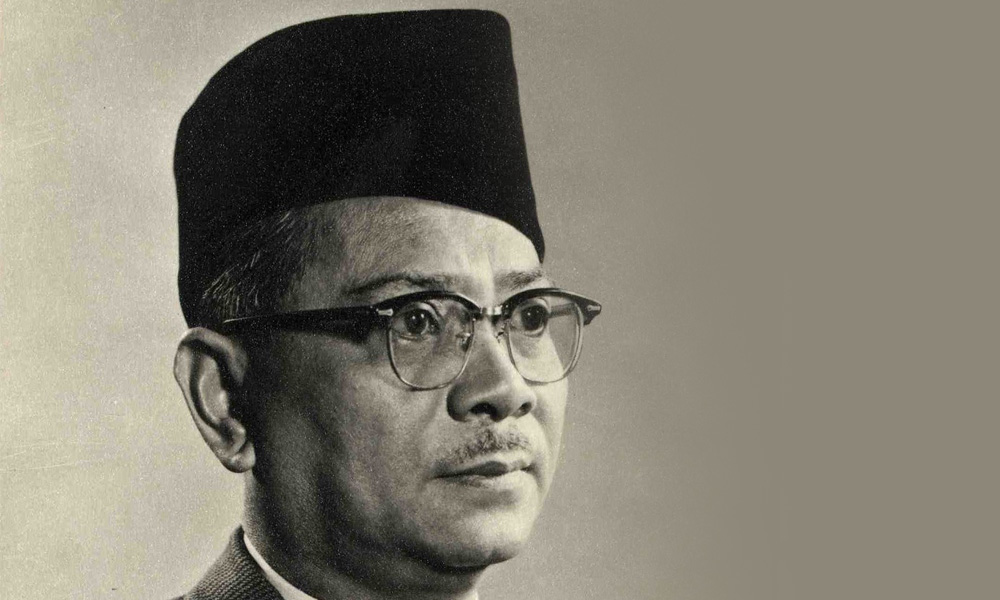
Malaysia’s first prime minister, Tunku Abdul Rahman (pic), was a lawyer who also went through the struggle for independence. His statement in Parliament on May 1, 1958, makes this point clear:
“I would like to make it clear that this country is not an Islamic state as it is generally understood; we merely provided that Islam shall be the official religion of the state.”
On numerous occasions in his later life, he reiterated the fact that Malaysia is a secular state. A secular state, as practiced across the globe as well as in the Malaysian Constitution, operates on the principle of inclusivity that grants religious freedom to all citizens.
"Belief in God" is not found in our secular Federal Constitution nor in the Constitution of any other nations which claim to be democratic. And surely any supposed “national principle” must be consistent with the spirit and letter of our Federal Constitution?
Religious diversity is our rich resource
The diversity of religions in the world has been a fact throughout the history of humankind and this diversity is a rich resource for a community rather than a source of contention.

Religious diversity is an important component of cultural diversity although sadly some people harbor the thought that their religion is superior to others and regard their religious chauvinism as a necessary component of religious commitment.
Religious diversity is a norm that can clearly enrich our understanding and appreciation of one another in our brief life on this planet. It made me smile when I saw this bumper sticker the other day:
"I've got nothing against God. It's his fan club I can't stand"
Thus, on this 50th anniversary of the Rukun Negara, I call on the government of the day to review our “national principles”, to encourage a national debate involving the representative organisations of all ethnic communities, so that we can arrive at a consensus that should then be legitimized through a parliamentary Act.
It is time to revisit our “national principles” in order to ensure that they are inclusive of all religions and belief systems; humanistic and based on science, reason and the rule of law; sensitive to preserving Malaysia's nature and also a regenerative economy; committed to equality, social justice, and democracy in order to make ours a better world for all Malaysians.
KUA KIA SOONG is Suaram adviser.
The views expressed here are those of the author/contributor and do not necessarily represent the views of Malaysiakini.


Are you sure you want to delete this comment?
This action cannot be undone.