
COMMENT | Stop giving discounts to offenders
COMMENT | When Reza Aziz was let off from criminal charges simply for returning the cash he squandered, I had one reaction – what a coincidence, we do this every year.
No, seriously. We do this every year by giving discounts for traffic and parking summonses by local councils and enforcement agencies.
Just yesterday, it was announced that the Road Transport Department (RTD) managed to collect RM500,000 from a single company – after applying a 70 percent discount. There are a few ways to view this news.
The bright side people would say we managed to collect RM500,000, and the pessimists would say we lost 70 percent...
COMMENT | When Reza Aziz was let off from criminal charges simply for returning the cash he squandered, I had one reaction – what a coincidence, we do this every year.
No, seriously. We do this every year by giving discounts for traffic and parking summonses by local councils and enforcement agencies.
Just yesterday, it was announced that the Road Transport Department (RTD) managed to collect RM500,000 from a single company – after applying a 70 percent discount. There are a few ways to view this news.
The bright side people would say we managed to collect RM500,000, and the pessimists would say we lost 70 percent or roughly RM1 million from being collected.
The Covid-19 pandemic suffering economist would be asking – we can still afford to give discounts when the government is looking to source further revenue?
Sarcastically, I guess we aren’t broke enough as a country even during this pandemic to stop giving discounts to criminals.
And that’s what we need to stop – leakages in the form of whitening criminal activity such as breaking traffic laws and not paying large fines.
In fact, the RTD, along with the police and the local councils should have implemented a tiered system in which summonses cost less if people pay them early. For example – paying immediately warrants a 25 percent reduction, whereas the price increases 25 percent every week for three months before triggering a red alert or the cars to be clamped wherever found.
For those who don’t pay at all, perhaps it is time to find them and clamp their offending cars until they pay in full with an additional penalty for making law enforcement having to chase them down in the first place.
If it can work for credit cards and car loans, it should work for summonses as well.
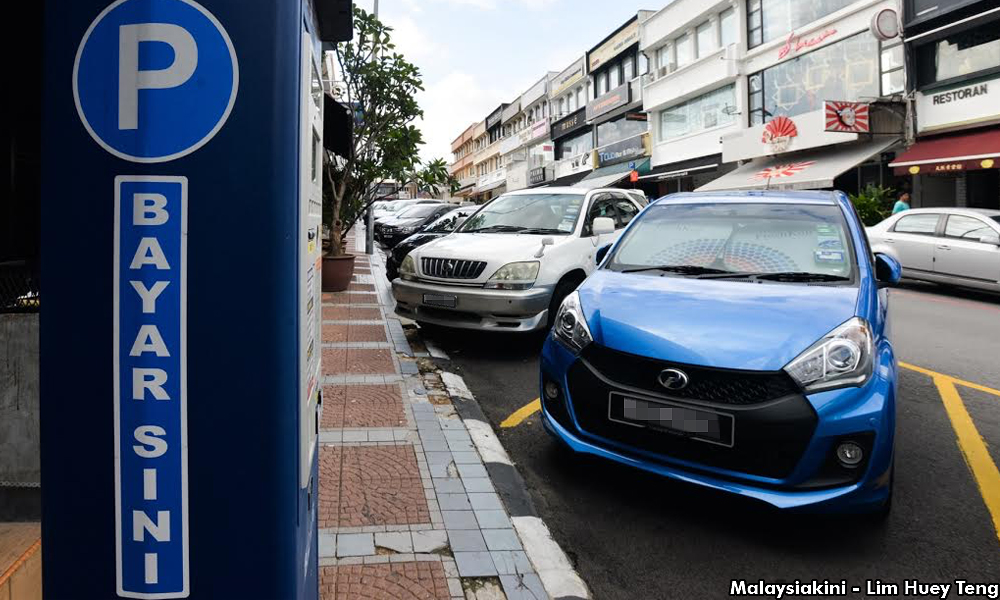
Some have gone for the “chicken and egg” argument – that the reason parking offences happen is because machines have broken down, or there is no parking at the location they want to go to.
This is pure fiction – the reason is that some people refuse to walk long distances, be it to their car or to another auto parking machine located on the street if one of them is not working.
And the reason for this refusal is because, in the back of their heads, they believe getting a ticket is no big deal, it can be settled at a discount, and it won’t have large repercussions either on their licence or their ability to just continue driving like nothing happened. This is what we need to stop.
How technology can play a role
Of course, this does not mean we need an increase in manpower, roadblocks or even time spent by the three enforcement bodies to implement a system that is responsible. Instead, it needs three things.
The first, it would require transparency and database sharing between the local council, the police and the RTD. This would allow all three to inform drivers that they have reached a certain number of summonses by all three enforcement agencies to warrant clamping their car.
There may be legal provisions involved due to the involvement of agencies under two different ministries and thus, if amendments to the law are required, it is up to lawmakers to do so where necessary.
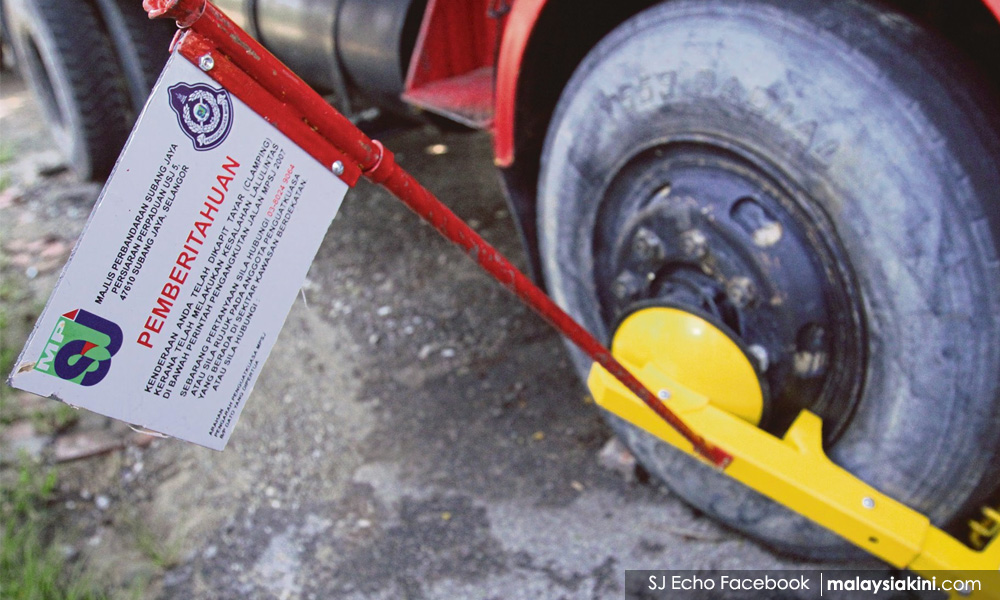
The second is clamps – yes, car clamps. There is no need for towing, or even visiting homes to arrest drivers, or even roadblocks slowing down traffic every night or even midday.
With all three agencies and a centralised database to check for offenders, all three agencies just need to patrol their assigned areas, spot the cars, and clamp the cars wherever they are found. And then, just drive away.
Be sure that there is a centralised payment system, which is accessible by a QR code on the clamp, and you will also save the headache and heartache of having some irate person calling up the helpline.
The third is the hardest – none of the agencies can accept cash payments on-site, must implement the system without bias, and must not amend the database to remove their “friends” from the list. The hardest part of any law enforcement system is to implement integrity and to withstand corruption.
There will be plenty of people with or without titles calling in favours, but agencies must stop accepting these calls and push on for equal enforcement on everyone. Not doing so will taint the work of all agencies, increase scepticism in law enforcement, and will pretty much end up badly for everyone.
This is not something that can be implemented with a carrot or a stick. Increasing wages of enforcement agency officers will work for a while, but there is no way for the civil service pay scale to cope with the same ladder as the private sector without taking into account the allowances and pensions involved.
The plan above is sound, and it can be implemented without much change as well as generate a large amount of government revenue for federal and local authorities.
It will allow the cohesion of the law enforcement system until automation is implemented, at which point all three agencies can breathe a sigh of relief and move on to other duties.
HAFIDZ BAHAROM is the former communications director of the Malay Economic Action Council (MTEM).
The views expressed here are those of the author/contributor and do not necessarily represent the views of Malaysiakini.