




G7, G7 + 1, G8, or just The G?
When the then G7 countries welcomed Russia into the rich club, their paramount concerns included containing the conservative forces within the Kremlin who were constantly on a lookout to sabotage West-friendly Boris Yeltsin. This, as well as ensuring a closer monitoring on the former nuclear superpower.
Since then, Russia has always occupied an awkward position in the club. It is not a fully-fledged democracy, at least not of a brand that is recognisable to the United States and Britain; neither is it an economic giant on par with the rest of the club members.
In fact, when Boris Yeltsin defaulted on debt payments which caused severe financial turbulence in the world's markets and forced the rouble to devalue in 1998, many a political pundit was predicting an eventual departure of Russia from the ironically-named G7+1.
When the then G7 countries welcomed Russia into the rich club, their paramount concerns included containing the conservative forces within the Kremlin who were constantly on a lookout to sabotage West-friendly Boris Yeltsin. This, as well as ensuring a closer monitoring on the former nuclear superpower.
Since then, Russia has always occupied an awkward position in the club. It is not a fully-fledged democracy, at least not of a brand that is recognisable to the United States and Britain; neither is it an economic giant on par with the rest of the club members.
In fact, when Boris Yeltsin defaulted on debt payments which caused severe financial turbulence in the world's markets and forced the rouble to devalue in 1998, many a political pundit was predicting an eventual departure of Russia from the ironically-named G7+1.
 What a difference nearly a decade can make. Whereas the Americans and the Europeans were finding it an arduous task not to make an ailing friend feel slighted, they are now being confronted with an entirely different dilemma - how to live with a strong but increasingly assertive Russia.
As Anthony Robinson, a former Financial Times correspondent in Moscow, has recently written, '... the humiliated Russian eagle has developed a sharper beak and stronger talons', against the expectations of those who first sought to nurture it in their image.
The just concluded G8 Summit at St Petersburg was no doubt a grand occasion for the Russians to celebrate their nation's coming of age. For a country that was so traumatised by the aftermath of communism, it was vitally important to focus on the substance as well as the form. The meetings might have been held in much fanfare and pomp but they were also dominated by some very pressing issues that Moscow hoped to address.
After all, this has been the first time in nearly two decades that the Russians, still lost in a reverie about their glorious past, were able to set a world agenda which included, unsurprisingly, energy security, infectious diseases and education.
China's eagerness
But it is beyond dispute that it was the first topic that was on the uppermost of President Vladimir Putin's mind, the other two being largely ceremonial and ornamental in order not to arouse too much suspicion on the part of world leaders and the media. Putin's political acumen was manifest in the invitation that he personally extended to President Hu Jintao and Prime Minister Manmohan Singh, as well as leaders of other major developing nations.
Being a major oil and gas producing country, Russia's stakes are high in terms of energy security. Although often chastised by the neo-conservatives in the US for being too statist, Russia has nevertheless been working for market maximisation and diversity. This time, Putin was not hesitant in telling the US that any talk on oil and gas security would end in futility without the participation of China and India.
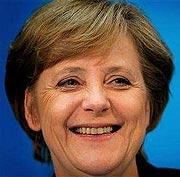 Neither can the European partners be taken for granted. Gerhard Schroeder, who had worked in close rapport with the Russian leader, stepped down last year following electoral defeat. Angela Merkel, who succeeded as Chancellor, is trying to keep herself at equal distance between Putin and President George Bush.
The political dynamics of the European democracies have shown that Russia's current dependence on Europe for oil and gas exports is becoming unsustainable, although the received wisdom in European capitals remains that it would be most illogical to please Washington at the expense of the energy supply flowing from Moscow.
As a close partner, Russia fully understands China's eagerness to be present at G8 summits. This is never in doubt. When asked by Chinese journalists whether Beijing would one day be represented at the rich club, Zhu Rongji, then premier, cautiously stated that China would value any positive role that it could play in the global arena, but China's first and foremost solidarity would still be with the developing world. This effectively dismissed the possibilities of joining a grouping that was always regarded as rich and democratic.
Those were the days and now things have changed. In the last few years, Britain, France and Germany have called for China's formal participation in G8. And the rapidly developing China is now an economic power to be reckoned with. But wouldn't Beijing's appalling human rights record and its solidarity with the Third World stand in its way to the club?
Dividing tool
It would now seem that Russia, whose highhandedness in dealing with political dissidents, NGOs and the media has come under sharp criticism, is willing to do everything to straighten the path for China.
In other words, Moscow's frustration at the West's stringent and often double standards, has moved itself closer to China and to a lesser extent India and Brazil. Together, they will never cease to question the legitimacy of the G8 in dictating global agenda.
The hawks in the US, especially Dick Cheney whose oil interests are enormous, may be in high dudgeon over the tighter restrictions Russia is now placing on investment by US and other energy companies. Bush, however, is not necessarily of one mind with them.
Acutely aware of his 'coalition of the dwindling' against global terrorism, he has sought to assuage Putin's angst with conciliatory language. The embarrassing issue of human rights was not raised in public, and the two leaders instead pledged to work closely in curbing terrorism.
Putin indeed has failed to reach a deal with his American guest over Russia's entry into the World Trade Agreement but he has nevertheless succeeded in turning energy into a dividing tool between the US and Europe.
The latest G8 Summit has just pointed a new direction for the most influential grouping. Whereas in the past, it was dominated by countries seemingly adhering to the notions of democracy, the hard realities over the last few years have forced them reconsider a new makeup.
As the saying goes, the only constant in life is change. It would be interesting to see how this important club is going to evolve in the next decade.


