



COMMENT | Nation hamstrung by corruption and extremism
COMMENT | The Sabah polls have come and gone. Again Malaysia has tested her political maturity with another peaceful election. Kudos to the winners and losers for by participating they make democracy work.
Shafie Apdal may have lost the government, but he remains a formidable political figure, and I hope his political ideology of a united Sabah under God will find traction throughout the country.
This ideology entails several factors for good governance, especially the separation of government from politics and religion as the Federal Constitution dictates.
Although a government is decided by politics, it must be above both in its proper functioning. This is easier said than done. But if there is the will, there will be a way.
Politicians in both state or federal governments must not politicise their office and role in national and regional developments. There must be no payoffs and paybacks for voters as in the past.
Having lived in different countries, I still think Malaysia is a pleasant place to live if endemic corruption...
COMMENT | The Sabah polls have come and gone. Again Malaysia has tested her political maturity with another peaceful election. Kudos to the winners and losers for by participating they make democracy work.
Shafie Apdal may have lost the government, but he remains a formidable political figure, and I hope his political ideology of a united Sabah under God will find traction throughout the country.
This ideology entails several factors for good governance, especially the separation of government from politics and religion as the Federal Constitution dictates.
Although a government is decided by politics, it must be above both in its proper functioning. This is easier said than done. But if there is the will, there will be a way.
Politicians in both state or federal governments must not politicise their office and role in national and regional developments. There must be no payoffs and paybacks for voters as in the past.
Having lived in different countries, I still think Malaysia is a pleasant place to live if endemic corruption and the slide into racial bigotry and religious authoritarianism in Peninsular Malaysia can be halted.
Facilitate business people and inherent talents, and they will put the nation on the world map for outstanding achievements, not ignominious kleptocracy. I believe in the country's untapped talents and people potential, at home and abroad. Malaysia Boleh must always be positive.
Life can never be fulfilling or outstanding under any religious jackboot. Sabah and Sarawak, however, hold much for Peninsular Malaysia to emulate.
Zan Azlee's article 'Pray that Sabah does not become like Peninsular Malaysia' illustrates the point and makes for edifying reading.

If 'In God we trust, unite we must' the Warisan electoral catch cry sounds aspirational, consider, 'Love God, Love People, Love Nature' as I advocated in my novel.
Both ideas encapsulate the thought of togetherness, caring for one another and concern for endangered wildlife and nature, far better than the ethnocentric and divisive 'untuk bangsa dan ugama' (for race and religion) doctrine which is unsuitable as a national policy. It has produced manipulative and corrupt leaders and misplaced development.
Before we offer our pious prayers to God, have we offered food to the poor and hungry?
Before we build monuments, does everyone enjoy clean water, electricity and bitumen roads?
Before the government lays out lavish banquets, do the poor have food laid on the table?
Before they prioritise economic profits, have they considered the impact on the environment, rainforest people, rural folks and the country's diminishing natural resources?
These, among others, are pertinent questions for any government with big ideas.
Hamstrung, stymied, by extremism
Malaysians have many religions, but God has no religion. He is truth, justice and righteousness. In fact, he hates the religious types who are hypocritical and love money.
God wants to have a meaningful relationship with his creatures, but only when they are just, merciful and walk humbly with him in absolute trust and obedience. His door is always open to the repentant 'Prodigal Son' even a profligate politician. But not to recalcitrant reprobates who blame others for their crimes while in high office.
He must be tired of hearing self-righteous and rambling prayers from evildoers and when people ill-treat one another and a government condones, even causes disunity and practises selective prosecution.
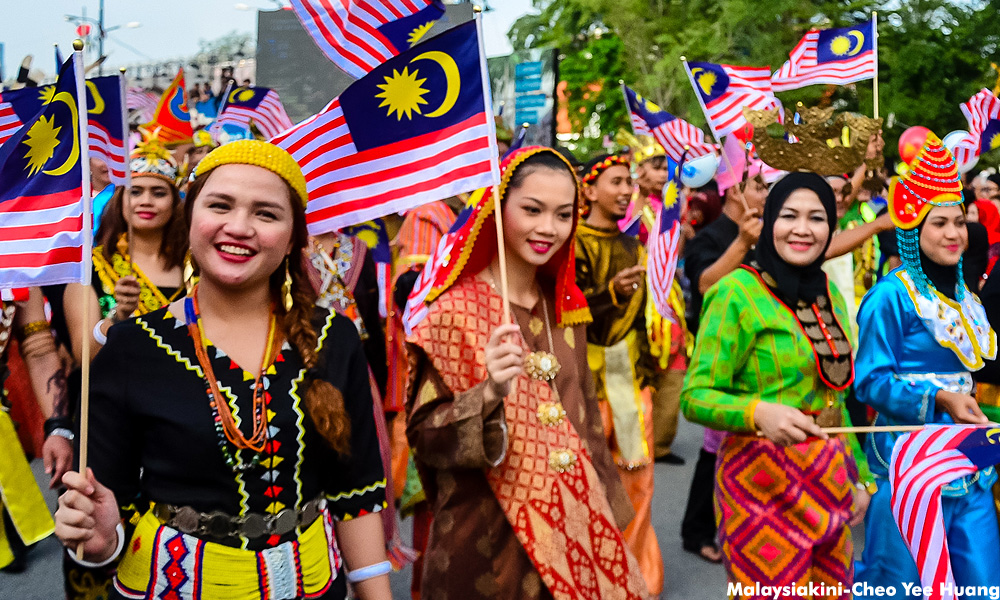
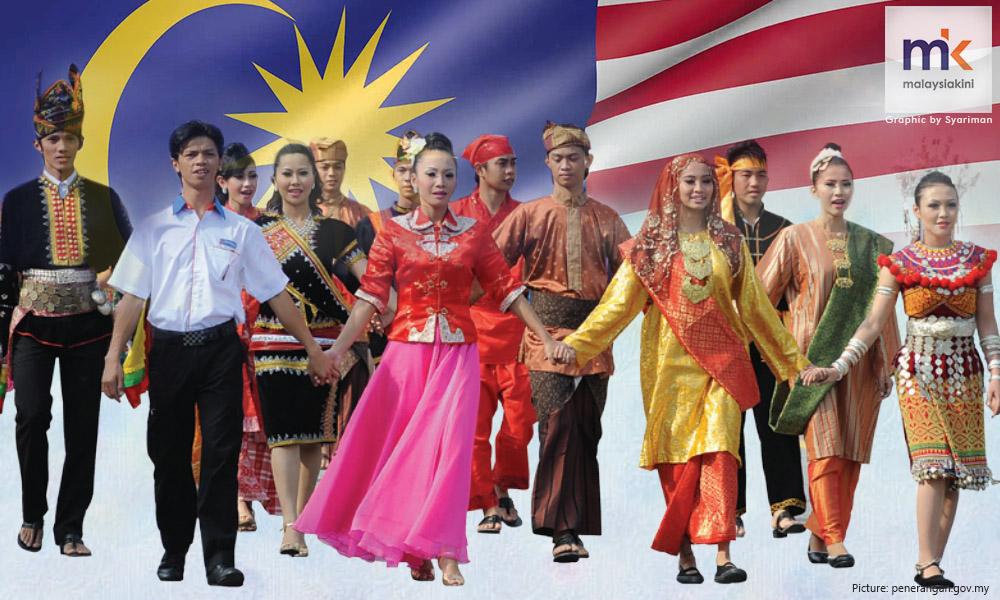
Certain people have yet to come to grips with and accept that Malaysia is a multinational and multi-religious nation, period. It faces the danger of creeping religionisation and racialisation of the state though it is a plural society.
The country's development will inevitably be hamstrung, even stymied, by extremism. The previous governments have been careless in failing to create an open society but complicit in causing narrow mindsets to fester.
In God, we trust is not the same as in religion we trust. God is trustworthy. Corrupt leaders are not. And paying lip service to religious slogans and platitudes, even pompous preaching and high-sounding prayers does not produce the desired moral and spiritual results. Godly character and good deeds do and they are not born of bigotry.

The Americans print the glorious words, ' In God, we trust' on their dollar notes. But their foreign affairs are governed by money and nuclear missiles. And they ban prayer in schools. Figure that out.
The Australian Federal Parliament opens a session with the Lord's Prayer. And the ensuing debates are anything but like their recitation of hallowed words. Talk about paying lip service to God.
How different is it in Malaysia?
Whatever people believe about God or don't or don't know, what is important is that a government must never use religion as a political tool and be corrupt and must do what is good and equitable for the people.
Do not politicise the government and skew it with race and religion. A good government is fair to all.
The people must never surrender power to politicians who then use that power to steal from, abuse and commit fraud upon the people on all sorts of false pretence. And not only that but silence, prosecute and jail those who expose their corruption and wrongdoing in government.
A government is not synonymous with a political party. A politician may be the leader of a political party, but once he has taken the oath of office, he has to serve everyone.
Prime Minister Muhyiddin Yasin can no longer say 'I am Malay first' if he wants to be taken seriously as a country leader. A racist leader is a betrayer of the constitution and has broken his oath of office. At least Muhyiddin is candid unlike the 'incurable racist' who is ever hypocritical.
Ethos of affluence and elitism
A political commentator said the Pakatan Harapan government fell because it tried to do too much. That's fallacious. On the contrary, it did too little. Most importantly, it failed to honour certain promises, and it gave Mahathir too much rope to politically choke himself and got Harapan evicted from Putrajaya in the ensuing treachery.
Is Muhyiddin playing again to the Malay gallery with his 'pay it forward' idea? He says bumiputra beneficiaries of the New Economic Policy (NEP) should help other bumiputras and it is open to the Kadazans et cetera.
Why not just say the government encourages everyone to help all the poor and do away with the race-centric NEP? After all, poverty does not afflict only one race.
A blanket policy benefits every poor Malaysian. Why only help poor Malays when others are also in financial strife? In this regard, PKR is more forward-thinking in their 'needs-based' criterion for the NEP, and it won't be 'bastardised.'
The problem for national development is that the past BN government governed with the ethos of affluence and elitism in mind. They loved the high life and promoted a culture of wealth-making, first among themselves, wasted billions, while many Malaysians are still struggling with basic necessities like putting food on the table.
The elitist approach is unfairly anti-people, social class-centric, inequitable and creates a society of snobs and social disunity and open to abuse. In opposing the proposed elite kindergarten idea, former deputy prime minister Dr Wan Azizah Wan Ismail illustrates the danger.
There can be no shared prosperity unless national wealth is spread across the board from personal effort and not entitlement without penalising the productive or affluent on race. Politicians getting rich in office is a sure sign of corruption, and the Malaysian Anti-Corruption Commission only has to scratch the surface.
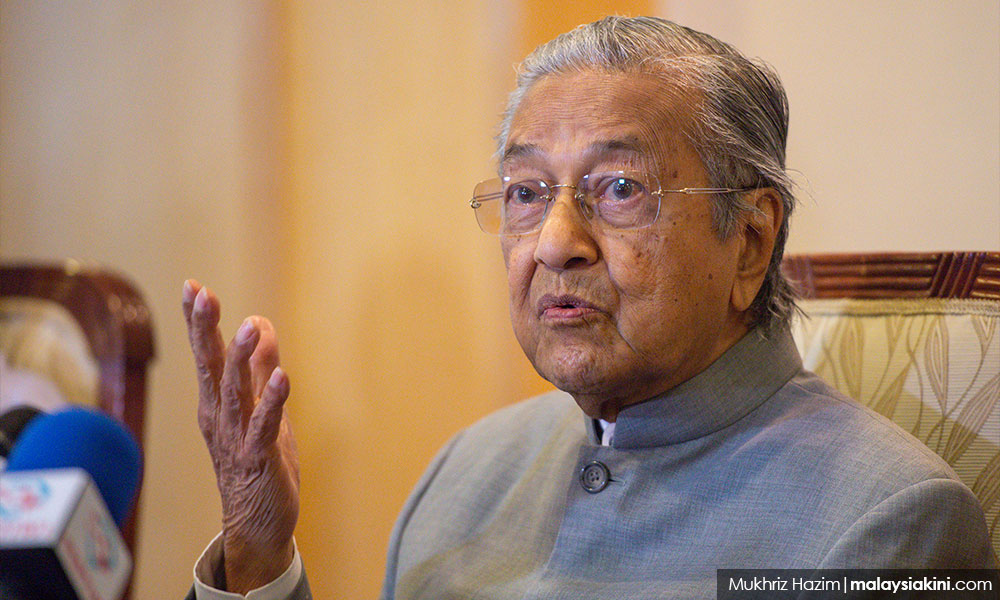
Didn't Mahathir once try to create a class of instant Malay tycoons only to watch them fall like flies and the people's money used to bail them out? It was the advent of mega projects, mega corruption and mega losses for the country.
The government lacks a foolproof, fair and fortified strategy to build a nation because certain politicians are busy raising their private collection of geese that lay golden eggs for them.
If the government wants shared prosperity to materialise, it has to stop the corrupt politicians. It is an impossible task when one risks losing power if three disgruntled parliamentarians investigated do the infamous frog jump.
Sadly, the voice of religion, the trumpeter of morality that ought to be fighting for the poor and shouting loudly against corruption is muted. Shafie's 'In God, we trust' makes sense. Fortunately, God works through active concerned citizens.
Successive governments love novel ideas and slogans when what is needed is 'Morality 101' and things our teachers taught us in school like 'honesty is the best policy'.
It is time to stem corruption and stop playing politics with race and religion.
Muhyiddin has to start governing fairly, nab the corrupt, remove the incompetent in government and deliver a sound framework and conducive environment for all Malaysians to prosper.
Shared prosperity can then be shared equitably across race and not become the stolen prosperity.
Discard the elitist and crony mindset, a colonial hangover and create a more egalitarian and equitable society congruous with the Rukunegara. Every citizen treated fairly before corrupt crony politics in the country is long overdue in Sabah and the rest of the country.
STEVE OH is an author and composer of the novel and musical 'Tiger King of the Golden Jungle'. He believes good governance and an engaging civil society are paramount to Malaysia being a unique and successful nation.
The views expressed here are those of the author/contributor and do not necessarily represent the views of Malaysiakini.




Are you sure you want to delete this comment?
This action cannot be undone.