




China, Japan, US not in some playground
At a recent meeting with a group of Universiti Putra Malaysia students, I was asked a question that is often raised by the Chinese press: when will the US and Japan come to their senses and embrace China as a friend and not a rival?
In other words, why must Washington and Tokyo watch with caution the diplomatic offensives of Beijing in recent years, and see them as a zero-sum game?
Instead of tackling the issue directly, I asked the students to consider if it was really necessary for the three powers (Japan, of course, being only one in economic terms) to talk only about friendship but not national interests.
Thanks to the narrow worldviews that these young students had developed courtesy of the Chinese dailies, my question puzzled them for they never looked at international politics from a realist's perspective.
At a recent meeting with a group of Universiti Putra Malaysia students, I was asked a question that is often raised by the Chinese press: when will the US and Japan come to their senses and embrace China as a friend and not a rival?
In other words, why must Washington and Tokyo watch with caution the diplomatic offensives of Beijing in recent years, and see them as a zero-sum game?
Instead of tackling the issue directly, I asked the students to consider if it was really necessary for the three powers (Japan, of course, being only one in economic terms) to talk only about friendship but not national interests.
Thanks to the narrow worldviews that these young students had developed courtesy of the Chinese dailies, my question puzzled them for they never looked at international politics from a realist's perspective.
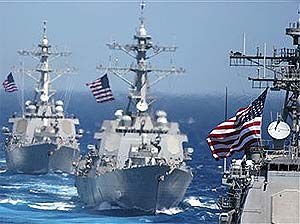 A case in point - when North Korea defied the US and ignored China's advice in going ahead with a missile-testing exercise early this month, Japan's gauche foreign minister Taro Aso seized the opportunity to assert that his country could retaliate. This prompted some ridiculous suggestion that it is high time the US take China as a real friend and be tough on Japan's jingoistic stance.
This exasperation is understandable, but the recalcitrant act of Pyongyang only hardens the opinion of the hawks in Capitol Hill that Beijing has failed in the vital task of guiding its bellicose friend onto the right path. Caught in surprise and fury, Washington is more likely to review its position in relation to the Korean Peninsula and exert greater pressure on Beijing, not less.
Kenneth Waltz, a neo-realist guru, argues that material factors are deterministic of whether or not a nation constitutes a threat to others, and that states with substantial power military especially pose an inherent threat as the anarchic international system provides no security guarantee to weaker neighbours.
Shared identity
Seen in this light, China is to the US and Japan a threat as it does have the essential capabilities to achieve certain foreign policy goals. But power is not the be all and end all factor, for intent does matter too. Michael Walt, for one, argues convincingly that Canada has never felt threatened by its southern neighbour despite the asymmetry of power for the US has never manifested any intent to that effect since even before World War II.
In the case of China, Zhao Suisheng, executive director of the Center for China-US Cooperation and a professor at the Graduate School of International Studies, University of Denver, wrote in 1999 that Beijing's ultimate objective is to resume its rightful dominant position in Asia by marginalising Japan and minimalising US influence in this part of the world.
This should worry both the US and Japan, although the received wisdom is that China is more anxious than any other power to maintain the status quo at least for the next two decades for the sake of its economic development.
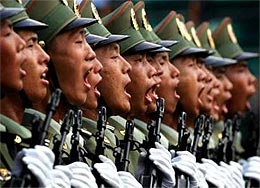 Positivists have, on the other hand, come up with a relatively more optimistic argument. Alexandra Wendt, for one, places great faith in the nature of the relationship between two nations, which is to a considerable extent dependent on the level of a shared identity between them. The more two states believe they share a common identity, the less they perceive the other as a threat.
The US-Japan partnership since 1945 has been maintained and entrenched through shared fundamental values such as freedom, democratic political systems, market economy, rule of law, as well as respect for human rights. China has come into the US picture in view of its increasingly important regional role in issues ranging from environmental protection to harnessing Pyongyang and Iran.
The staggering rise of China as an economic powerhouse in Asia, coupled with its strategic significance, has left the US with no option but to engage the awakened dragon. Chinese political observers were delighted when President George W Bush declared China a 'stakeholder' of the US early this year.
While this may be true to some extent, unsure of Beijing's long term ambitions and concerned by the opaqueness in China's military spending, the Americans still find it more assuring to have a closer strategic partnership with Japan.
Sanctions lifted
As Mike M. Mochizuki writes in his article 'Terms of Engagement: The US-Japan Alliance and the Rise of China', Washington and Tokyo have discovered another important aspect of their shared concern: Beijing's military prowess.
Japanese leaders, fearful of abandonment by their friends in Washington, have been making overtures to the latter time and time again. Prime Minister Junichiro Koizumi made a good use of the historic opportunity to tie his country never famed for independent diplomacy since 1945 - more tightly into America's military framework in Asia by establishing common strategic objectives in February 2005, making Japan ready to play second fiddle to the US.
After all, they share more common values and mutual interests and China is not known for its willingness to embrace democracy and respect for human rights. This partly explains why Washington is least willing to be seen to be too deeply involved in the Yasukuni shrine visits by Koizumi and the effort by rightwing Japanese to whitewash Japan's war atrocities in the past.
The Chinese leadership may gain support by playing up the nationalism card against Japan. The reality is that Japan for its own selfish interests was the first (then) G7 nation to lift sanctions against China following the Tiananmen Massacre of 1989, to the chagrin of its western allies.
 Then Japanese Prime Minister Kaifu Toshiki took the initiative to resume trade ties with Beijing, winning himself a title of 'a good friend of the Chinese people'. What was left unsaid then was that Japanese investors benefitted hugely from this diplomatic bravery of their leader.
If the aggressive nationalism of the two countries is not properly managed, even the US will stand to lose in a confrontation between its two most important partners in Asia.
In summary, it is to the detriment of the Chinese press in Malaysia to continue to project the triangular relationship between China, Japan and the US as 'playground diplomacy', that Washington must be Beijing's friend because Tokyo is a bad guy, or the childish rhetoric that 'Beijing is a better playmate of Washington and they should both not play with Tokyo.
The triangular relationship will continue to transform and evolve according to the changing interests and strategic values of each of the three countries and not with a romantic dream of who should be a better friend of whom.


