



COMMENT | The economic cost of being a woman during the pandemic
COMMENT | At the start of the pandemic, in trying to mobilise an all-encompassing societal fight against Covid-19, many governments, organisations and leaders tried to rally citizens behind the following sentiment - we are all in the same boat. We are all in this together. Kita jaga kita (We’ll look after each other).
Very quickly, however, we realised that we are all not in the same boat in the storm – some are only on rafts, some are barely floating, and some are in luxury yachts. And what became most clear after a while was that most of our boats are, in fact, being steered by women.
Women constitute around 49 percent of the Malaysian population. We are nurses and doctors, leaving our own loved ones at home to treat you and yours when you get sick. We are your teachers and lecturers, pivoting to providing the best online education we can, mostly without any prior training.
We are your cleaners, picking up after you and your trash every single day. We cook your food, build the products you use at home, and we are the voices who answer when you call customer service. We are mothers, keeping a household together by doing 50 things at once.
We are your delivery food riders, we get you your online shopping packages, we fly your planes, we drive you around the city. We take care of communities and help distribute aid to people in need. We are a huge part of the global economy. We are everywhere.
Decades of progress, undone
Let’s take a look at what’s been happening with working women - say, a new graduate who makes about RM2,000 a month. Recent data for Malaysia showed that almost a third of employed women in Malaysia were in services and sales – about 29 percent in 2018.
Many sectors that employ women, such as the hotel line and food and beverage, require a physical presence. Systematic discrimination against women has also caused women to primarily occupy jobs at the bottom of an organisation.
These jobs were amongst the first to be done away with when the economy sank into a recession, leaving many women without a source of livelihood. In many ways, this represents more than a loss of income – it is also a loss of independence...
COMMENT | At the start of the pandemic, in trying to mobilise an all-encompassing societal fight against Covid-19, many governments, organisations and leaders tried to rally citizens behind the following sentiment - we are all in the same boat. We are all in this together. Kita jaga kita (We’ll look after each other).
Very quickly, however, we realised that we are all not in the same boat in the storm – some are only on rafts, some are barely floating, and some are in luxury yachts. And what became most clear after a while was that most of our boats are, in fact, being steered by women.
Women constitute around 49 percent of the Malaysian population. We are nurses and doctors, leaving our own loved ones at home to treat you and yours when you get sick. We are your teachers and lecturers, pivoting to providing the best online education we can, mostly without any prior training.
We are your cleaners, picking up after you and your trash every single day. We cook your food, build the products you use at home, and we are the voices who answer when you call customer service. We are mothers, keeping a household together by doing 50 things at once.
We are your delivery food riders, we get you your online shopping packages, we fly your planes, we drive you around the city. We take care of communities and help distribute aid to people in need. We are a huge part of the global economy. We are everywhere.
Decades of progress, undone
Let’s take a look at what’s been happening with working women - say, a new graduate who makes about RM2,000 a month. Recent data for Malaysia showed that almost a third of employed women in Malaysia were in services and sales – about 29 percent in 2018.
Many sectors that employ women, such as the hotel line and food and beverage, require a physical presence. Systematic discrimination against women has also caused women to primarily occupy jobs at the bottom of an organisation.
These jobs were amongst the first to be done away with when the economy sank into a recession, leaving many women without a source of livelihood. In many ways, this represents more than a loss of income – it is also a loss of independence. Some women may be forced back into economic dependency on others – perhaps family, a spouse, or partner who still has a job – in order to pay bills.
Some women who are now unemployed were also single-earners in their household or are single parents. In many cases, and for many women, we are witnessing decades of economic progress unravel. Perhaps most disappointingly, the gains made as a consequence of the hard work of many women to overcome institutional barriers to enter the labour market are being decimated.
Working women who have been able to keep their jobs throughout the past year face a myriad of other issues – the main one being a significant drop in productivity. This drop is due to many reasons, but perhaps the most glaring reason is the sudden increase in childcare duties for those who have children.
Unpaid care a major factor
It’s important to note that women have always spent an inordinate and an unequal amount of time on childcare and unpaid care work – decades, and arguably perhaps even for centuries before the Covid-19 pandemic.
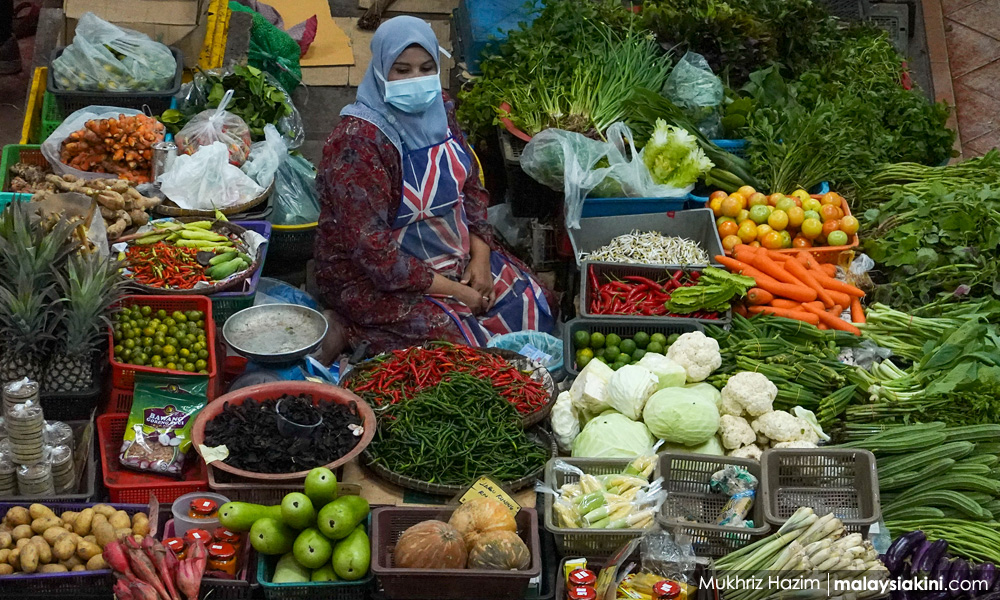
The real neighbourhood 'Makcik Kiah' who sells you really the tasty nasi lemak by the side of the road? She probably is balancing trying to make RM50, RM100 in sales a day and thinking about the kids she left at home while at work.
This “gendered burden” cuts across social class and educational attainment in many ways, though, as with most things, it is women from low-income backgrounds who tend to suffer significantly more than richer women.
Unpaid care work is unbalanced even amongst the highest-educated of couples. Worldwide, the trend has been similar - women devote significantly more time to household work and childcare due to school and daycare closures than men.
School and daycare closures in the past year have greatly exacerbated gendered burdens. Women who were previously working at an office suddenly found themselves in multiple roles all at once – balancing working from home, childcare, supervision of virtual learning, housework, etc.
In Malaysia, data shows that gendered burdens during the first movement control order (MCO) period greatly escalated women's burden.
Tasked with an increase in physical duties, women also faced increased stress levels and declines in mental health. They were also affected by other peoples’ decline in mental health, such as their spouses and family members. Makcik Kiah may be the brunt of her husband Pakcik Mat’s anger and frustration at losing his job.
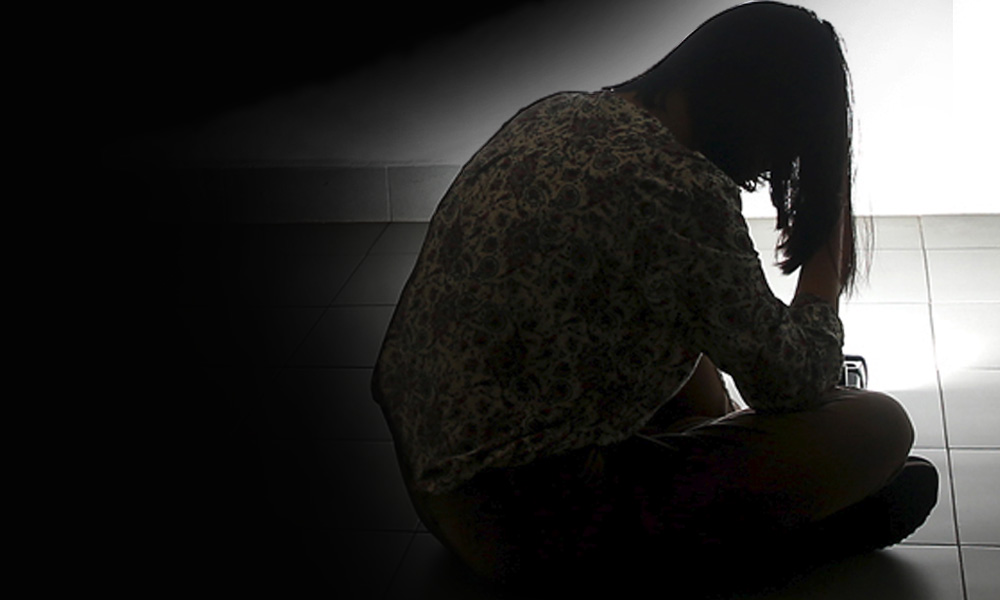
Early in the pandemic, the Women’s Aid Organisation reported that their national crisis hotline experienced an almost 60 percent increase in calls since the start of the first MCO in Malaysia. As everybody’s doors closed due to lockdown orders, women in abusive relationships - often with children - were “locked in” with their abusers.
Due to the lack of social workers in the country, it’s hard to say how biased the reported numbers are from the truth, but we can safely conclude that they only provide a lower bound on how bad the situation actually is.
Unicef Malaysia started a longitudinal nine-month study on the effects of the pandemic on low-income households living in PPR flats shortly around the middle of 2020.
In its latest issue, Issue 3, we catch a glimpse of what is happening with the most vulnerable of households – B40 families with single mothers (i.e. female heads of households). Imagine if Pakcik Mat died, and left Makcik Kiah behind.
The poverty rates amongst these families are rising at an alarming rate. From 47 percent in September 2020 to 60 percent in December 2020.
The loss of hope
The saddest part, aside from the rapid decline in social mobility for these households, is the death of hope and an increase in pessimism. Almost half of B40 families with female heads of household expect their financial situation to worsen in the next six months – a large uptick compared to the 34 percent recorded in September 2020.
It paints a portrait of struggle, of declining mental and financial health, and of despair. In the same report, we also see the heartbreaking compounding effects of this on the children supported by these women – about half of the mothers in this study, and almost 60 percent of female heads of households, are worried about not being able to feed their children – a doubling from the levels recorded in September 2020.
Makcik Kiah is losing hope over her ability to do the fundamental thing a parent is supposed to do for their children – to provide for them. The pandemic has also set women who were thinking of entering the workforce back in their career goals. Female labour participation in Malaysia was about 56 percent in 2019. This number significantly lags behind many regional counterparts in Asean.
For example, Vietnam had a more than 70 percent female labour participation rate in 2016, and Thailand was at about 60 percent in the same year.
Due to the pandemic and following the economic recession, unemployment rates have increased. Jobs that were previously advertised may no longer exist due to the death in many small and medium enterprises (SMEs) around the country.
This, coupled with the uncertain Covid-19 recovery, causes too much uncertainty for many women intending on starting their career by entering the labour force.
There is also, of course, the uncertainty of how long and whether schools can persist with reopening this time around, after being closed for months (for the second time). The pandemic has effectively erected more barriers around participation in the formal labour market, which means that women will either not participate in the formal labour market or work informally.
The gig economy
The problem with this is that informal work can be very precarious. Over the course of the pandemic, many women have resorted to opening their own small business – typically revolving around cooking or baking – to make ends meet. These jobs are not easy and require a significant amount of time to do (which is an additional burden, on top of childcare).
Again, imagine Makcik Kiah balancing life with children and her roadside stall. Also, many individuals, particularly young Malaysians, have resorted to jobs in the gig economy – trying to ride through the storm by taking up jobs on delivery platforms, such as Grab, FoodPanda and GoGet.
The good thing about the gig economy is that it is a substitute for entering the formal labour market – it provides a means to make a living, which matters when women are faced with many expenditures and little income.
The bad thing is that it provides zero social support – no retirement benefits, uncertain hours, and no employer-provided private health insurance. This may change in Malaysia in the future – for example, the United Kingdom’s Supreme Court recently ruled that Uber drivers are indeed workers and should be afforded all benefits typically given to regular workers – but change is not yet here in Malaysia as of now.
A significant concern is the following - if women are increasingly relying on the gig economy or informal employment to boost their income, they may actually never leave to pursue better, more stable jobs. This may be by choice, which is arguably a personal decision, but for many, it may be out of necessity.
This could potentially stagnate our female participation in the labour market, pushing us further behind our regional peers. Finally, let’s look forward. Perhaps in a couple of months from now, the storm will pass.
We’ll still be in the middle of the ocean on our respective boats, but the waves have receded, and we no longer have to worry about sinking. At this point in time, we’d expect many boats to be able to dock at a nearby jetty – effectively ending their adventure through the storm.
The issue, however, will be that boats piloted by many women will still be forced to journey onwards – and many of these boats will continue venturing into more and more bad weather and storms.
It is hard to say how many households will recover from this pandemic, but we can say with near certainty that economic recovery for many women and female-headed households will lag that of male-headed households or for men more generally.
So how can we make sure their boats finish this journey? How can we make sure that they get through the next two, three storms that are coming their way?
Targeted assistance needed
A very solid argument can be made for the four following points for government intervention to mitigate the uneven gender effects of the pandemic:
1. That there should be an increase in cash transfers and aid to households headed by females.
2. That there should be targeted reskilling programs for unemployed women who no longer have jobs to return to.
3. That female-led households with dependents should be prioritised for Covid-19 vaccinations as they are significant “life jackets” in this storm for their households.
4. That social support should be enhanced for all populations, but particularly through jobs in the gig economy and informal employment.
There are many things that are hard to do from a policy perspective with these issues – one big problem being solving the entire issue of discrimination towards females in the labour market – but there are also smaller issues that we can try and tackle as a society. Before preparing for the next pandemic, we need to create an environment where every woman, regardless of how vulnerable they are, has opportunities to succeed.
This piece has primarily focused on Malaysian citizens, but it’s important to note that the picture for non-citizens, particularly the undocumented migrant worker population, is dire. It is perhaps even the worst it’s been in our history as a nation.
We need to create resilient communities that can uphold their members, specifically, the women. In fact, it’s very likely that the heads and hearts of these communities themselves are women. This will likely not be our last pandemic – maybe not even in our own lifetimes.
How prepared we are for the next one depends on how well we have recovered from this one, and that will involve making sure all boats are able to dock, and not just the luxury yachts.
The Australian feminist GD Anderson once said: “Feminism isn’t about making women stronger, women are already strong. It is about changing the way the world perceives that strength.”
As we continue navigating through the storm, we should thank, honour, and uphold the women in our lives and others who have been steering our boats.
We should do this in ways more meaningful than superficial acts like a social media shout-out or wearing certain colours for International Women’s Day.
Let’s rally behind what really matters - real, sustained support for women who have picked up more of almost everything during this pandemic and help them recover from these horrible times so that they may again start taking care of themselves and the communities they sustain.
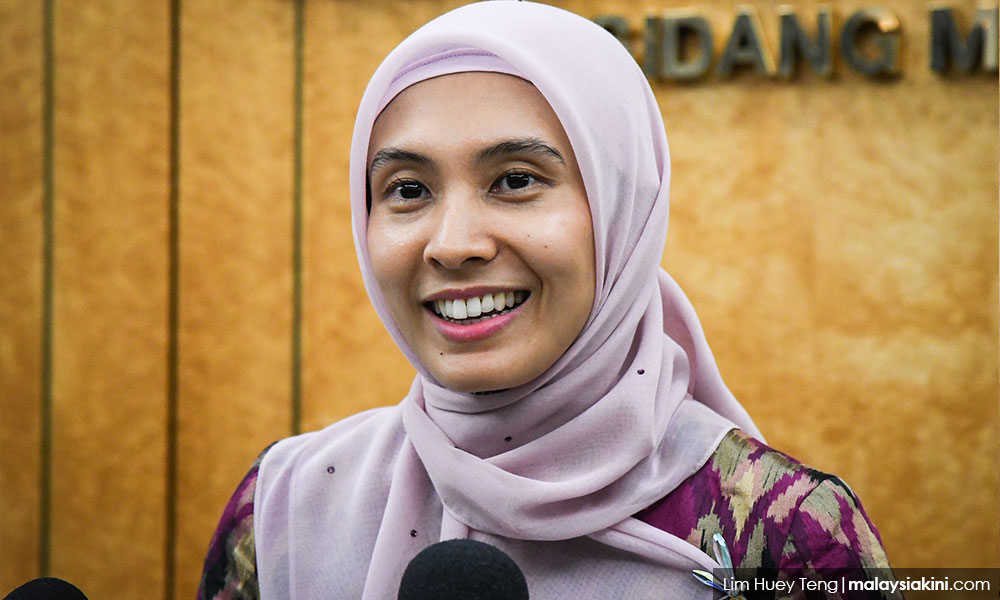
MELATI NUNGSARI is an assistant professor of economics at the Asia School of Business and a research affiliate at MIT Sloan School of Management.
The views expressed here are those of the author/contributor and do not necessarily represent the views of Malaysiakini.
Malaysiakini is running a series of articles from March 8-10 in celebration of International Women’s Day 2021. Read more here.



Report this comment
Are you sure you want to delete this comment?
This action cannot be undone.