



COMMENT | The politicians who know no shame
COMMENT | In 1971, the Nobel Peace Prize was awarded to a person with three names. For the first 20 years of his life, the recipient was known as Herbert Ernst Karl Frahm, a son to a cashier mother. His fiery sense of justice did not match his abilities. After passing his final exam, he only managed to secure an apprenticeship at a shipbroker.
The job did not provide him much except for his life. The connections he fostered at the port and the ships later became his only escape from Hitler’s Nazi Germany. That was the beginning of a life that was full of hiding.
He needed to use a different name to hide from the Nazi, so he chose Willy Brandt. Later, when he returned to Germany for a few months, he took up another name, Gunnar Gaasland. This time, it was borrowed from a Norwegian student. Name-borrowing and identity-switching were more common in the Nazi days...
COMMENT | In 1971, the Nobel Peace Prize was awarded to a person with three names. For the first 20 years of his life, the recipient was known as Herbert Ernst Karl Frahm, a son to a cashier mother. His fiery sense of justice did not match his abilities. After passing his final exam, he only managed to secure an apprenticeship at a shipbroker.
The job did not provide him much except for his life. The connections he fostered at the port and the ships later became his only escape from Hitler’s Nazi Germany. That was the beginning of a life that was full of hiding.
He needed to use a different name to hide from the Nazi, so he chose Willy Brandt. Later, when he returned to Germany for a few months, he took up another name, Gunnar Gaasland. This time, it was borrowed from a Norwegian student. Name-borrowing and identity-switching were more common in the Nazi days.
When Brandt joined politics, he needed to hide how he really feels - a standard practice for politicians who wanted to survive. It was doubly hard for Brandt because his views are not shared by either the left or the right. His policy of Ostpolitik (reconcile with Eastern European countries) was not favoured by the right, and the left denounced his support of American policies. He had to decide whether to stick to his guns or continue hiding his thoughts.
A lifetime of hiding
On one occasion, he chose to follow his gut. He took a trip to Poland and signed a peace treaty with the country worst-hit by the Nazi’s oppressive policies. Many of his closest advisers regretted taking the trip because the Polish officials did not even speak to the German delegation unless absolutely necessary.
The cold relations between the two countries persisted in the frosty winter.
Before leaving for Germany, Brandt said that he wanted to visit the Monument of Ghetto Heroes in Warsaw. Journalists, officials, and spectators followed Brandt as he approached the polished slab of stone. He puts his right hand to the ribbon on the wreath to straighten out its appearance. Overcome by the enormous shame that he carried as the child of his motherland, his knees dropped to the ground.
At the place where innocent Jews were given two paths - left (death) or right (live a little longer) - Brandt pled to the 300,000 perished souls for forgiveness. For 30 seconds, he was no longer hiding.
That symbolic gesture divided opinions in the short run but healed the world in the long run. Brandt became a vessel to which all the shame inherited from their forefathers in Nazi Germany could be flushed through at once. The unspoken and unwritten pact of preserving humanity at all cost was upheld by a device called shame.
Psychologists agree that shame is a useful tool to remind the target person of society's common agreement. To remind them never to overstep what is harmful to the rest and to prioritise cooperation above all.
Politicians who know shame
Shame is like pain, where it might be unpleasant to the recipient, but it serves as necessary prevention of us damaging our tissues. Shame is to protect society’s tissue.
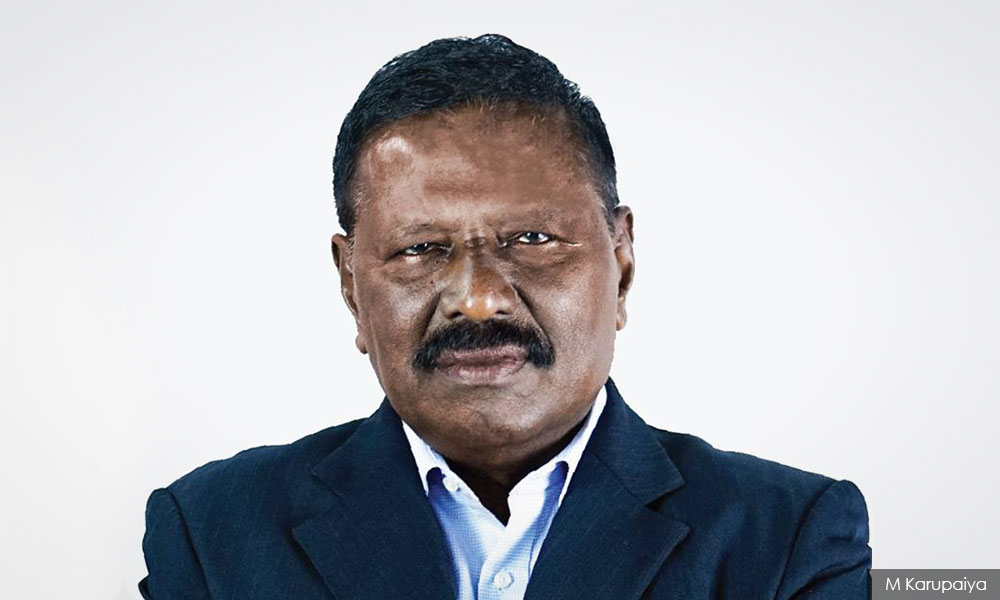
There are two politicians who seem to understand it - and you would not have heard of their name before this. They are M Karupaiya and Awang Husaini Sahari, both parliamentarians.
They told the press that they had been approached by people associated with the government to defect. They were offered funding for their constituencies and also some extra cash for themselves. In today’s politics, most people would have taken it, but they chose not to.
Awang said that he was approached “around 10 agents” since last year to jump ship, and Karupaiya was approached by a man called “Azhar”. When asked why they chose not to take the deal as many had, they said they remained loyal to the party they served.
More important, Karupaiya said that if he had taken the money, his constituency would lose respect for him. It mattered to him more that there is “hormat” of him. That is something money cannot buy, something that made him happy - something he was willing to risk his safety for.
At the very least, Karupaiya and Awang understood the concept of shame.
Three levels of politicians
There are three levels of politicians in Malaysia.
Level One is the politicians whose names you do not know. They do not make the headline news because they are solely invested in their constituency. Because their biggest asset is their connectedness to the ground, they are least likely to defect because the shame they would assume would be too great.
Level Two is the politicians whose names you may sometimes know. They are neither here nor there, where they do not appear in the news regularly, nor do they serve their constituency well. Because of this lukewarm relationship to the ground and their hollow ego to reach a higher place, they are likely to defect if the price is right. But they are quiet defectors - they will defect and hide their faces - because, at least, there are still some elements of shame.
Level Three is reserved for the worst kind of politicians, typically the powerful and well-known. They make the headlines sufficient times to ignore the constituency work. Since they are out of touch, they are also orchestrators and architects of defection. Not only do they lack any sense of shame at all, they would also justify defections as moral.
If there were no rules before, they would create those rules. If there were rules before, they would say they are the exception to the rules. Their defections are loud, public, and dramatic.
But they are never shameful.
JAMES CHAI is a legal consultant and researcher working for Invoke, among others. He also blogs at jameschai.com.my. You may reach him at jameschai.mpuk@gmail.com.
The views expressed here are those of the author/contributor and do not necessarily represent the views of Malaysiakini.





Are you sure you want to delete this comment?
This action cannot be undone.