




Koizumi the 'Lion Heart'
Remember the movie, Braveheart , starring Mel Gibson, anti-semite and drunk extraordinaire? Gibson played William Wallace, the 14th century Scottish patriot who tried to win back his homeland from the marauding English hordes. William Wallace stood tall and strong against a Scottish landed gentry who were prepared to bed the English. Wallace wanted political reform. And he wanted economic reform: land, and so wealth, redistribution. Only, for his trouble, Wallace died at the end of the English guillotine. That history is murky at best; nobody really knows if Wallace even existed. But never mind.
Fast-forward to 2001. Dateline: Tokyo, 21st century Japan. Junichiro Koizumi, a Beatles and Elvis Presley fanatic and, as member of the dominant, feudalistic Liberal Democratic Party, stepped up to the plate like a baseball pro, whacked a home-run on his first batter-up, and wins the most prized of political competitions: the prime ministership. Like William Wallace, he stood before his people and promised lots, including a rosy future after 12 years of recession, then stagnation which latterly also coupled deflation. But Koizumi warned that there could be no gain without pain. Now, step back to Wallace, who whipped up Scottish nationalist fervour with these words: "They (the English) may take our lives but they'll never take our freedom."
Remember the movie, Braveheart , starring Mel Gibson, anti-semite and drunk extraordinaire? Gibson played William Wallace, the 14th century Scottish patriot who tried to win back his homeland from the marauding English hordes. William Wallace stood tall and strong against a Scottish landed gentry who were prepared to bed the English. Wallace wanted political reform. And he wanted economic reform: land, and so wealth, redistribution. Only, for his trouble, Wallace died at the end of the English guillotine. That history is murky at best; nobody really knows if Wallace even existed. But never mind.
Fast-forward to 2001. Dateline: Tokyo, 21st century Japan. Junichiro Koizumi, a Beatles and Elvis Presley fanatic and, as member of the dominant, feudalistic Liberal Democratic Party, stepped up to the plate like a baseball pro, whacked a home-run on his first batter-up, and wins the most prized of political competitions: the prime ministership. Like William Wallace, he stood before his people and promised lots, including a rosy future after 12 years of recession, then stagnation which latterly also coupled deflation. But Koizumi warned that there could be no gain without pain. Now, step back to Wallace, who whipped up Scottish nationalist fervour with these words: "They (the English) may take our lives but they'll never take our freedom."
Not that Koizumi and Wallace can be equated but Koizumi was playing up to his people at a time when the economy had sunk so deep into crisis that it could have burned a hole through the earth's core. And the nation's politics was also odious. All of Koizumi's immediate predecessors had failed miserably to bring the world's post-war economic miracle and industrial juggernaut out of a deepening rut. But Koizumi had read the people's mood, their disdain for LDP politicians, and he tapped into populism, helped along by a near-hysterical media at home and abroad.
The saviour
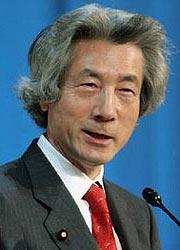 The saviour had arrived, and he walked on water. And come hell or high water Koizumi vowed he'd make Japan great again. This month Koizumi retires, though he may sit on the backbench for a while yet. But for what will Koizumi be remembered: his passion for the music of the Beatles and Elvis Presley, saving the economy, his bosom mateship with US president George W Bush, making as many frequent pilgrimages to Washington and Bush's ranch in Crawford, Texas, as his visits to the Yasukuni Shrine, which glorifies Japan's prominent war criminals?
No matter. Koizumi, 64, leaves office next week. Whatever his legacy, he is the third-longest serving prime minister, so he's sure to go down in the annals of Japanese history. He'll soon be forgotten by future generations of Japanese. He leaves politics at a time when the Japanese economy is turning a reasonably growth rate, albeit not quite of decades past. Interestingly, Koizumi took office on the cusp of an economic upturn. Even then the economy remained perilously close to disaster.
Koizumi talked of many reforms but few ever measured up to his populist rhetoric. To be fair, he was hamstrung by his own party's intransigent feudalists who weren't prepared to give up any of their precious political gains. To do that would be to surrender a huge stake of their personal wealth. Sections of Japan's economic bureaucracy were equally obstinate: policy cooperation came slowly, if at all. When it did, execution was so painstakingly slow Koizumi needn't have bothered in the first place. But he did, though he waited until last September: he called a snap election when 37 LDP upper house parliamentarians blocked his privatisation plans. He retaliated by fielding 37 opposition rival candidates. Almost all won. It was the first breakthrough of entrenched LDP old-guard power.
Japan Post
For all that, though, Koizumi pushed hard at one reform move, which ended up as outright privatisation of the colossus Japan Post, the world's largest financial institution, with almost 25,000 branches, and banking and insurance assets of around US$3 trillion. Targeting Japan Post on the basis of its sheer size couldn't have been reason alone for Koizumi's sudden reformist zeal. It was his last do-or-die mission. Failure would've meant yet another ignominious exit for yet another of Japan's ignominious leaders. After all, he'd threatened to 'destroy' the LDP if he didn't get his way.
Having been shunted around by the fractious LDP old guard, Koizumi knew their backs could be broken to a degree if they could be stopped from using Japan Post as a party slush-fund racket. More, Koizumi, a latter-day free marketer, thought Japan Post was inefficient at allocating capital. Almost one-quarter of Japan Post savings in this nation of high-savers is allocated by government. Where it goes is unclear. But why Koizumi has bothered at all is baffling. Once he leaves it's entirely possible a rear-guard campaign will be launched by Koizumi's enemies within the LDP and government bureaucracy to wrest control and return to the old political economy.
Koizumi, who likens himself to Galileo, thinks Japanese society shouldn't revolve around the LDP. He has also tagged himself as 'lion heart' for the reforms that he wanted to pursue and the fight he was prepared to take to the LDP strongmen. But Japanese politics in the future will likely resemble the past. There hasn't been, nor is there ever likely to be, devolution of political power from the centre, much like neighbouring China. Public spending may have been cut but the size of government has not, and the LDP remains as imperial as ever.
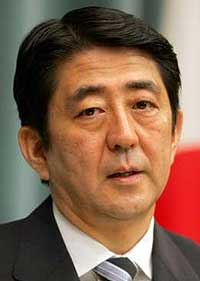 His anointed successor, Shinzo Abe, 51, chief cabinet secretary, may likely take over from Koizumi, and already the right-leaning Abe has signalled that he intends to change Japan's pacifist constitution towards greater military duties. He has also made some noises that smack of old-style right-wing neo-nationalism, but that could be just shadow play to appease sections of the LDP's feudal powers. To that end he won't say if he'll be visiting the Yasukuni Shrine at all. Bet he does.
Bet, too, that Abe will do very little in furthering real economic reforms that Japan desperately needs to underline its growth momentum. The noises will be like Koizumi's populist. The economy will possibly bump along at current speed. But one area where Abe could win strong support inside Japan and outside it is over his plans to change the pacifist constitution of 1946. China is looking huge on its western front, militarily, and seemingly unstoppable in global geo-economic stakes. And there are other, equally tricky problems on the horizon.
Over to Abe.
MANJIT BHATIA, an academician and writer, is also research director of AsiaRisk, a political, economic and risk analysis consultancy in Australia. He specialises in international economics and politics, with a focus on the Asia-Pacific.


Are you sure you want to delete this comment?
This action cannot be undone.