



COMMENT | In defence of political satire
COMMENT | Notorious political satirist Fahmi Reza attracted controversy in the last couple of weeks over a series of satirical graphics lampooning prominent Malaysian public figures. While he often gets attacked for his scathing social commentary via his imagery, the blowback often comes from seemingly unrelated third parties.
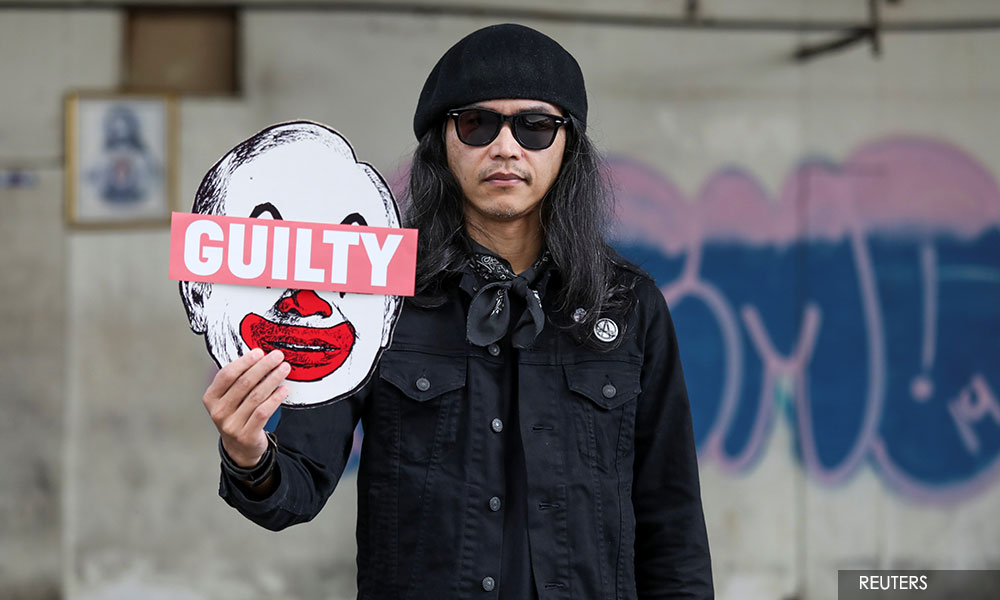
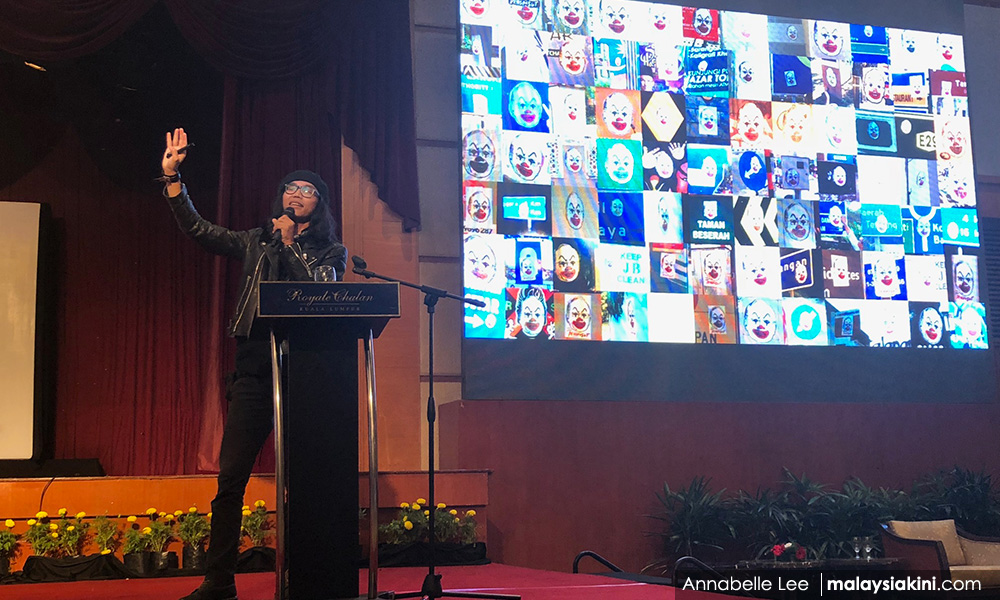
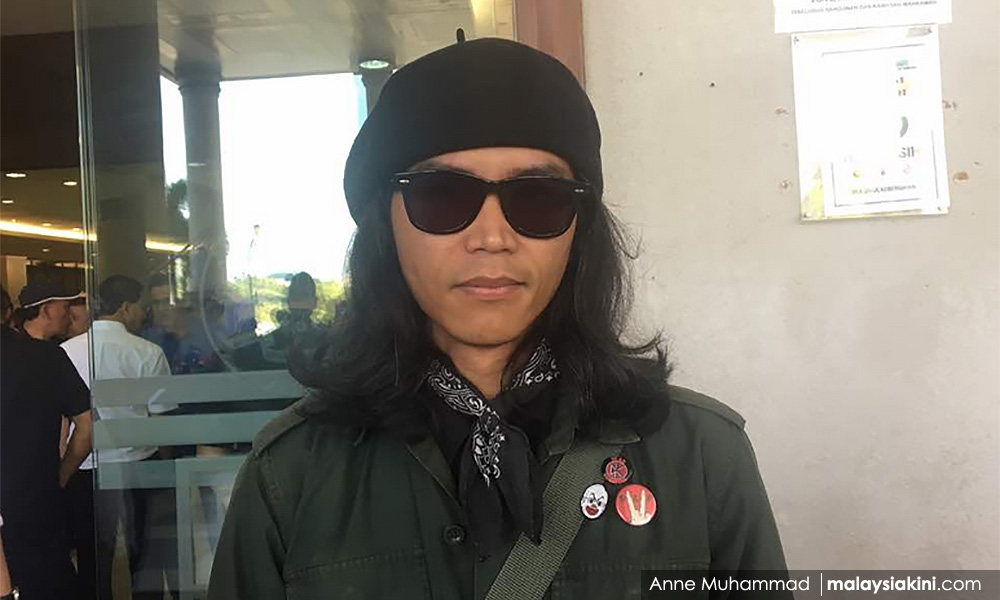
On April 5, taking a cue from an off-the-cuff remark of one politician towards another (with the former mocking the latter for being so skilled at party-hopping that he should have a “Masters in Party-Hopping”), Fahmi (above) produced a mock Master’s diploma for the said politician from the fictional 'National Frogging (a local colloquialism for party-hopping) University'.
The mock logo was based on the coat of arms for the National University of Malaysia (UKM) with frogs in place of its original symbols. This drew the ire of the university and some of its students and alumni who charged that the university's coat-of-arms had been defaced.
They threatened legal action unless Fahmi removed the offending image. In true Fahmi Reza form, he then proceeded to release a higher quality version of the graphic.
Yet, this controversy was not the usual fare commonly associated with the political artist and has drawn some mixed responses from...
COMMENT | Notorious political satirist Fahmi Reza attracted controversy in the last couple of weeks over a series of satirical graphics lampooning prominent Malaysian public figures. While he often gets attacked for his scathing social commentary via his imagery, the blowback often comes from seemingly unrelated third parties.
On April 5, taking a cue from an off-the-cuff remark of one politician towards another (with the former mocking the latter for being so skilled at party-hopping that he should have a “Masters in Party-Hopping”), Fahmi (above) produced a mock Master’s diploma for the said politician from the fictional 'National Frogging (a local colloquialism for party-hopping) University'.
The mock logo was based on the coat of arms for the National University of Malaysia (UKM) with frogs in place of its original symbols. This drew the ire of the university and some of its students and alumni who charged that the university's coat-of-arms had been defaced.
They threatened legal action unless Fahmi removed the offending image. In true Fahmi Reza form, he then proceeded to release a higher quality version of the graphic.
Yet, this controversy was not the usual fare commonly associated with the political artist and has drawn some mixed responses from the public. As the university itself was not involved in the issue but was just the unwitting “donor” for the base image for the parody, many found this to be in poor taste and damaging to the university’s image and reputation.
Without going into the convoluted realm of copyright law and fair dealing provisions, I’d like to focus the discussion on how political satire has become an important aspect of political discourse and it needs to be recognised as a valid form of commentary and political communication.
In the last few decades, political news satire has evolved to become an important supplementary component of the daily news cycle. Popularised by American political comedy talk shows like The Daily Show and Last Week Tonight, these shows heavily employ the use of satire to find humour in the daily spin that emerges from politics on a daily basis.
Despite taking a light-hearted and less serious approach to important political reporting, the act of distilling complex political scenarios into ridiculous jokes makes them easier to understand and digest for contemporary audiences.
Within the Malaysian context, political satire (in the form of online caricatures, cartoons and memes) is slowly growing to become a critical component in making complex and complicated political news more accessible. Ever since the political upheaval of the 14th general election, a new generation of people have experienced a political awakening and are hungry for political knowledge but struggle to get educated.
These audiences lack the immense foreknowledge that is needed to figure out the massive web of political relationships and power dynamics within the Malaysian landscape but are still keen to keep abreast with the latest news.
Wayang kulit
In a conversation with Ann Lee, a scholar of humour studies, now writing a book on political satire in Malaysia and Indonesia, she states that although satire is often portrayed as ‘Western’, there are many traditional forms of satirical commentary found in such forms as wayang kulit and dikir barat.
However, TV or online satire is more popular among many urban Malaysians. The prevailing contemporary trends on political discussions in Malaysia have expanded to include and incorporate various forms of political humour, particularly via memes which can be produced anonymously. Lee adds that political satire is not uniform and engages with the public with various layers.
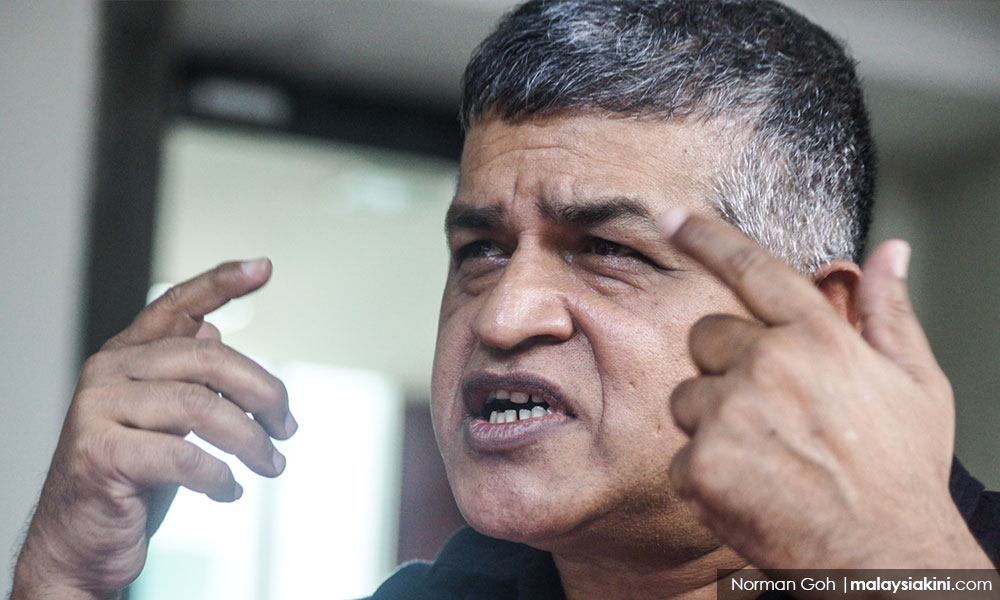
On one end of the spectrum of satire includes one of the mainstays of political satire, Zunar, who produces caricature comics with highly critical and cutting social commentary. On the other, we have a newcomer to the field, Ernest Ng with his more lighthearted takes on current events in the country through his “If Covid-19 was an anime” comic series.
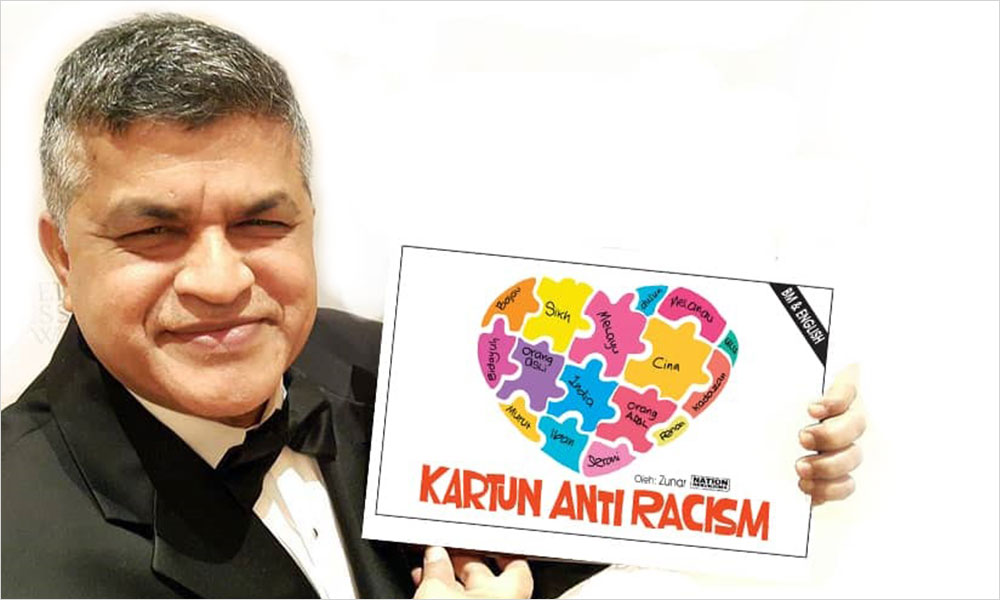
Both these artists do their part to educate the public on political events with the former focusing on interrogating and dissecting political intrigue while the latter is about highlighting important events that have happened in recent times and how they fit within the wider Malaysian context.
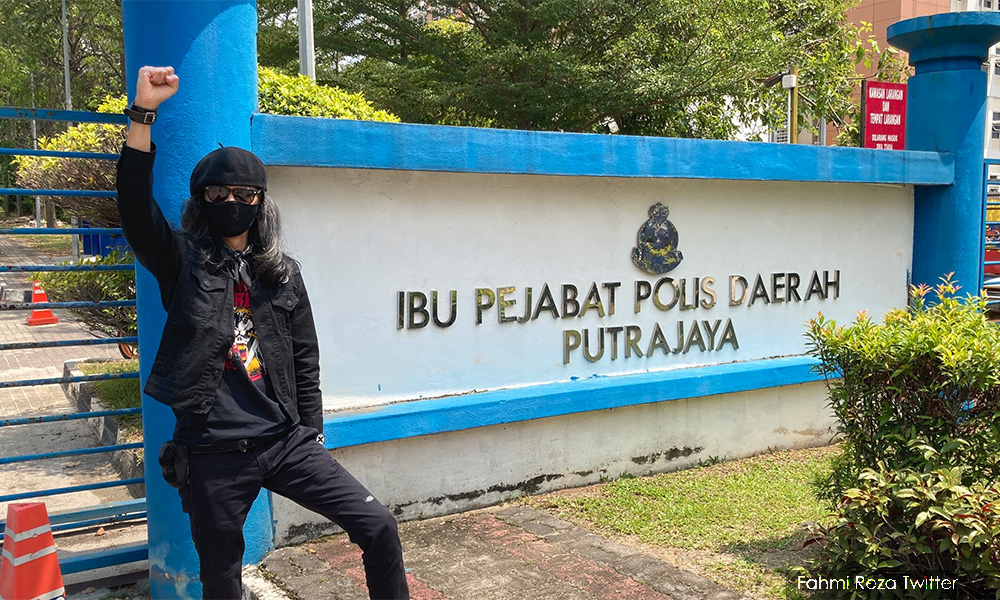
Fahmi’s approach to satire is rather different as his political images are often parodies produced rapidly and quickly to weigh in on trending news events. Fahmi has his finger on the pulse of national issues and rapidly produces graphics to essentially “meme” these events by making use of existing iconography and “remixing” them.
The act of modifying existing trademarks and images is often considered to be fair use under copyright law in most countries that recognise satire as a valid “remix” artform.
Lee, from her readings of various biological and philosophical studies, suggests that political satire, like other creative forms that push boundaries, is essential for the purposes of thinking and discovery.
My big takeaway from our conversation was this: if UKM takes legal action against Fahmi, the results may go some way in determining the boundaries of political satire within public discourse.
There is an importance in upholding political satire’s role within public discourse to ensure that it remains vibrant and that satirists like Fahmi can continue speaking their truth to power whether we agree with them or not.
BENJAMIN LOH YEW HOONG is a senior lecturer at the School of Media and Communication at Taylor’s University.
The views expressed here are those of the author/contributor and do not necessarily represent the views of Malaysiakini.


Report this comment
Are you sure you want to delete this comment?
This action cannot be undone.