
ADUN SPEAKS | Protect foreign workers, but do they assist in skill formation?
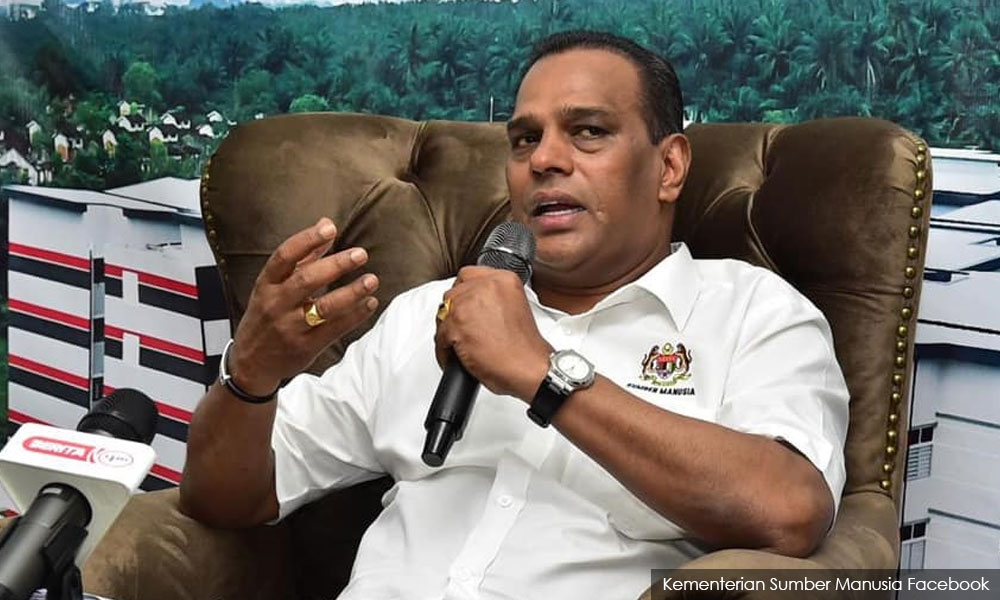
Human Resources Minister M Saravanan is adamant that the country will protect foreign workers from being fleeced by unscrupulous agents and that there are definitive labour laws for their protection.
In an interview recently, he further highlighted that the armoury of laws within the disposal of his ministry will serve to protect foreign workers.
It is well and good for Saravanan to have pointed out the laws that can be enforced in the protection of foreign documented workers...
ADUN SPEAKS | Human Resources Minister M Saravanan is adamant that the country will protect foreign workers from being fleeced by unscrupulous agents and that there are definitive labour laws for their protection.
In an interview recently, he further highlighted that the armoury of laws within the disposal of his ministry will serve to protect foreign workers.
It is well and good for Saravanan to have pointed out the laws that can be enforced in the protection of foreign documented workers.
But Saravanan, of all people, should know the real problems faced by foreign workers.
The huge gap between the laws and their effective enforcement has been something of great concern for some time.
This is something that Saravanan should have addressed in his interview, which took on a very legalistic and formal approach.
Labour laws have been present in the country long before Saravanan took office. Their ineffectiveness is legendary.
Saravanan might be a hardworking minister, but he is also naive when it comes to the extent of legal protection for not just foreign but local workers well.

When talking about foreign workers, Saravanan might be referring to documented ones and not necessarily the undocumented ones.
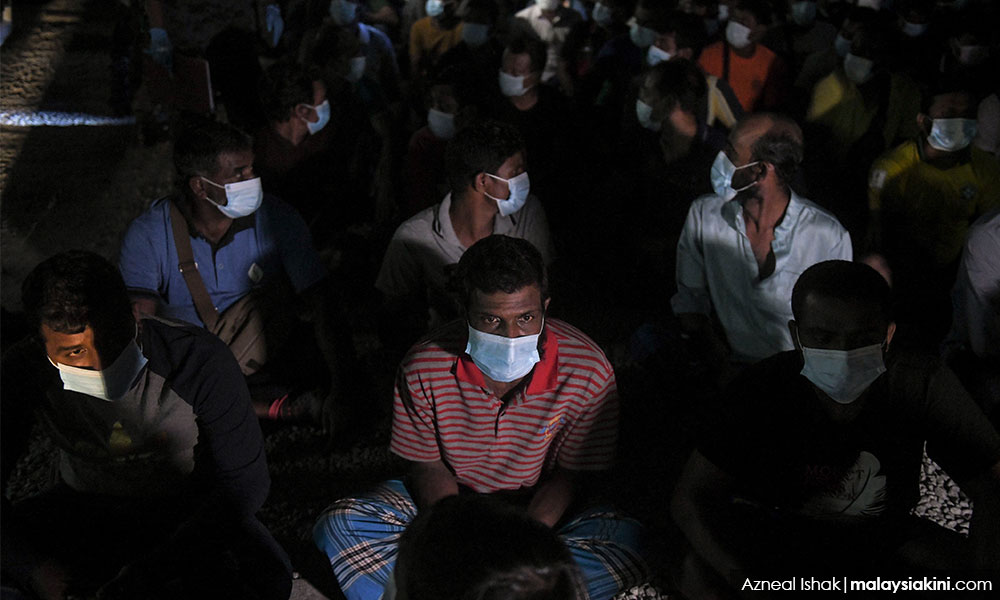
It is my understanding that there are 1.2 million documented foreign workers and an equal number of them are undocumented.
Of course, the law is silent when it comes to the latter. This “reserve labour force” that can be drawn upon by unscrupulous employers serves to militate against wage hikes for local workers.
In discussing extending protection for foreign workers, I meant the documented ones, and Saravanan should understand why their situation in the country is deplorable.
It takes the US justice system to punish companies, especially those in the glove industry, rather than Malaysia.
Apart from the inadequacy of the enforcement of laws, there is a prevailing culture that militates action against employers for abusing the rights of foreign workers.
For a long time and until today, foreign workers have been used by employers to deflate wage increase among local workers, for stunting the development of unions, and most importantly, to deny the creation of value in the production process.
Saravanan may or may not realise that the large presence of foreign workers in the country is indirectly responsible for the lack of skills in the service and manufacturing sectors.

Employers, by relying on cheap and unskilled foreign workers, might have inadvertently contributed to the stunting of skills development.
This might not be the case with local workers.
Both documented and undocumented workers constitute 30 percent of the country’s workforce.
There are also no visible signs from the government or the Human Resources Ministry as to how the large number of foreign workers in the country will be reduced in the future.
The constant reiteration of protecting foreign workers through the operation of the laws is simplistic and inadequate.
Why talk about laws when they themselves are not sufficient to protect foreign workers.
The culture and attitudes that militate against the protection of foreign workers are omnipresent.
They are much more pernicious and dangerous to the continued presence of foreign workers in the country.
Since local workers are not protected enough, there is nothing much to expect for foreigners.
Saravanan must critically examine the human resource requirements of the country as a whole.
It is only through such a broad and meaningful analysis that light may be shed on the nature of human resources needs and the roles of foreign workers in the country, and what needs to be done for the future.
In a more specific sense, there is a need to ascertain the relationship between foreign workers and their impact on skill formation in the country.
Approaches towards foreign workers should not be dictated by xenophobia or the instrumental need to exploit them for making huge profits.
Suppressing workers’ rights for the derivation of maximum profit is contrary to the idea of value creation by workers in the production process.
Therefore, a consideration of the creative potential of workers and to what extent foreign workers really contribute to the economic wellbeing of the country might be a more rational and humane approach.
P RAMASAMY is Perai assemblyperson and Penang deputy chief minister II.
The views expressed here are those of the author/contributor and do not necessarily represent the views of Malaysiakini.