




Rise of China, rise of Chinese Malaysians? (Part II)
When the financial crisis caught the entire East Asian region off-guard and left many economies in tatters, China emerged as a surprise winner. Beijing quickly promised not to devalue its currency so as to prevent the crisis from deteriorating, and has since been raising its profile in a region that is otherwise skeptical of Chinese influence. Burma, Cambodia, Indonesia and Vietnam are now regular recipients of China's foreign aid.
The worldwide China-mania has ushered in new hopes. Will the rise of China elevate the position of the - to employ the currently trendy adjective - 'marginalised' Chinese community? I seek to answer this question by looking at the internal conditions of both China and Malaysia.
When the financial crisis caught the entire East Asian region off-guard and left many economies in tatters, China emerged as a surprise winner. Beijing quickly promised not to devalue its currency so as to prevent the crisis from deteriorating, and has since been raising its profile in a region that is otherwise skeptical of Chinese influence. Burma, Cambodia, Indonesia and Vietnam are now regular recipients of China's foreign aid.
The worldwide China-mania has ushered in new hopes. Will the rise of China elevate the position of the - to employ the currently trendy adjective - 'marginalised' Chinese community? I seek to answer this question by looking at the internal conditions of both China and Malaysia.
As many have argued, the paramount guiding principle in China's foreign policy is to secure an outside environment that is most conducive to the country's economic and social development. In this regard, Southeast Asia is to China what Central Asia is to Russia: a near abroad.
Although the region has never been more than a vassal-dom of Beijing, China made the biggest and costliest diplomatic blunder in the 1950s and 1960s, an age in which the Marxist-Leninist ideology held sway, by supporting the communists in Burma, Indonesia, (then) Malaya and Thailand. It even lent legitimacy to the murderous Khmer Rouge regime of the 'Democratic Kampuchea' in the 1970s.
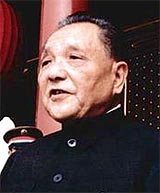 Deng Xiaoping, upon assuming his leadership, deemed such policy 'a waste of money and resources', and ditched it in no time. Since 2003, China's foreign policy has been formulated on the 'Peaceful Rise' model, and was strictly adhered to under the co-leadership of President Hu Jintao and Premier Wen Jiabao to refute the China Threat theory and to regain the trust of the Southeast Asian governments. One of the best ways to achieve this objective is to stay clear of the internal affairs of the regional countries. Several states, such as Indonesia, Malaysia and the Philippines in which ethnic Chinese make up significant minorities and are perceived to be economically dominant, are particularly sensitive.
China is not known for safeguarding the infringed rights of the Chinese in Southeast Asia. When Pol Pot was at his maddest, Chinese Cambodians sought help from the Chinese embassy in Phnom Penh, only to find that the doors were firmly shut. A Cambodian Chinese family that I know was fortunate to leave the country for London with the help of their relatives in Bangkok, but some 200,000 Chinese did not survive the communist regime.
When the anti-Chinese riots in Indonesia made international headlines in May 1998, Chinese communities the world over were shocked and angered. The orgy of rape and looting was well-organised and systematic, its target being almost exclusively Indonesians of Chinese origin. Knowing the ramifications of this tragedy, Beijing banned the news from the general public - it did not want to be seen as meddling in Jakarta's domestic affairs and, more importantly, it feared public backlash for its inertia. Still, a few hundred students of the prestigious Peking University braved arrest and demonstrated before the Indonesian embassy in the Chinese capital.
When Dr Mahathir Mohammad remarked that Chinese Indonesians were singled out because they were 'wealthy', he failed to see many of the victims were average people. The filthy rich Chinese had left for Hong Kong and Singapore. Strange enough, Beijing did not lift a finger over Mahathir's racist undertone. To his credit, Anwar Ibrahim, then deputy prime minister, condemned the riots in no uncertain terms.
While Beijing stood idly by, the US Congress passed a resolution condemning the massacre, and congressional hearings were held to bring the rape victims to Washington for testimony. Many Indonesian Chinese studying in the US had their visas extended, including that of a friend of mine. She is now a US citizen and much better off.
Foreign policy
In October last year, a group of Burma's Chinese handed a petition to China's Permanent Mission to the United Nations, urging it not to veto putting Burma on UN agenda. For strategic and security reasons, Beijing has long been the single most important backer of Rangoon in terms of arms and trade. At the recent 61st Security Council meeting, Wang Guangya, the Chinese ambassador to the UN, disappointed Burma's Chinese by opposing the move, reiterating that the world community should recognise Burma's efforts to solve its own problems.
An editor of the Shanghai-based Jiefang Daily told me recently that the Chinese Communist Party will only move towards the US and the EU position on Burma in a tradeoff, such as a greater role for China in the International Monetary Fund.
So long as China is beset with a host of social and political challenges, its foreign policy will continue to be guided by ultra pragmatic considerations. It also does not want other powers to interfere in the restive region of Xinjiang and, to a lesser extent, Tibet. But Beijing continues to play on the Greater China complex pervasive among Chinese Malaysian business and cultural elites to its own advantage, as seen in its relentless effort in rallying them behind the call for a reunification with Taiwan. Of course, it falls short of a public endorsement for the right of Chinese Malaysians to vernacular education.
 While China's foreign policy does not help, Malaysia's internal conditions, too, do not offer a rosy a picture either. Being a multi-ethnic state par excellence, Malaysia has, since Merdeka, been struggling with the question of who are its citizens and what kind of human rights it will grant them. Judging from the recent survey by the Merdeka Centre, our nation-building project is a paltry effort, if not yet an utter failure.
This is because Malaysia's state ideology is premised on the (mis)belief that the so-called bumiputera communities form the alpha race, and autonomy is conceded to the 'non-bumiputeras' as the state thinks fit. While many legal political devices in institutionalising a consensus democracy and in avoiding ethnic conflicts are in place, they are, more often than not, manipulated to serve the ruling classes and to reinforce the state ideology.
The governing coalition is, no doubt, fantastically made up of several 'stable' race-based parties, but what it has created over the years is nothing but unstable politics, to borrow the argument of Donald Horowitz in his Ethnic groups in conflict .
Khairy Jamaluddin, despite his Oxford credentials and a short stint with The Economist , can only perform what his predecessors did best: racist stunts. Who can blame him? Although the Hitler regime has long been consigned to the dustbin of history and Germany is one of the world's most vibrant democracies today, the scraps and remnants of the lebensraum ideology are picked up by other state elites to justify their authoritarian rule. By playing up the fear of losing their living space, as Khairy has done in the case of the Malays in Penang, these elites only seek to gain power and influence.
But the Khairy phenomenon is not confined to Umno. It is an open secret that many of the Chinese guilds and associations, convinced of a bleak future, have been encouraging young parents to help increase 'our' numerical strength. Lee Chong Meng, chairman of MCA Bukit Bintang, called on the Chinese to have more children two weeks ago. Naturally, a dwindling Chinese population spells doom for the MCA, and quite clearly, the lebensraum factor has its residual effect on the psyche of the marginalised communities too.
Still, increasing the Chinese population is a futile endeavour because the state can easily import the 'desired' communities from Malaysia's neighbouring countries. I need not repeat the logic behind Mahathir's 70 million population target here. There will be no end to this numbers game, which could lead to an ultimate showdown in its ugliest form. History suggests that society, devoid of trustworthy, transparent and impartial public institutions, will remain volatile, and in some cases may even sit on the volcano.
The path to a better future is through genuine democracy buttressed with real and sustainable economic prosperity and not to look out for a savior or a hero. Lee Kuan Yew may have spoken the home truth that we were dying to hear from MCA and Gerakan politicians, but he did this for his own political gains, and his mindset is yet to free of the old racist paradigm. Lest not forget, empirical evidence does not indicate that the Chinese are the only marginalised group in Malaysia. Let's save our chorus of praise for the day when the Minister Mentor talks about the plight of all the downtrodden and the oppressed in Malaysia, past and present.
Shining example
The best way, no doubt, also means a lot of hard work, including reforming Malaysia's electoral system and expanding the scope of competitive elections. Proportional representation, for one, could be introduced to keep extreme forces at bay. Better still, dismantle the race-based parties and start our nation's political process afresh. The reader can easily finish up the task list for me.
Despite the drawn-out political impasse, Chinese in Thailand are not made a scapegoat for the kingdom's political malaise. No one has said Thaksin Shinawatra should go because he is Chinese. Remember, Warrington Smythe, a British advisor to the Thai King at the end of the 19th century, once called the Chinese 'the Jews of Siam'. It would seem that such view belongs to the past. The latest setback notwithstanding, the democratic process over the years must have done some good.
Of course, handling ethnic issues is never an easy business even for mature democracies. Hungary and Slovakia, two member states of the European Union, still exchange spats over the treatments of their respective minorities in either country. But the conflict is held in check thanks to the Copenhagen criteria accepted by the EU in 1993, which stipulates that all potential candidate states should effectively recognise minority rights, and Brussels has been acting as a bulwark against the escalation of the issue into war.
 Germany, which has come clean with its racist past and is imbued with new spirit, also has to be cautious in dealing with the issue of ethnic Germans in Russia, Central Asia and Eastern Europe. But at least Berlin is a shining example when it comes to meeting the needs of the minorities within the German borders.
In the same vein, Chinese minorities in Australia, Britain, Canada, New Zealand and the US are hardly bothered about their demographic size as they have faith in the public institutions in these countries. Even in the case of Lee Wen Ho, who was accused of stealing nuclear secrets for China, the victim managed to clear his name through just and fair legal procedures, and with the help of the civic-minded communities that cut across race and religion.
The rise of China certainly has its positive impact. A UPM lecturer of modern languages told me there are now a dozen Mandarin tutors at the Mara Institute of Technology so that the Malay students get to learn the language. But without a change in our political climate, the benefits will remain limited. The Unified Examination Certificates of the Independent Chinese Schools, for instance, are still unrecognised by the government. The chronic problems facing the Chinese primary schools are unsolved, while forming a Chinese language society in state universities will still involve tussle with the relevant authorities.
An economically prosperous China will be of some help in that it provides one more exit route for those who are disgruntled with the current establishment. As Hou Kok Chung, Director of the Institute of China Studies, has written, the new generation of Chinese Malaysians may not necessarily take pride in the rise of China, but they will invariably be attracted to the idea of cultural China, induced by the abundant business opportunities in the mainland. Again, this option is only available to those who are upwardly mobile and have the necessary know-how, whereas the majority of Chinese Malaysians are left behind to fend for themselves in a hostile environment.
The only viable solution for the Chinese dilemma is not to look to a strong China for salvation, but to work on the ground and improve the public institutions. Political apathy will only lead to slow political death, and no amount of grumbling over marginalisation will stop the racist politicians from plotting their next move. As my friend Wong Chin Huat has passionately argued, in a football match, one can choose to be a player and play the game well, or be the ball to be kicked around. It is time to stop wavering and take the political plunge.


Are you sure you want to delete this comment?
This action cannot be undone.