




A coup has a different meaning in Thailand
In Thailand, the recent bloodless coup was the first explicit military interference in the local political arena since 1991, when Suchinda Kraprayoon, a military general, deposed a civilian government in a bloodless conquest.
Regrettably, an attempt by Suchinda to keep power had then led to bloodshed street demonstrations by students and other people. Those protesters were confronted by heavily armed troops in full battle gear. Forty-four people are believed to have been killed, and nearly forty are still unaccounted for.
Finally Suchinda was ousted in 1992. The tragedy was called the 'Black May'. Subsequently, the military promised to remain in its garrison, in contrast to earlier decades when military coups were a fundamental of Thai politics.
In Thailand, the recent bloodless coup was the first explicit military interference in the local political arena since 1991, when Suchinda Kraprayoon, a military general, deposed a civilian government in a bloodless conquest.
Regrettably, an attempt by Suchinda to keep power had then led to bloodshed street demonstrations by students and other people. Those protesters were confronted by heavily armed troops in full battle gear. Forty-four people are believed to have been killed, and nearly forty are still unaccounted for.
Finally Suchinda was ousted in 1992. The tragedy was called the 'Black May'. Subsequently, the military promised to remain in its garrison, in contrast to earlier decades when military coups were a fundamental of Thai politics.
As Sondhi Boonyaratkalin, the army chief and Sept 19's coup leader, once said, "The army will not get involved in the political conflict. Political troubles should be resolved by politicians."
"Military coups are a thing of the past," Sondhi had said then.
Why coup?
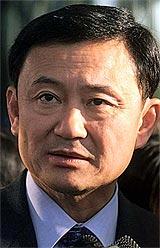 Thaksin Shinawatra, a telecommunication tycoon-turned-politician, appeared to be one of the most powerful statesmen in Thailand's recent history.
Since coming to power in 2001, he won three general elections with landslide. He earned great support among the rural poor for his populist policies. However, he alienated the urban middle class, educated people, intellectuals and pro-democracy activists.
They began mass street demonstrations late last year, charging Thaksin with abuse of power with his CEO-style administration, corruption by his policies supporting his own business, emasculation of the country's democratic institutions and attacks on the press freedom in the kingdom.
Bhumibol Aduljadej, the world's longest-serving constitutional monarch with limited powers, has used his influence to pressure opposing parties to compromise during political crises.
In recent months, mass protests and an impasse over flawed elections have thrown the country into its worst crisis since the last army takeover in 1991.
A small number of people expected Thailand's political crisis to lead to a coup. But when the military made its move to take over the government on late Tuesday night on Sept 19, it came as no surprise as there are so many reasons to support this coup.
Some even called it a "popular-acceptable" coup since it was the only short cut to overthrow Thaksin. Of course there were others who considered it as demolition of democracy.
Calling the Sept 19 coup a hiccup, political commentator of Bangkok English daily The Nation Kavi Chongkittavorn said: "It was a necessary evil, if you look at it. There were no other options to end this political cul-de-sac."
"It is a contradiction in terms to have a military coup that calls for political reform. That's the dilemma," he however conceded.
A source from the Human Watch-a Bangkok-based independent monitoring group who declined to be named objected the coup.
"If the latest coup d'tat in Thailand is justified, similar military interventions in a situation of political flux such as in Mexico will also be justified," he said.
"The coup d'tat in Thailand is a threat to democracy all over the world."
Maintaining the populist measures
Former Prime Minister Anand Panyarachun who was appointed as the country's caretaker premier following the 1991 military takeover told Newsweek 's Sept 25 edition that "a coup d'etat has a different meaning in the Thai context."
"It's not a military coup like in Africa or Latin America, which is normally associated with severe violence, mistreatment of people and curtailment of rights" he was quoted as saying.
"The ban on political activity is not going to last long. The military has been asked what will happen if people violate the ban. They say 'well, we would caution them'. It was a bloodless coup, it was well received by the people, and the situation is still calm. There is no curfew. There is no censorship. We're all leading normal lives. All you have to do is take a three-hour flight to Bangkok and have a look," Anand added.
A main task of the interim government will be to heal the rifts that Thaksin has created, avoiding vendettas that could devolve into the same bad circle.
Moreover, the new governments should embrace one of Thaksin's positive legacies, a focus on the needs of the poor, with programs like village development funds, debt forgiveness and low-cost health care.
 These populist measures, however calculating and paternalistic, did address long-neglected needs of the majority of the population.
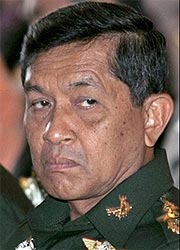
General Sonthi said he would choose an interim civilian prime minister within two weeks and then "we step out".
But he said that interim government would have the task of drawing up a new constitution, putting it to a referendum, and then holding parliamentary elections, a process that would take more than a year.
By that time, Thailand's political scene may have already changed. So what are the changes that will be in place by then?
That, for me, will be unpredictable.


Are you sure you want to delete this comment?
This action cannot be undone.