


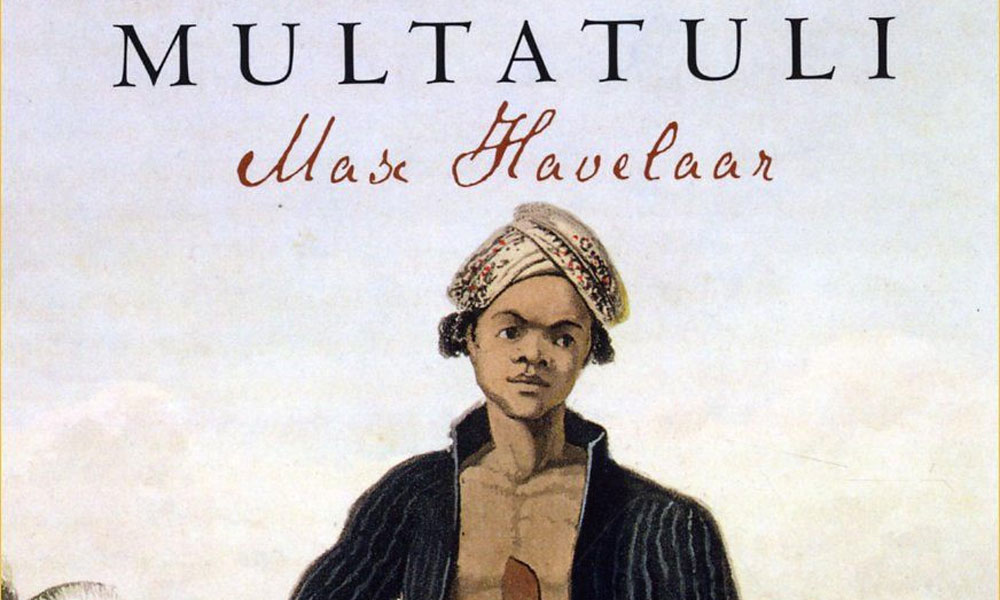

COMMENT | A flair for the dramatic
COMMENT | When the iconoclastic Eduard Douwes Dekker, writing under the pen name “Multatuli” – dreamer, adventurer, lifelong romantic and former colonial servant – tore through the artifice of the last pages of his novel Max Havelaar, breaking the fourth wall for the purpose of, among other things, “protesting against the endless expeditions and deeds of derring-do against poor miserable creatures (the Javanese of the 19th century) who have first been goaded to rebellion by ill-treatment”, his words set in motion a deep unease about the Dutch colonial system in Indonesia.
The end of colonialism in itself wasn’t Multatuli’s aim, being an imperialist at heart, although his writings “have long been popular in the Soviet Union as an exemplary denunciation of colonialism and capitalism”, according to an afterword by EM Beekman in a 1982 edition of his book. What is true is that he was deeply concerned with the exploitation he had seen while stationed in his sojourn across the Dutch East Indies, where he spent a good chunk of his pre-literary career, and “dreamt of sweeping reforms quite as impractically as the romantics did”. In Multatuli’s book, the seeds for the cultural background which led to the Ethical Policy in the early 20th century were sown.
With an increasing public awareness of exploitation in the colony, it was necessary for the Dutch to show that they were indeed bringing about benefits to its inhabitants, and it is in this atmosphere filmmakers came to Indonesia, a process that Sandeep Ray of the Singapore University of Technology and Design has studied in Celluloid Colony. To facilitate this process, the Colonial Institution came into being in 1910, where it saw “making films a promising way of providing visual evidence of the state of the colony […] (and) to persuade civilians […] to take pride in the development of the East Indies.” Although their efforts in actually making films ended in 1922, missionaries and corporate institutions would keep enthusiastically shooting whale hunts and the processing of migrant labour on their own initiative.
So much raw footage was shot, a lot of it largely ignored for decades, and put together ...
COMMENT | When the iconoclastic Eduard Douwes Dekker, writing under the pen name “Multatuli” – dreamer, adventurer, lifelong romantic and former colonial servant – tore through the artifice of the last pages of his novel Max Havelaar, breaking the fourth wall for the purpose of, among other things, “protesting against the endless expeditions and deeds of derring-do against poor miserable creatures (the Javanese of the 19th century) who have first been goaded to rebellion by ill-treatment”, his words set in motion a deep unease about the Dutch colonial system in Indonesia.
The end of colonialism in itself wasn’t Multatuli’s aim, being an imperialist at heart, although his writings “have long been popular in the Soviet Union as an exemplary denunciation of colonialism and capitalism”, according to an afterword by EM Beekman in a 1982 edition of his book. What is true is that he was deeply concerned with the exploitation he had seen while stationed in his sojourn across the Dutch East Indies, where he spent a good chunk of his pre-literary career, and “dreamt of sweeping reforms quite as impractically as the romantics did”. In Multatuli’s book, the seeds for the cultural background which led to the Ethical Policy in the early 20th century were sown.
With an increasing public awareness of exploitation in the colony, it was necessary for the Dutch to show that they were indeed bringing about benefits to its inhabitants, and it is in this atmosphere filmmakers came to Indonesia, a process that Sandeep Ray of the Singapore University of Technology and Design has studied in Celluloid Colony. To facilitate this process, the Colonial Institution came into being in 1910, where it saw “making films a promising way of providing visual evidence of the state of the colony […] (and) to persuade civilians […] to take pride in the development of the East Indies.” Although their efforts in actually making films ended in 1922, missionaries and corporate institutions would keep enthusiastically shooting whale hunts and the processing of migrant labour on their own initiative.
So much raw footage was shot, a lot of it largely ignored for decades, and put together years later by Vincent Monnikendam into Mother Dao, the Turtlelike in 1995, a documentary consisting entirely of this found footage in which the uplifting images of the Dutch impact in Indonesia acquired a more menacing implication. Juxtaposed, lacking context and accompanied by haunting poetry, scenes acquire a haunting strangeness – a great crocodile hunt, factory floors full of cotton drifting like snow and peaceful boat journeys on paddle-steamers, ending on a shot of fidgeting local boy in European hat. Who is he? From watching the film alone no information is given, but he seems to symbolise as the success of the new, “humane” system.
Much of the footage was filmed in a period when a new globalised age of revolution was on the rise, a sprawling web of international conspiracy, espionage and the trade of ideas, the sort which has been captured in works such as Timothy Harper’s Underground Asia or Benedict Anderson’s The Age of Globalisation. The 20th century took on a fiercely cosmopolitan look, resulting in episodes such as the Indian revolutionary MN Roy winding up in Mexico, while a young aristocrat from Sumatra ran for political office in the Netherlands, firmly entrenching himself in the international anti-colonial movements of his time.
The title Mother Dao comes from a creation myth found on the island of Nias, on the western coast of Sumatra. In relative terms, considering the vast size of the island, this was not too far from where the hometown of the revolutionary Tan Malaka, born on mainland Sumatra on the eve of the implementation of the Ethical Policy.
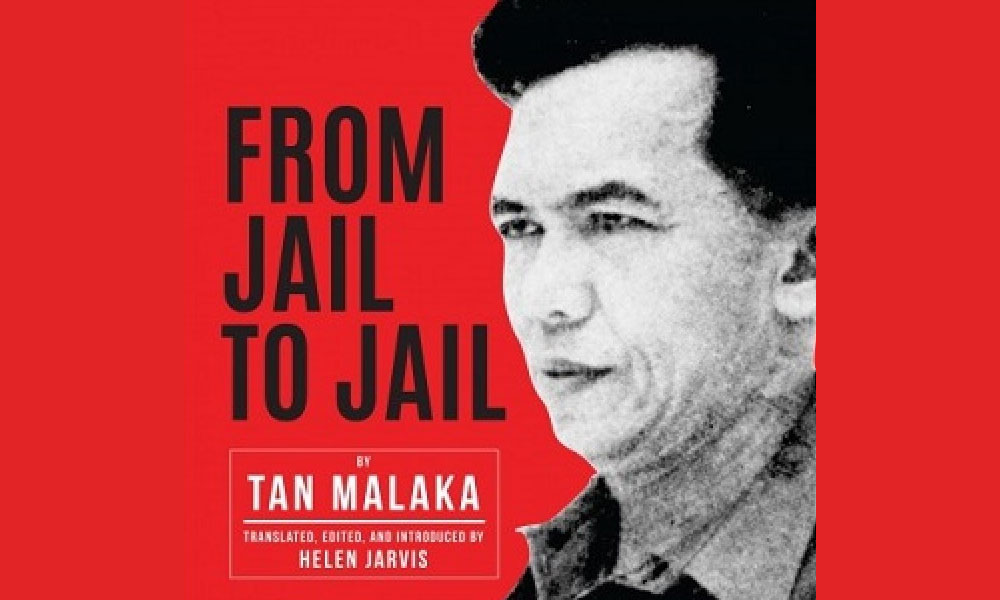
It would have been fairly easy for him to have joined the ranks of the “Inlander” elite – “Tan Malaka” is actually a shortened version of his hereditary title, his given name being Ibrahim – but the opposite happened. He became a communist revolutionary, jumping from one continent to the next, and his experiences suggested the title of his voluminous autobiography, From Jail to Jail, in fact, written in prison in Java, not very long before his eventual death in the war of independence, coming not at the hands of the Dutch but rather the Indonesian army.
Grand subversions
By this time, this man “with simple tastes and pleasures” had evolved into legend, and as Dr Helen Jarvis, who translated this work into English, recounted. The recounting of his exploits and adventures sit comfortably beside his expositions on philosophy, politics and nationalism, recounting his role as a communist operative and the rivalries between the revolutionaries. The subject of much controversy, he was to be posthumously declared as one of the national heroes by Sukarno, although he was still largely peripheral to the official anticolonial narrative, and a lot of her work has centred on understanding his life and activities in greater detail, as seen through some of her recent works.
Leaving aside the politics, the Stalin-Trotsky split and the spectacle of a continent on the edge of revolution, what makes his autobiography interesting as a piece of writing is his ascent into legend. By the time of Jarvis’s translation, a project that spanned 12 years and involved interviewing relatives and old acquaintances he had been written about in books, which happened even before his killing. He appeared as a Pacar Merah (Scarlet Pimpernel-esque figure), romanticised in the fiction that was devoured by the reading public of the prewar period, one still gradually imagining itself to be more broadly Indonesian. Although Jarvis notes that the text sometimes “echoes that of the hikayat […] in particular its lack of a distinct chronology and its frequent change of vantage point”, it is also distinctly cosmopolitan, with borrowings of expressions from Dutch and English, among others, coupled with the theoretical insights that betray a wealth of learning, all maintained despite his years on the run and in exile.
What he also appears to delight in is weaving his grand subversions of colonial authority into his autobiography – adopting dozens of aliases, disguising himself as a Chinese school teacher in Singapore, acquiring sympathetic well-wishers in the colonial Philippines and evading the Japanese Imperial Army’s invasion of China. Thematically, his book bears literary solidarity with the club of rising nationalists, from Gandhi to Ho Chi Minh, who also used the “prison image”, which was “chosen by a number of Asian political leaders for the title of their autobiographical writings”. To quote Jarvis further: “The image of suffering, exile, and persecution of those in the right, or holders of truth, is a powerful one with cross-cultural meaning” – evoking a recognition from Muslims, Hindus and Christians, all three of which are significant faiths of the Indies, while bringing together the old ideas of merantau and Javanese self-sacrifice into an all-encompassing narrative several hundred pages long.
There are not many degrees of separation between the dramatic Multatuli (“I will be read … the substance of my work is irrefutable!”) and the confident Tan Malaka (“My voice will be louder from the grave than it ever was while I walked the earth!”) In fact, Multatuli’s Eurasian nephew, who later went by the name Setiabudi, would make his uncle’s work known to his revolutionary comrades, a circle that Tan Malaka was very well aware of, even if their political views did not align. Thematically, both men could perhaps be linked by their flair for the dramatic, the understanding of the power of narrative in the achievement of political goals, to turn prose from didactic text to grand drama through romanticised elements. This came in defiance of the pragmatic colonial mindset – for example, the Dutch colonists frowned upon the idea of their colonial films being merely entertaining – attesting to the power of a good story to effect salient changes in history.
WILLIAM THAM WAI LIANG is an editor at Gerakbudaya and the author of two novels. His new novel, The Last Days, is set in 1981 and covers the continuing legacy of the Emergency. His first book, Kings of Petaling Street, was shortlisted for the Penang Monthly Book Prize in 2017.
The views expressed here are those of the author/contributor and do not necessarily represent the views of Malaysiakini.


Report this comment
Are you sure you want to delete this comment?
This action cannot be undone.