



COMMENT | Interim government? Unity government? Mageran?
COMMENT | As the political stalemate prolongs and a constitutional crisis brews after the royal rebuke of the government, more discussions about government change are taking place in the country.
Umno leaders yesterday raised the idea of “an interim government with only three mandates”: health, economy, and the 15th general election (GE15). Meanwhile, other groups continue to deliberate on “unity government” and alternative governance authorities modelled on the National Operations Council (Mageran) as seen in 1969-1971.
All these ideas deserve serious examination and consideration. Perhaps we can begin with some “how” questions on each of these alternatives:
- How more effective will it be than the current government?
- How more stable will it be than the current government?
- How long should it last?
- How and by whom will it be backed, especially in the event of public discontent?
Interim government
It should be noted that the Federal Constitution...
COMMENT | As the political stalemate prolongs and a constitutional crisis brews after the royal rebuke of the government, more discussions about government change are taking place in the country.
Umno leaders yesterday raised the idea of “an interim government with only three mandates”: health, economy, and the 15th general election (GE15). Meanwhile, other groups continue to deliberate on “unity government” and alternative governance authorities modelled on the National Operations Council (Mageran) as seen in 1969-1971.
All these ideas deserve serious examination and consideration. Perhaps we can begin with some “how” questions on each of these alternatives:
- How more effective will it be than the current government?
- How more stable will it be than the current government?
- How long should it last?
- How and by whom will it be backed, especially in the event of public discontent?
Interim government
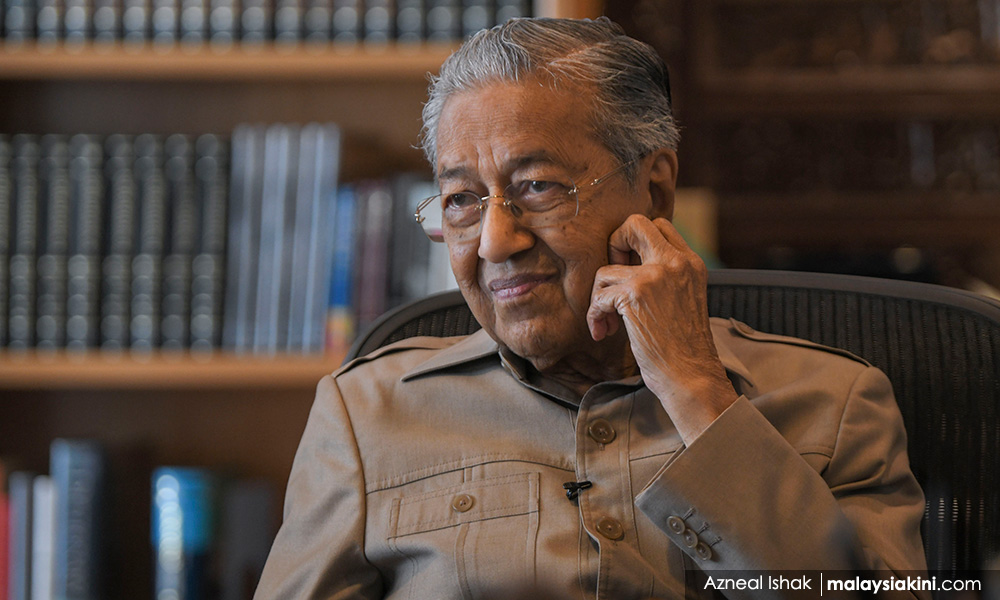
It should be noted that the Federal Constitution does not have any provision for interim governments and interim prime ministers (PMs). When Dr Mahathir Mohamad was appointed as an interim PM from Feb 24-29, 2020, he was meant to be a caretaker PM, as all caretaker PMs have been - between the dissolution of Parliament and the swearing-in of a new PM.
Although Mahathir overstepped his limited role with an economic stimulus package on Feb 27, 2020, when he was the only person in his minister-less caretaker government, this cannot be a rule for caretaker governments.
Caretaker governments are meant to only make the minimum administrative decisions before the next government is formed, after an election or a successful inter-party negotiation.
Notwithstanding Umno's intention to signal its limited length and power and disarm the fear of other parties, this “interim government” is really just another normal government, and if it materialises, would be Malaysia’s second post-election coalition federal government.
The interim government can be a majority government or a minority government with opposition support on a Confidence and Supply Agreement (CSA) basis.
Umno's contribution to the debate is really the idea of “limited mandates”. A less ambitious but more focused government may indeed help stabilising politics when too many parties aim for long-term dominance.
Even though the present government’s failure on health and economic governance is as clear as daylight, we must probe further on Umno's proposal.
What differences will the new government – with Umno's dominance or full support - make? What policy agenda should be adopted but is rejected by the current government? Will it sack incompetent ministers like Adham Baba and appoint more the likes of Khairy Jamaluddin from across government parties? Or, is it simply so because it can secure a majority that the current government cannot?
Umno's proposed third mandate – holding GE15 as soon as possible once herd immunity is achieved – however, may undermine the first two goals. How can ministers focus on governance and make longer-term plans if the electoral calendar is hanging in the air and only months away?
To be taken more seriously and not dismissed cynically as just an excuse for a power grab, Umno must widen the discussion on the policy agenda and plan.
Unity government
A unity government, in the conventional sense, is a government that contains all or most major parties in the Parliament and is called a “grand coalition government” in certain contexts.
In Malaysia, the idea of a post-election unity government took root in the emergency following the 1969 ethnic riot with three important elements.
First, the trauma of riots created a strong desire for both political elites and the masses to seek stability at all costs.
Second, it was initiated by the Alliance government, whose simple majority remained intact despite the electoral setback. The Alliance wanted to restore its dominance and offered the fragmented opposition a deal of power-sharing.
Third, starting with coalition governments at the state and municipal levels, it culminated with the form of a permanent coalition that aimed to eliminate electoral competition for all government parties, BN.
Had DAP and Snap joined BN and no major parties left later as PAS did in 1977, Malaysia would be a full-blown one-party state with ritualistic elections.

It is clear that such conditions are not present now. First, while the pandemic has a traumatising effect, it is not as strong as in 1969. Second, as the PM and the government resists power-sharing, how can this be imposed on the government? By royal intervention? Most fundamentally, it cannot end infighting in government as parties are waiting to beat each other in GE15.
Notwithstanding the noble intentions by some of its proponents, the unity government is a failed formula to resolve the political stalemate.
While we are already entering uncharted waters into the wide ocean, building a ferry – no matter how excellent it may be for coastal travel – should be simply left out of the agenda.
Mageran
Modelled on the Mageran led by then prime minister Abdul Razak Hussein in the aftermath of 1969, different variants of oligarchic government with different scopes of power have been raised.
Notwithstanding the allowance for the Parliament to sit and scrutinise in most variants proposed now, it is fundamentally oligarchic because the key decisions are to be made by an oligarchy of largely unelected individuals, informed by deep distrust and contempt of elected politicians.
The variants only differ in the mix of these four groups of elites: (a) politicians, (b) top bureaucrats; (c) military and police leaders; and (d) technocrats and experts outside the state.
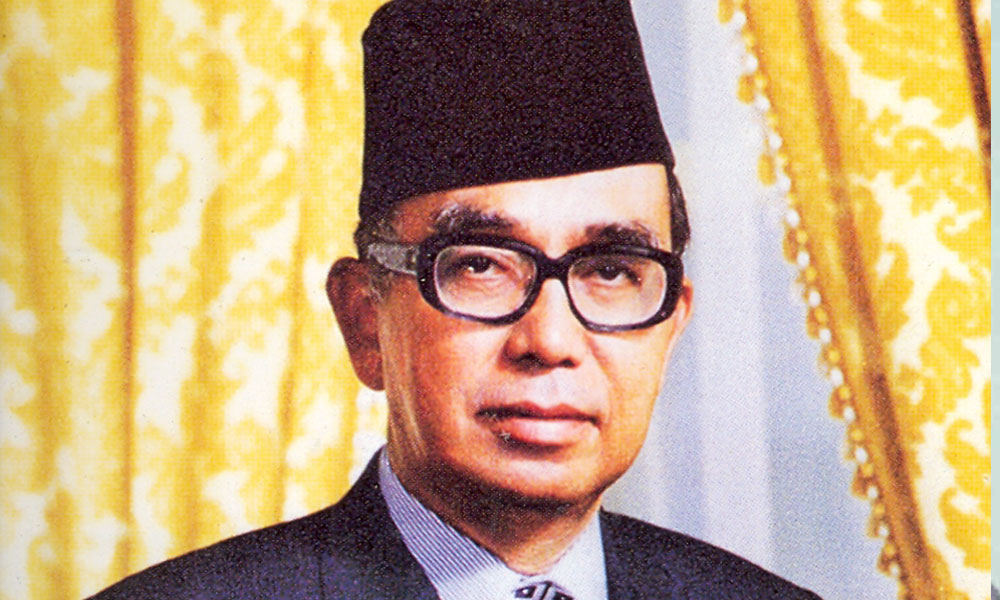
The original Mageran including five executing officials consisted of five ministers (including the deputy PM), four top bureaucrats, three military leaders, and two police leaders.
The original Mageran has a successor in the National Security Council (NSC), which has taken over key decisions on health and economy, with the Parliament suspended, during the emergency. It consists of six ministers (including the PM), two top bureaucrats, the chief of the defence forces, and the inspector-general of police (IGP).
What most proponents of the Mageran variants – let’s call it the Council - want is therefore just a different and broader version of NSC, with technocrats and experts drawn from outside the state playing a dominant role.
In the best scenario imagined, other stakeholders – elected politicians, the bureaucracy, pressure groups in society – would just accept the Council’s technocratic leadership, because it is all about “saving the country”.
Deja vu? Yes, the proponents want the Council to introduce more radical changes than what Pakatan Harapan tried to do after 2018 but by sidelining even more political actors.
Even if the Council is initially accepted by the frustrated public, some of its decisions will inevitably be challenged by segments of society, like what happens to most other governments in a pandemic. Who would back up the Council to impose its decisions on the population – the palace? The police? The military?
Until these questions are properly thought through, Mageran seems a dangerous idea notwithstanding the good intention.
Serious and honest deliberation
Change of government or change of governance modes must be seriously and honestly deliberated, not driven by emotion or adventurism. We should welcome any well-thought proposal of change without excluding the survival or partial change of the current government as also realistic options on the menu.
In such examination, it pays for the serious discussants to consider the following in their premise.
First, Malaysia has now a de facto hung Parliament, which may continue after GE15 unless any bloc can capture the public imagination in a greater prevalence of multi-corner fights than in GE14.
Second, constitutional monarchy should be protected by keeping the palaces above the fray of party politics. The palaces should not be pressured to install any government that sidelines the Parliament.
The manner of government formation in the Sheraton Move should not be made a convention, let alone to be expanded. If the public loses faith in parliamentary democracy, the call for radical changes such as the direct election of a head of government (implying presidentialism) may grow louder.
Third, any government’s survival should not hinge on other unelected institutions like bureaucracy, police, and military.
Finally, for elections to stabilise politics, it requires a level playing field during and after the election to reduce all parties’ anxiety, not haste. An electoral calendar tied to vaccination only makes pandemic and economic governance more short-term and defeats the purpose of changing the government for better governance.
WONG CHIN HUAT is an Essex-trained political scientist working on political institutions and group conflicts. Mindful of humans' self-interest motivation while pursuing a better world, he is a principled opportunist.
The views expressed here are those of the author/contributor and do not necessarily represent the views of Malaysiakini.


Report this comment
Are you sure you want to delete this comment?
This action cannot be undone.