



COMMENT | Botak Chin - crime, punishment and posterity
COMMENT | In 2006, the artist Wong Hoy Cheong produced "Chronicles of Crime", a series of black-and-white images depicting infamous Malaysian crimes. In an interview with Susan Acret of the Asia Arts Archive, Wong explains that crime “regarding migration and movements of people, is universal. It is something people despise but yet they are deeply fascinated by its presence.”
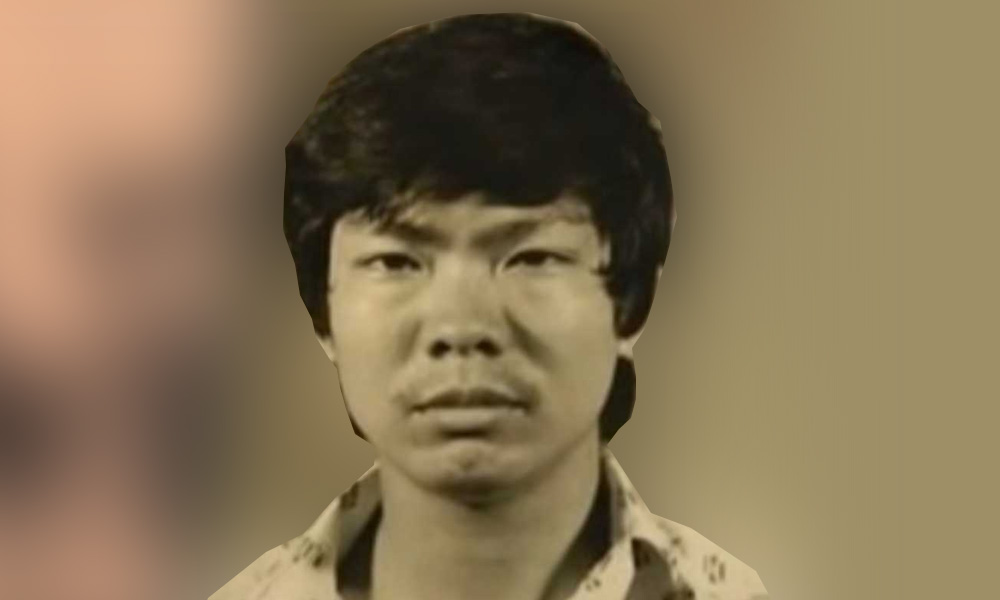
Wong’s models loosely portray their outlaw muses. In one, a bald man is seated beneath a barred window, a plate of food untouched before him. "Last Supper" loosely depicts the very end of the life of Wong Swee Chin – better known as Botak Chin – awaiting the noose. There is much that one assumes about him – a bald-headed Robin Hood character, robbing the rich and helping the poor. The romantic image being portrayed is inaccurate; for instance, Botak Chin had a head full of hair.
Now compare this with another one from the collection of the New Straits Times. He is being marched down the steps of the courthouse in 1980 as a man condemned to the gallows, flanked by police officers on all sides as reporters crowd around. He has just pleaded guilty under the Internal Security Act. He is defiant, still a young man at this point despite the few years spent in Pudu Gaol after his arrest, the state’s “monopoly on violence” being exercised. He will be hanged the next year, his career of crime brought to an end, instructing that his ashes be thrown into the drain.
Regardless, he keeps a dubious place of honour in popular memory, as both a Robin Hood and brutal gangster. In official memory, he is memorialised in the Police Museum, where a display of the weapons seized from Botak Chin’s gang following his arrest in 1976 is prominent - a shotgun with shells, a .38 Luger, .32 and .25 Beretta and a .38 Walther. Other police success stories are commemorated, including the killing of Bentong Kali but Botak Chin’s gang takes a certain strange pride/notoriety of place.
A brief look at his career, synthesised from recollections between Najib Abdul Razak and retired officer Kenny Woodworth and Bernama - in 1969, after eight armed robberies, Wong Swee Chin was sentenced to seven years in prison, but at this time he had yet to use firearms in the robberies – just ...
COMMENT | In 2006, the artist Wong Hoy Cheong produced "Chronicles of Crime", a series of black-and-white images depicting infamous Malaysian crimes. In an interview with Susan Acret of the Asia Arts Archive, Wong explains that crime “regarding migration and movements of people, is universal. It is something people despise but yet they are deeply fascinated by its presence.”
Wong’s models loosely portray their outlaw muses. In one, a bald man is seated beneath a barred window, a plate of food untouched before him. "Last Supper" loosely depicts the very end of the life of Wong Swee Chin – better known as Botak Chin (above) – awaiting the noose. There is much that one assumes about him – a bald-headed Robin Hood character, robbing the rich and helping the poor. The romantic image being portrayed is inaccurate; for instance, Botak Chin had a head full of hair.
Now compare this with another one from the collection of the New Straits Times. He is being marched down the steps of the courthouse in 1980 as a man condemned to the gallows, flanked by police officers on all sides as reporters crowd around. He has just pleaded guilty under the Internal Security Act. He is defiant, still a young man at this point despite the few years spent in Pudu Gaol after his arrest, the state’s “monopoly on violence” being exercised. He will be hanged the next year, his career of crime brought to an end, instructing that his ashes be thrown into the drain.
Regardless, he keeps a dubious place of honour in popular memory, as both a Robin Hood and brutal gangster. In official memory, he is memorialised in the Police Museum, where a display of the weapons seized from Botak Chin’s gang following his arrest in 1976 is prominent - a shotgun with shells, a .38 Luger, .32 and .25 Beretta and a .38 Walther. Other police success stories are commemorated, including the killing of Bentong Kali but Botak Chin’s gang takes a certain strange pride/notoriety of place.
A brief look at his career, synthesised from recollections between Najib Abdul Razak and retired officer Kenny Woodworth and Bernama - in 1969, after eight armed robberies, Wong Swee Chin was sentenced to seven years in prison, but at this time he had yet to use firearms in the robberies – just knives, which also meant that Botak Chin would have avoided being persecuted under the Firearms Act. But it was also here that in the post-May 13th period that many headmen from the secret societies were incarcerated and the activities of the societies severely curtailed afterwards, as Mak Lau Fong found.
But when he was released, he formed a new gang with three men who were commonly known as Ah Wong, Pangkor Chin and Seng Chai, and their exploits became more daring. At this point, he ceased to be a member of a secret society proper – being formerly part of the 360 Gang.
The 360 Gang, one of the Triad societies, saw a teenage Botak Chin recruited into their fold. Even as early as 1957, they had been formally classified by the authorities, alongside groups such as the 21 Brothers and the Ten Tigers of Canton, specialists in “extortion, gang fights, petty theft”, as the scholar, colonial officer and future Malaysian citizen Leon Comber noted. Such was the atmosphere of violence that the outskirts of the city were entrenched in.

The crime spree of the new Botak Chin gang started in 1975, with a raid on an illegal gambling den in Sentul, going on to rob the Bank of Tokyo, mah jong players at a Chinese temple and the Turf Club. On Nov 22, Deputy Superintendent S Kulasingam of the police force, head of the Serious Crimes Section, was shot at seven times in his car with Botak Chin as one of the gunmen.
Miraculously, Kulasingam survived and following this, the “Magnificent 12” task force was set up. Botak Chin’s spree came to an end shortly afterwards, and it was reported that at his arrest at a sawmill on Jalan Ipoh, he taunted officers with the following words, later quoted by the authorities during his trial: "Saya dua tangan sudah jammed kalau tidak saya sudah tembak lu.”
Romantic bandits
Crime and (possible) punishment go hand-in-hand with posterity, bringing with it a certain dark glamour, as Wong Hoy Cheong has demonstrated. The same way Truman Capote was drawn to the Clutter family murders for the writing of In Cold Blood, Laurel Fantauzzo’s The First Impulse, or closer to home, Suganthi Suparmaniam’s The Story of Bentong Kali. Botak Chin has been dead for forty years but his story remains in lurid newspaper reports, locked away in archives, or reincarnated in the television series "Tangkal Besi" and in books such as Wanted: Botak Chin by Danny Lim.
Then there is much scholarly interest into not just the roots of crime, but also the makeup of the secret societies that were particularly prominent in the pre-independence period, such as the 360 Gang mentioned above. It is interesting to digress a little on this point. Mak Lau Fong defines secret societies as “a group which has a set of well-defined norms, secret rituals and an oath that are intended subjectively to bind the members to secrecy regarding the group’s affairs”.
After the transfer of the Straits Settlements to the Colonial office in 1867, pressured by the police, the societies discarded ritual and turned into, or were replaced by ordinary gangsters, but the same tactics of intimidation remained. Right through to the end of the colonial period, they proved a problem - the scholar Wilfred Blythe claimed that the only way to clamp down on activity in Malaya was assimilation, and with the closing of immigration, there was no chance to" revivify the Triad tradition". A secret document, "Triad and Tabut", was compiled by the authorities and showed how deeply worried they were.
Meanwhile, Comber provides a list of all active gangs in Malaya and Singapore, including the aforementioned 360 Gang. Comber states that they were one of the Triads, which originated from a single origin – the ancient Triad Society of Southern China. The best-known origin story traces their formation to the massacre of the fighting monks of Fujian’s Shao Lin temple on the orders of the Kangxi emperor.
The few survivors formed the core of an anti-Manchu feeling: “Overthrow the Qing and restore the Ming” (反清复明). Whether true or not, the Triad would eventually split into smaller splinter groups and rival factions as they travelled in the trails of the Chinese sojourners and immigrants, and centuries later, even played a role in the politics of the 1911 Revolution.

Not all Malaysian secret societies were entirely Chinese – the northern states were rife in non-Chinese secret societies as Mahani Musa’s interesting study has found. Displaced by Kedah’s wars with Siam, forced to flee to British Penang and Province Wellesley, many Malay refugees resorted to secret societies, which also served as a form of social organisation (also called jumaah or kongsi gelap).
Interestingly, this origin story bears parallels to the origin myth of the Triad society. Indian secret society leaders who were believed to have been among the convicts sent to Penang and incarcerated there would introduce Indian-style secret societies into the fray.
Returning to the subject of the posterity of crime more generally – criminals of the Robin Hood archetype are a longstanding Nusantara tradition. The late Cheah Boon Kheng’s research into the little-known peasant robbers who terrorised Kedah in the early decades of the twentieth century is an interesting case. Far from becoming seen as part of the forces that oppressed them, the rural peasantry regarded notable bandits, who sometimes acted in alliance with their oppressors, as symbols of resistance, tales of their exploits creatively adapted into bangsawan plays, romanticised historical narratives, comic books and in one case, into an incomplete film script written by a retired Tunku Abdul Rahman.
Java also has a rich tradition of romantic bandits. Margreet van Till discusses one particularly infamous bandit, the charming yet vicious jago Si Pitung, whose real name was Salihoen, who became larger than life, and lived on in novels, bangsawan and lurid newspaper reports, in Betawi oral tradition. He even cameoed in Pramoedya’s House of Glass, although this time as an embodiment of resistance to colonisation.
For better or for worse, stories of crime appear in many forms – in narratives of public enemies or defenders, quickly running away from their real-life counterparts, the stories taking on a life of their own outside the official record, transformed into modern myths.
WILLIAM THAM WAI LIANG is an editor at large for Wasifiri. His new novel, The Last Days, is set in 1981 and covers the continuing legacy of the Emergency. His first book, Kings of Petaling Street, was shortlisted for the Penang Monthly Book Prize in 2017.
The views expressed here are those of the author/contributor and do not necessarily represent the views of Malaysiakini.


Report this comment
Are you sure you want to delete this comment?
This action cannot be undone.