



COMMENT | The politics of climate change
COMMENT | Since I have previously written about climate change and the environment through personal and industry lenses, the next one to peer through is that of politics.
In a brief interview with Dr Michael Jeyakumar Devaraj, chairperson of Parti Sosialis Malaysia (PSM), we recently discussed a few of the existing political challenges, of which there are many.
The short answer is that the issue is not being ignored or dismissed out of hand, even if Covid-19, economic malaise and the political flux occupy the spotlight. Journalist Tashny Sukumaran has written more on this matter in the South China Morning Post.
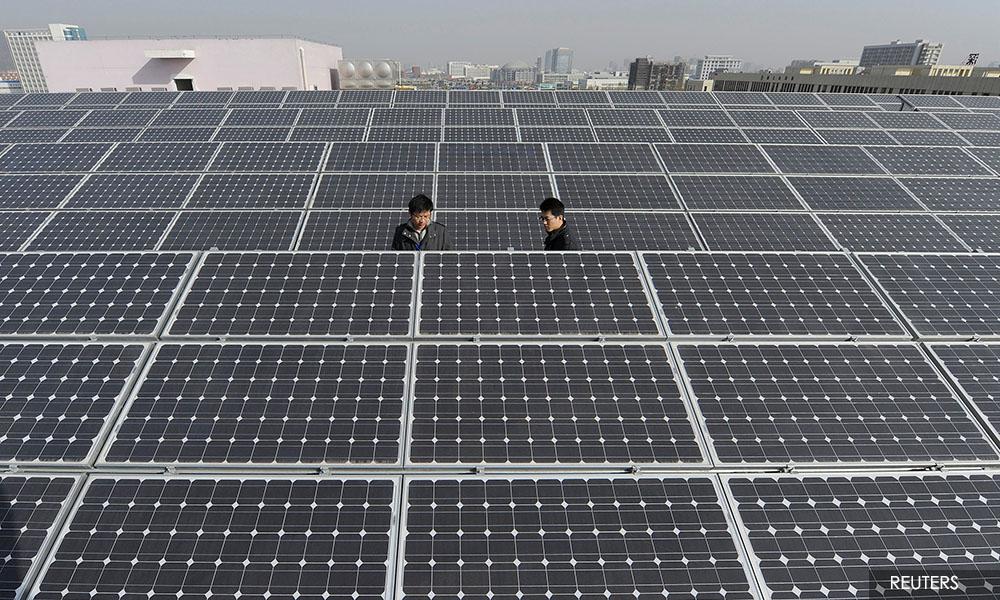
However, whether state and federal promises – such as hitting a certain percentage decrease in the intensity of greenhouse gas emissions per unit GDP, the installation of solar panels, replanting trees, carbon capturing and using bio-methane in the palm oil sector – turn out to be solid commitments or just rhetoric, is another matter.
Climate itself is multifaceted, and...
COMMENT | Since I have previously written about climate change and the environment through personal and industry lenses, the next one to peer through is that of politics.
In a brief interview with Dr Michael Jeyakumar Devaraj, chairperson of Parti Sosialis Malaysia (PSM), we recently discussed a few of the existing political challenges, of which there are many.
The short answer is that the issue is not being ignored or dismissed out of hand, even if Covid-19, economic malaise and the political flux occupy the spotlight. Journalist Tashny Sukumaran has written more on this matter in the South China Morning Post.
However, whether state and federal promises – such as hitting a certain percentage decrease in the intensity of greenhouse gas emissions per unit GDP, the installation of solar panels, replanting trees, carbon capturing and using bio-methane in the palm oil sector – turn out to be solid commitments or just rhetoric, is another matter.
Climate itself is multifaceted, and so while Malaysia may not see the startling, abrupt changes characterising the upper reaches of the northern hemisphere, localised effects will still occur, some of which will be linked to transcontinental systems such as the monsoons.
Our seasons are dictated by these monsoons, the phenomenon spanning continents and oceans – the subject that Sunil Amrith meticulously studies in Unruly Waters.
Going from a historical study to the spectre of climate change, Sunil analyses how we are seeing how manmade changes have wreaked havoc on the patterns of the monsoons and rainfall, the water cycle and the climate. All of these are intertwined, inseparable.
While I’ve written earlier on different aspects of the issue at hand in terms of their smaller, bite-sized components, these by themselves are not all we need to worry about. Agriculture, for instance, is responsible for a good chunk of emissions – while an oil palm plantation or rubber estate may look benign from a distance, there is a social and environmental cost upon closer analysis.
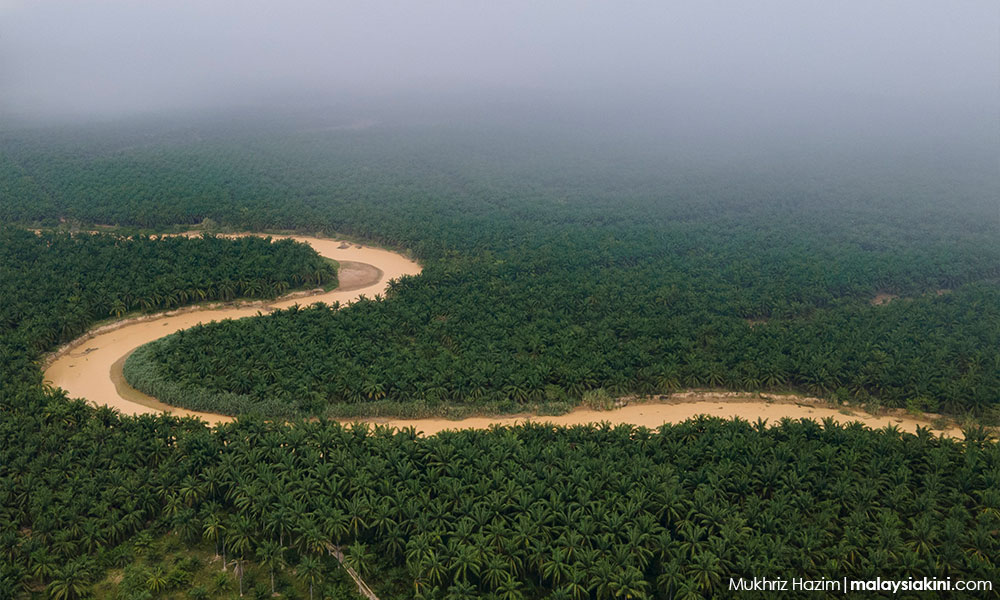
The study of the problems faced by industrial agriculture is an old one, and as John Bellamy Foster and Fred Magdoff have noted, modern sustainable agriculture traces its roots to the study of soil chemistry by Justus von Liebig, at a time when concerns for the degradation of soil fertility led to the plunder of battlefields for bones and outlying islands for guano.
It was von Liebig’s work that Karl Marx drew heavily upon, devoting a good chunk of his discussion in Das Kapital to the broader problems of capitalist agricultural systems. And in the many years since, we now have further complications with the broader understanding of emissions and supply chains.
In all this, responsible, green, renewable energy may be one of the keys to a solution – the eventual title of a previous article on this topic was somewhat misleading – but it must be coupled with the actual evolution of industry and political will.
Green innovation did not replace old tech
As David Wallace-Wells writes, “[m]arket forces have delivered cheaper and more widely available green energy, but the same market forces have … profited from them, while continuing to grow emissions (p. 44)”.
The reason for this isn’t that the innovations are ineffective or a hoax, but that the broader market “has not responded to these developments by seamlessly retiring dirty energy sources …[but is instead] simply adding capacity to the same system (p. 177).” And we still need to take into consideration transportation, domestic waste and venting from the oil and gas sector.
In the puzzle of ensuring that the existing innovations, which if directed, do have the capacity to effect changes, Wallace-Wells notes that “political will is not some trivial ingredient (p. 44).” It is now that we return to the question of political will, where the spectre of darurat iklim – the climate emergency – has been expressed by various public figures and political organisations, including Perak’s Sultan Nazrin and ABIM.
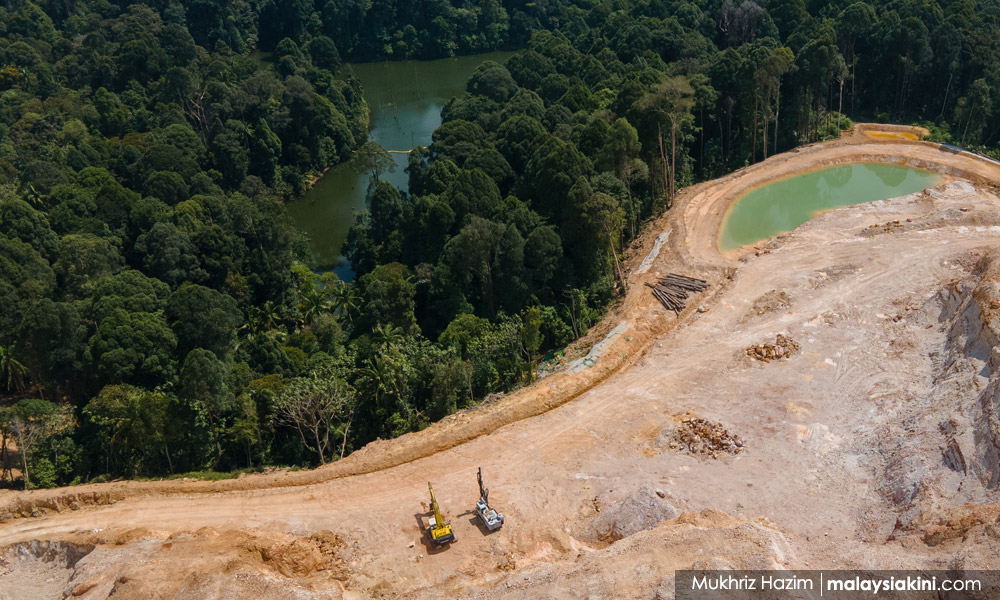
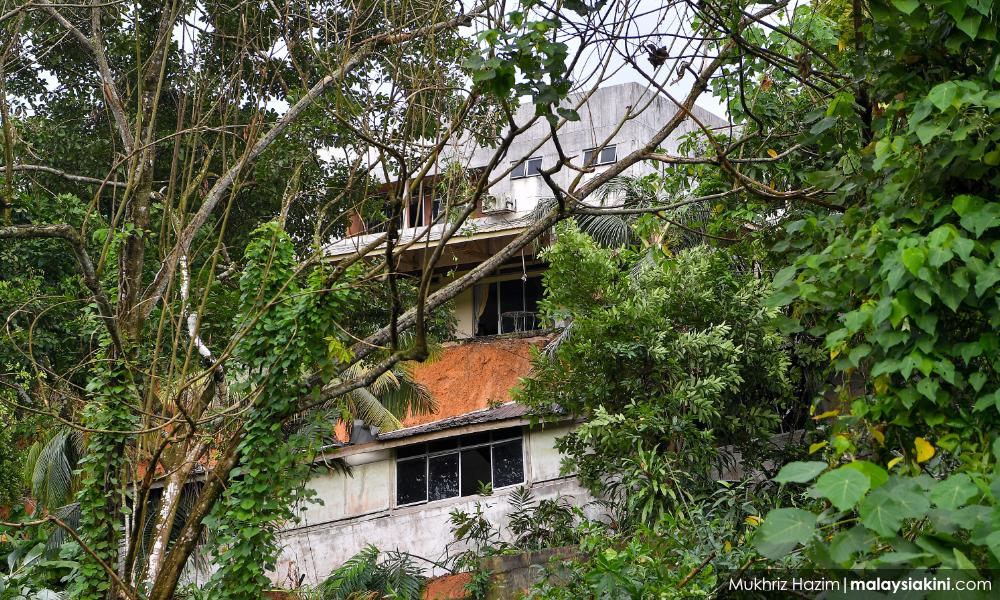
Meanwhile, building on the momentum of increased public anger and uncertainty, PSM’s environment and climate crisis bureau head, Dr Darren Ong Chung Lee, “suggested that Selangor lawmakers oust Amirudin Shari as menteri besar”, in the aftermath of the state’s recent de-gazettement of the Kuala Langat North Forest Reserve.
Ong remains pessimistic about the possibility of change, however. “This has nothing to do with the political situation being fluid. There was no urgency to fight climate change even under stable political situations.”
But if there is one thing that the Kuala Langat debacle has shown, it is that the corruption caused by the collusion between capital and politics is a key problem that must be addressed.

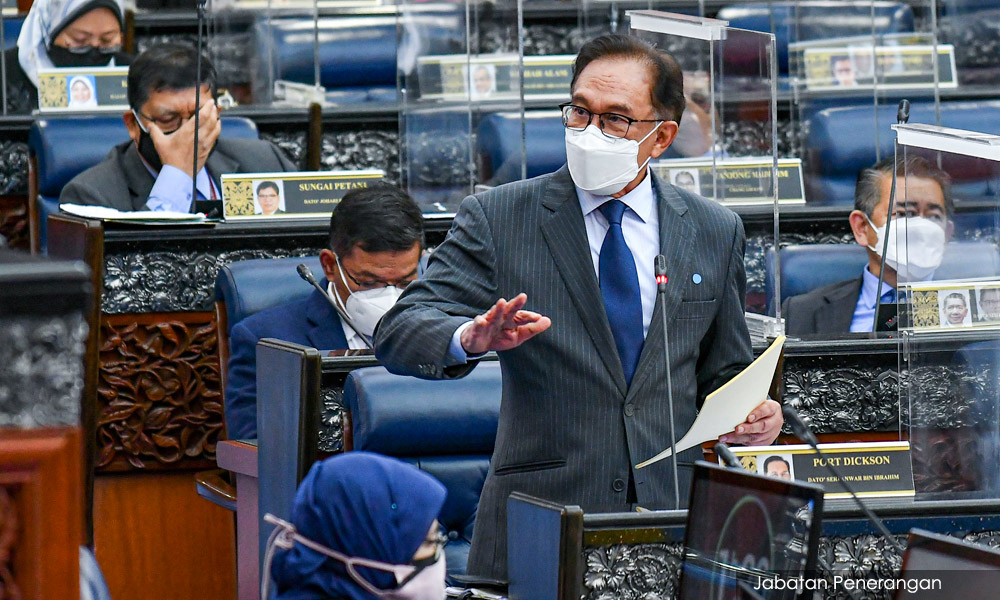
As his colleague Jeyakumar points out, politics and government are still crucial factors, where there is an urgent need to set up a “supra-ministerial committee chaired by the prime minister to coordinate the efforts to reduce greenhouse gases, because some of the issues are beyond the scope of the Energy Ministry”.
Meanwhile, Ong is cognisant that in this matter, there is the need for overcoming public apathy, which is still aplenty, and it is not surprising that the party takes its work with the grassroots seriously.
Naturally, a lot of the party’s work has gone into previous public communication efforts, including the preparation of a detailed study titled “Reducing Greenhouse Gases”, circulated in 2019 during the tenure of the former Pakatan Harapan government.
In addition to being part of Darurat Iklim (a network of NGOs that lobbies the government to take climate action), PSM is involved with PHSKLU (a coalition opposing the aforementioned de-gazettement) and Forum Kedaulatan Makanan Malaysia (which engages with food and agriculture issues).
If it has not become clear by now, the human and social element is foundational here. As former British Labour Party leader Jeremy Corbyn writes in Jacobin: “The climate and environmental crisis is a class issue. It is the poorest people… who suffer first and worst in this crisis.”
Civil societies play vital role
Sunil has noted how international networks and collaborations play a role in awareness and action, in particular, how Penang’s Third World Network (itself an offshoot of the Consumer’s Association of Penang), through work such as the publication of State of Malaysia’s Environment, was eventually able to influence the work of activists far beyond Malaysia’s borders.
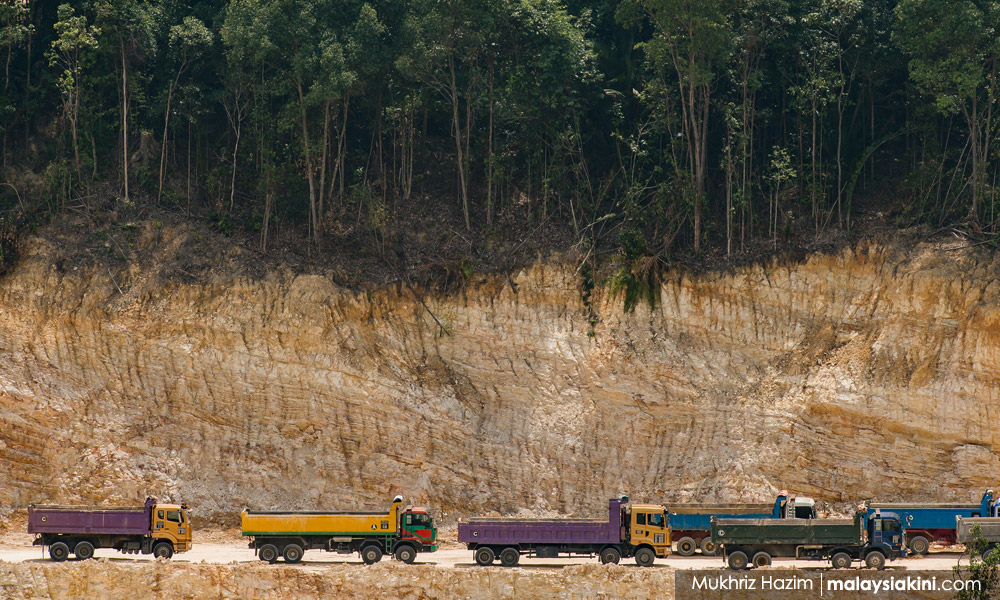
Sahabat Alam Malaysia, as always, plays a vital role in being a spokesperson for action. It is possible for Malaysians to be rallied around relatively short-term, specific efforts involving environmental degradation, such as Lynas. But climate change, being larger and more multifaceted, needs systemic effort to counter.
Thus, Jeyakumar sees the need to strengthen existing civil society movements, to launch a sustained campaign to insist that the ruling government listens. But activism on the ground is fraught with violence, as the vicious harassment of the environmental activist Shakila Zen reminds us.
In all of this, there can be a tendency to fling ourselves into despair or to advocate for extremes. Neither are tenable. Foster, in a different work, has outlined the rehabilitation of Malthusian theory, belatedly resurrected as an ecologist and whose work gave ecology a “conservative, pro-capitalist rather than revolutionary character (p. 150).”
Such ideals were espoused by famed writers such as Garrett Hardin, whose Tragedy of the Commons remains influential, while his eugenicist leanings are left aside.
And Wallace-Wells is concerned about the fact that the most practicable method (mass mobilisation) may be drowned out by cries of alarm from various sides of the spectrum, with advocacy for all measures and means – not so much of denialism, a bunkum belief if there ever was one, but open revolution, utter nihilism, fatalism, withdrawal/inaction – in many cases a matter of saving one’s skin first.
A more complete solution to climate change involves drawing upon three worlds – the personal, the political and the economic. And in all of this, a firm belief in the possibility of change cannot be ignored.
WILLIAM THAM WAI LIANG is an editor at large for Wasifiri. His new novel, The Last Days, is set in 1981 and covers the continuing legacy of the Emergency. His first book, Kings of Petaling Street, was shortlisted for the Penang Monthly Book Prize in 2017.
The views expressed here are those of the author/contributor and do not necessarily represent the views of Malaysiakini.





Report this comment
Are you sure you want to delete this comment?
This action cannot be undone.