


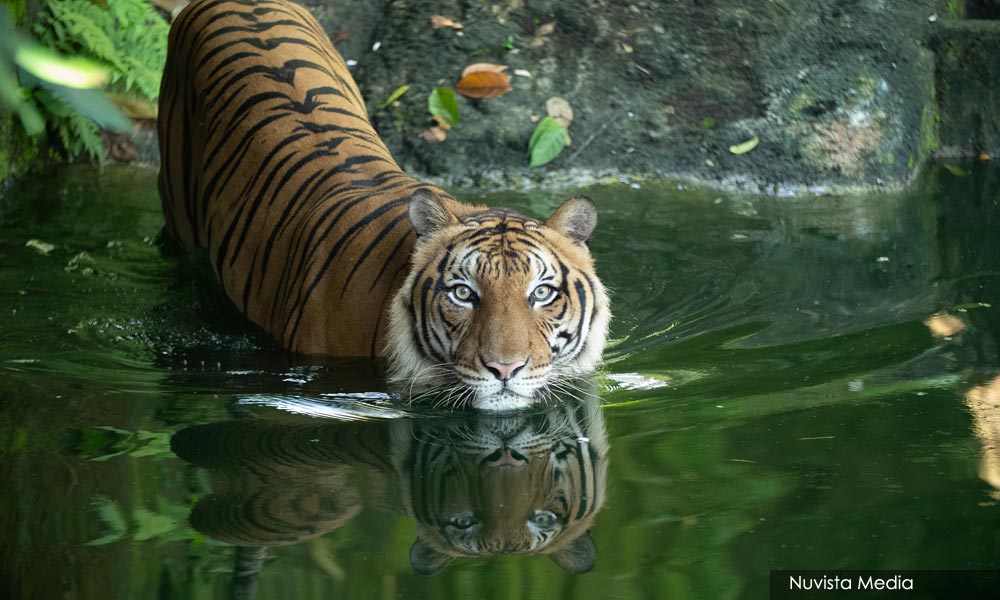

Filmmakers urge M'sians to 'play a role' in saving endangered tigers
Filmmakers Lara Ariffin and Harun Rahman are urging Malaysians to "play a role" in saving the critically endangered Malayan tiger.
Speaking to Malaysiakini on their upcoming documentary Malaysia’s Last Tigers, the filmmakers claimed that while there is no quick fix to saving the majestic animal, it was a situation that required an all-of-society approach.
“For me, nothing is going to happen unless everybody gets on board. The issues are so multifaceted. There is no one solution. There is no magic bullet.
“So, I think everybody plays a role - even (if it is) a small role,” Harun said.
The director added that this included the...
Filmmakers Lara Ariffin and Harun Rahman are urging Malaysians to "play a role" in saving the critically endangered Malayan tiger.
Speaking to Malaysiakini on their upcoming documentary Malaysia’s Last Tigers, the filmmakers claimed that while there is no quick fix to saving the majestic animal, it was a situation that required an all-of-society approach.
“For me, nothing is going to happen unless everybody gets on board. The issues are so multifaceted. There is no one solution. There is no magic bullet.
“So, I think everybody plays a role - even (if it is) a small role,” Harun said.
The director added that this included the football teams that put the Malayan tiger on their jerseys, and school students who set up an environmental society in their school.
“Everybody needs to step up. We're not saying there is an easy solution. There is no easy solution,” he added.
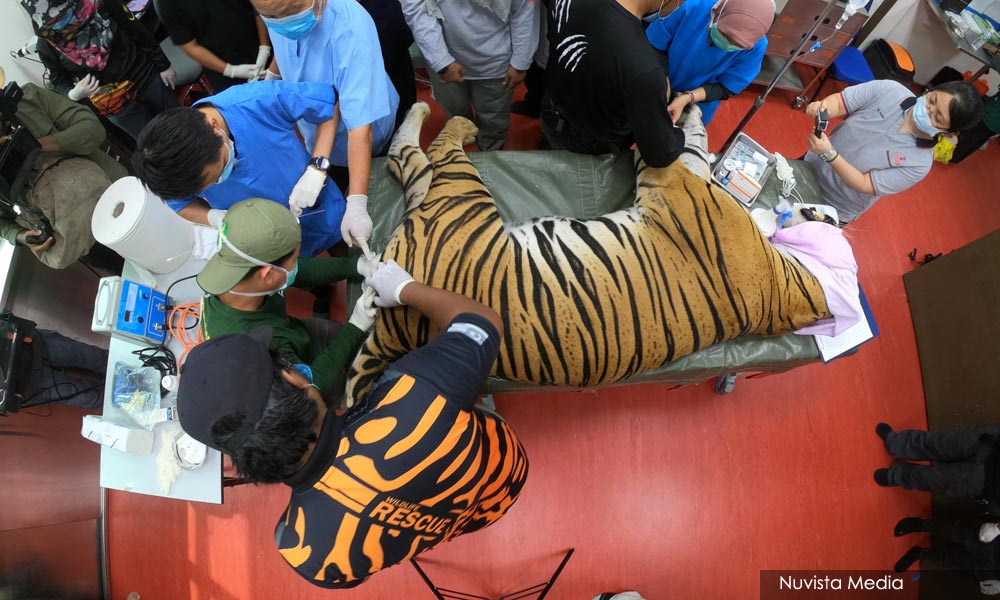
In the making of the film, it dawned on Lara that many still take the animal behind the country’s national symbol for granted.
“Malaysia, I think we need to really look inside and say that we have so much (natural resources) but we are just destroying it.
“We're not looking after what (we have). We really need to look at things in a different way. Don't take things for granted.
“I think a lot of Malaysians take things for granted, that the forest will always be there and the tigers will always be there,” she said.
The president of NGO Rimau added that in her lifetime alone, she had seen two key species go extinct - the leatherback turtle and the Sumatran rhino.

It was reported that the National Tiger Survey 2016-2020 preliminary findings indicated that the country’s Malayan tiger population in the wild had dwindled to less than 200 - due to poaching, loss of natural habitat and environmental pollution.
Conservation process
Harun explained that part of their film’s objective was to show the process of conservation in Malaysia.
“We wanted to show how difficult conservation work is. It's not an easy task. It needs a lot of people from all different aspects of conservation to be involved.
“We wanted to show heroes - basically, what they all go through. It is a tough job that benefits all of us in some way,” he said.
He added that the wildlife documentary also attempted to express the gravity of the situation surrounding the dwindling tiger population.

Taking audience into the forest
Lara said the film is also meant to inspire and bring the audience into a world that may be out of reach from their homes in the city.
“I think people forget how beautiful our country is. It's not accessible. It's very difficult to go into the jungle to spend time and to experience it yourself.
“Most of us live in the city - to be able to experience that kind of beauty is not easy. I think that's also the other thing that we wanted to make sure (of).
“Fall in love with our animals, fall in love with our rainforests because there is such wealth there that people don't know about. If they don't know, they won't care about it,” she added.
Set in the pristine rainforest of Taman Negara and the Main Range, Malaysia’s Last Tigers tackles issues such as poaching, tiger reproduction, and loss of habitat due to deforestation, among others.
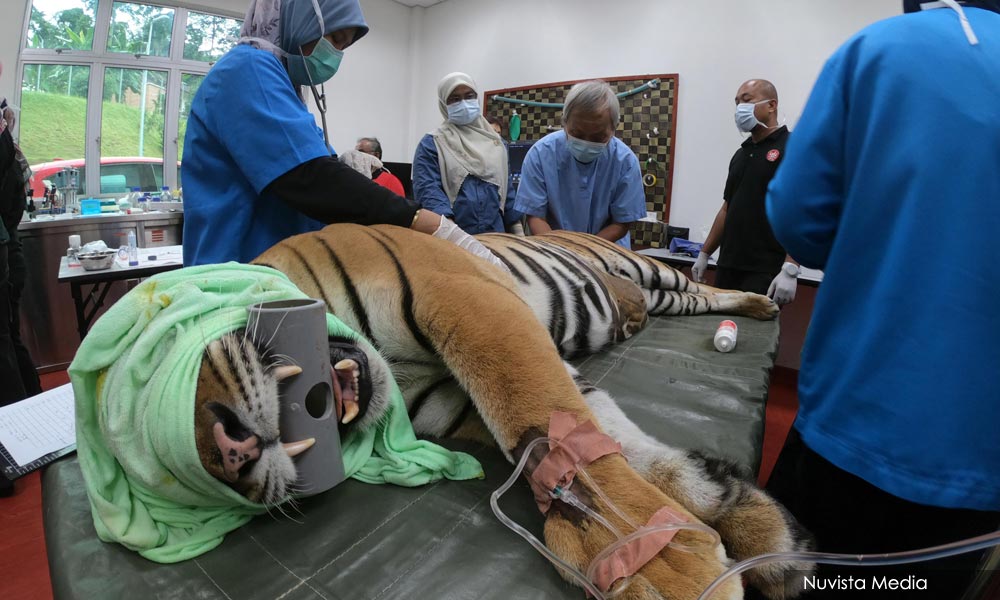
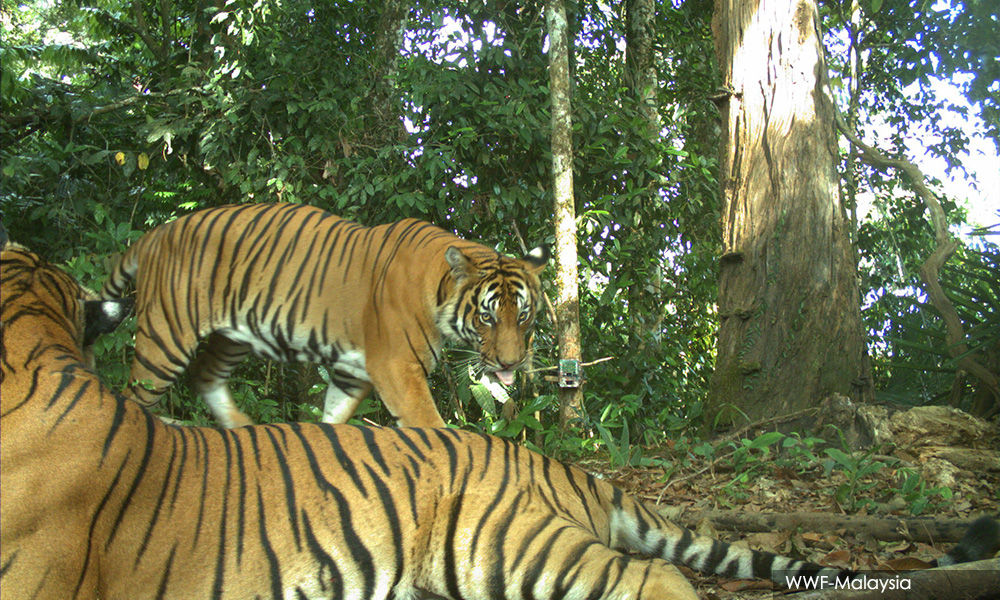
The film closely follows the work of the Wildlife and National Parks Department’s Tiger Unit and NGO Pelindung, as they set up camera traps to document the movements of the Malayan tigers, alongside other lesser-known species - such as the clouded leopard.
Earlier this year, former prime minister Muhyiddin Yassin urged state governments to gazette the habitat areas of the Malayan tiger as permanent forest reserves or wildlife reserves, in light of the species' decreasing numbers.
Malaysia’s Last Tigers will premiere on the National Geographic Astro channel at 10pm tomorrow and will be available on demand.




Are you sure you want to delete this comment?
This action cannot be undone.