


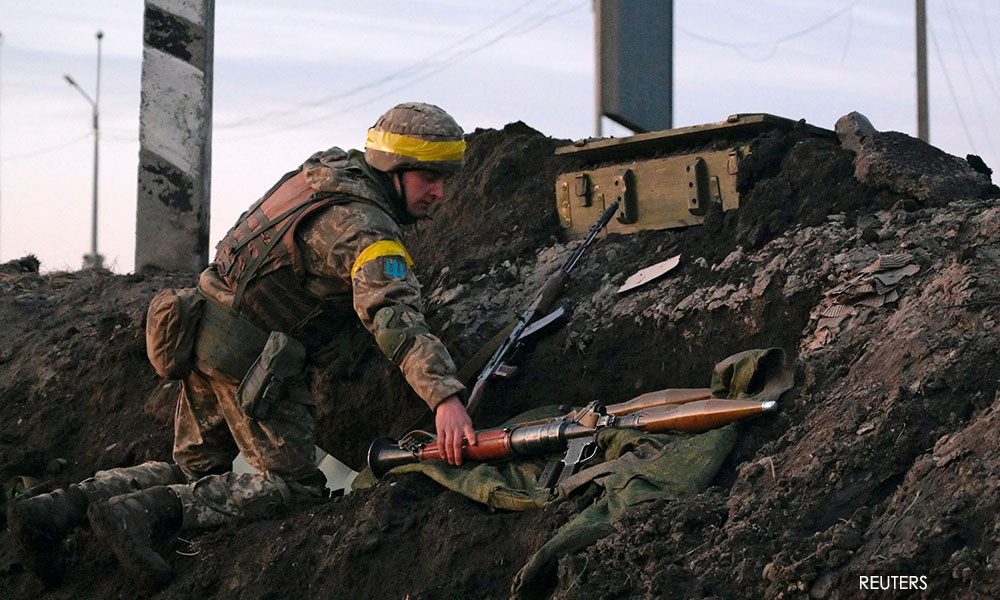

COMMENT | All countries must stand up in solidarity with Ukraine
COMMENT | The unthinkable has returned to Europe: war. Russia wages a war against Ukraine. How could that happen?
Europe had enjoyed a long period of peace, from 1945 to 2022, with the exception of the wars of succession to Yugoslavia in the 90s. Yes, for many decades, this was an unfriendly peace; it had not even been called peace but rather a Cold War.
There was the confrontation of two military and ideological blocks, the free West and the Communist East. With the fall of the Berlin Wall, the decline of the Soviet Union and the dismemberment of the Warsaw Pact, however, a new era of peace, security and cooperation seemed to dawn.
The Paris Charter for a new Europe documented the end of the Cold War and the separation of Europe, the heads of state and the governments of the European states committed their countries to democracy, the rule of law and respect for human rights. The Soviet Union and the US, among others, signed this pact.
At that time, the Soviet Union agreed to the reunification of Germany and to the adherence of united Germany to Nato. There was never a mandatory commitment that the other countries of the former Warsaw pact were not allowed to join Nato, despite...
COMMENT | The unthinkable has returned to Europe: war. Russia wages a war against Ukraine. How could that happen?
Europe had enjoyed a long period of peace, from 1945 to 2022, with the exception of the wars of succession to Yugoslavia in the 90s. Yes, for many decades, this was an unfriendly peace; it had not even been called peace but rather a Cold War.
There was the confrontation of two military and ideological blocks, the free West and the Communist East. With the fall of the Berlin Wall, the decline of the Soviet Union and the dismemberment of the Warsaw Pact, however, a new era of peace, security and cooperation seemed to dawn.
The Paris Charter for a new Europe documented the end of the Cold War and the separation of Europe, the heads of state and the governments of the European states committed their countries to democracy, the rule of law and respect for human rights. The Soviet Union and the US, among others, signed this pact.
At that time, the Soviet Union agreed to the reunification of Germany and to the adherence of united Germany to Nato. There was never a mandatory commitment that the other countries of the former Warsaw pact were not allowed to join Nato, despite some remarks of acting politicians of Western countries towards Soviet leaders.
This, of course, could not even legally have been possible as it would have amounted to an infringement on the sovereign rights of those countries to freely choose their alliances. Russia committed itself to this very right in the Nato Russia Founding Act in 1997 and again in the Document of Istanbul of the Organization for Security and Co-operation in Europe (OSCE) in 1999.
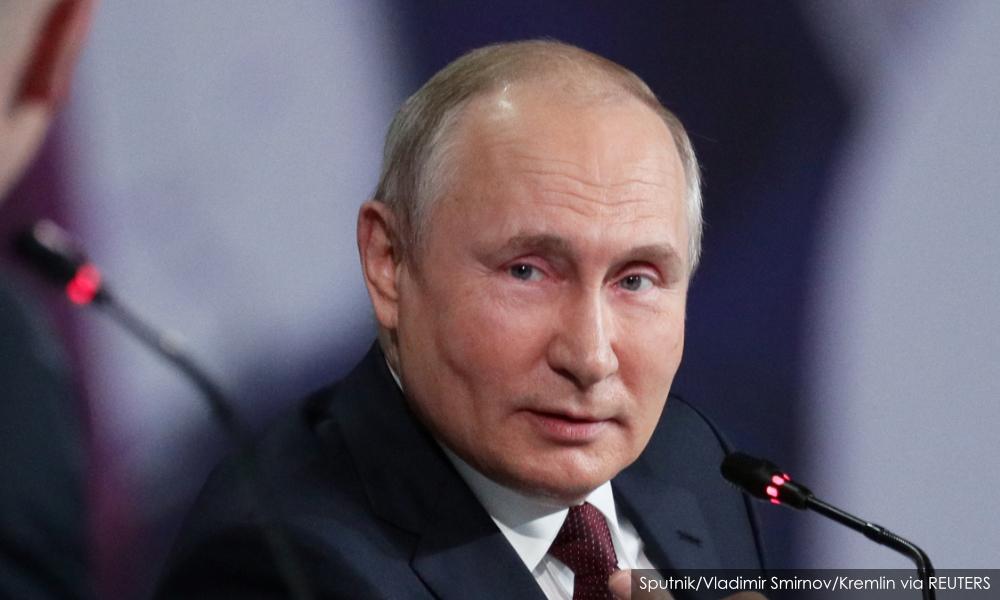
Dissolution of Soviet Union
When the Soviet Union was dissolved, many of her nuclear weapons rested on the territory of Ukraine, which became a sovereign state. In the Budapest Memorandum of 1994, Ukraine renounced the possession of nuclear weapons which were handed over to Russia.
In return, Russia, the USA and the United Kingdom committed themselves to guarantee the sovereignty and territorial integrity of Ukraine; France and China signed corresponding declarations.
Russia betrayed this commitment for the first time in 2014 when it first occupied and then annexed Crimea. This was a blatant breach of international law, which was almost universally condemned and rejected, also by Malaysia.
At that time, Russia also started an insurrection in the east of Ukraine, in the Donetsk Basin (Donbas), where a majority of Russian speaking people live. This also was a clear breach of international law, an interference in the internal affairs of another country.
The separatists later pronounced the independence of the so-called “people’s republics” of Donetsk and Luhansk. Nobody recognised these entities until Russia did, on Feb 21. Three days later, Russia started its war of aggression against Ukraine.
The justifications Russian President Vladimir Putin has put forward for his war of aggression do not stand any serious examination.
First, he claimed that Nato enlargement was threatening Russia. But the last Nato enlargement took place in 2004, and admission of Ukraine to Nato would not be on the agenda for any time soon. Moreover, it is every country’s own right to choose its alliances, as accepted by Russia itself in the Nato Russia Founding Act and in the Istanbul declaration. This naturally applies to Ukraine, too.
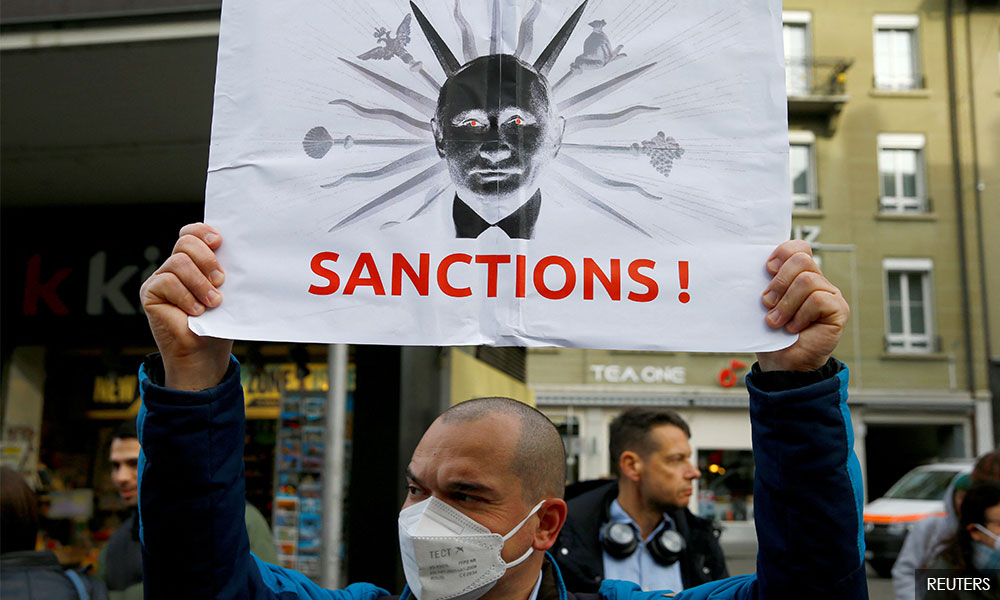
Pushing Ukraine to Nato
Ironically, it was Putin himself who pushed Ukraine to Nato: Whilst only a minority of Ukrainians favoured an accession to Nato before the illegal Russian invasion of the Crimea, this changed to a majority afterwards. Also, Nato has never threatened Russia and always offered disarmament talks.
Then, Putin came up with the totally unfounded assumption that Ukraine was committing genocide in the breakaway territories of Luhansk and Donetsk. The UN secretary-general himself has rejected this as untruthful.
Just imagine: a country like Ukraine, hopelessly outgunned by Russia, should provoke its giant neighbour by a genocide of its Russian speaking citizens next to the Russian border? This is hilarious.
Indeed, it is Putin himself who bears the responsibility for the 14,000 deaths to be mourned in this conflictual area by fuelling the separatist movements with logistic and propagandistic support since 2014.
Actually, Putin has disclosed his proper motivation in an essay of summer 2021 where he denied Ukraine its own national identity and opened up territorial claims. It is also well known that he considers the decline of the Soviet Union as the biggest geopolitical catastrophe of the 20th century.
All this reveals his true aspiration for Russia to regain its status as a hegemonic superpower in Europe and beyond. This is in total contradiction to the principals of the United Nations as a community of equal states. If not countered energetically, it bodes ill for the peace, freedom and security of every state on earth.
All countries, near and far from Ukraine, should stand up in solidarity with Ukraine and demonstrate to Russia that they do not accept the exchange of the order of peace established by the Charta of the United Nations by the law of the jungle.
Biden hits Russia with new sanctions for 'premeditated' Ukraine attack
EU says 'Putin must and will fail' as it agrees new sanctions
Explosions heard in Kyiv, official says enemy aircraft downed
Explainer: The new US export rules designed to freeze Russian tech
Biden takes veiled swipe at China in condemning Russia backers on Ukraine
Ukraine ambassador to M'sia hits out at Putin over needless bloodshed
ROLAND GALHARAGUE is the ambassador of France to Malaysia. PETER BLOMEYER is the ambassador of Germany to Malaysia.
The views expressed here are those of the author/contributor and do not necessarily represent the views of Malaysiakini.


Report this comment
Are you sure you want to delete this comment?
This action cannot be undone.