




A Christmas musing
Not long after the Taliban government was toppled in the war waged and led by President George W Bush in 2001, I met with a group of PAS members in a western-styled cafe in downtown Kuala Lumpur. They were still reeling from the swift but effective military offensive that ended the ultra-conservative regime in Afghanistan, and were livid that the western governments had shrugged off the collateral damage and the human cost.
Christmas was just around the corner. Attempting to stoke up my empathy with the suffering Afghan civilians, one of them asked, "I know you are a Christian. So tell me, how did you feel when so many Christians in East Timor were brutally killed in the 1990s? You should understand how much we Muslims feel for the Afghans right now."
But my answer shocked them all, as I told them my profound sympathy for the East Timorese did not spring from the fact that we happened to share the same Christian faith. Rather, it had always been my conviction that God's presence and mercy should be more keenly felt by Christians whenever there is war, conflict, strife, and disaster, regardless of the victims' religious faith.
Not long after the Taliban government was toppled in the war waged and led by President George W Bush in 2001, I met with a group of PAS members in a western-styled cafe in downtown Kuala Lumpur. They were still reeling from the swift but effective military offensive that ended the ultra-conservative regime in Afghanistan, and were livid that the western governments had shrugged off the collateral damage and the human cost.
Christmas was just around the corner. Attempting to stoke up my empathy with the suffering Afghan civilians, one of them asked, "I know you are a Christian. So tell me, how did you feel when so many Christians in East Timor were brutally killed in the 1990s? You should understand how much we Muslims feel for the Afghans right now."
But my answer shocked them all, as I told them my profound sympathy for the East Timorese did not spring from the fact that we happened to share the same Christian faith. Rather, it had always been my conviction that God's presence and mercy should be more keenly felt by Christians whenever there is war, conflict, strife, and disaster, regardless of the victims' religious faith.
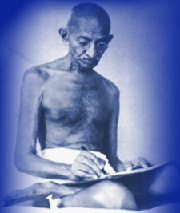 In other words, my friends in PAS really need not have used East Timor as an analogy in order for me to understand how much they had been emotionally affected by the war on Afghanistan. For many, their opposition to the war was informed by anti-Americanism, seeing it as yet another military adventure to assert America's power and its global hegemony. But I knew deep down that there would be innocent victims; whether or not it was a just war was immaterial. Mahatma Gandhi was indeed insightful when he observed that the good done through violence was only temporary, while the evil it left was permanent.
As Jesuit priest and peacemaker Daniel Berringan once said, peace activists often lost because they only wanted peace with half a heart, as opposed to war apologists who went out of their way to fight for their cause.
And I also seized the moment to articulate to them my firm view that, by urging the world to empathise with the Afghans, they must not have at the same time turned a blind eye to the oppressive rule of the Taliban. The human race is prone to amnesia, and absolves easily its own evil deed in the face of a "foreign" invasion.
Anyway, I was well pleased and grateful when the PAS members greeted me "Blessed Christmas" before we parted.
Christmas trees and Santa Claus
Some believe Yuletide began as a pagan invention the date cannot be found anywhere in the Bible and became a commercialised festival over the centuries. Yet, the transcendent meanings of Christmas break down human boundaries, to be shared by each and everyone who seeks love, peace and forgiveness.
Last night, I had the honour of helping to wrap a few small gifts with some of my church friends at the Father's House, just a few minutes' walk from the malaysiakini office, for the underprivileged, but not "unfortunate", children at Rumah Hope . These children may be denied certain privileges, given the right opportunity, they will get to enjoy life to the full in future, provided they grab and appreciate it.
 I must admit when I was younger, I was curious why my friends in Johor Bahru had to spend their Christmas Eve in Orchard Road, Singapore. Only years later did I realise the absence of Christmas trees and the glittering lightings in JB and other parts of Malaysia had cost the country some tourism revenue.
These days, our government is keener than ever to project Malaysia as a harmonious and peace-loving country. Should anyone question these multi-religious "credentials" of our nation, many an official would jump to his/her feet and point to the Christmas trees and the images of Santa Claus in and around the shopping malls to prove the person wrong.
And it works. A British friend of mine who visited KL recently was surprised to see the Christmas decorations in a largely Muslim country, and told me she now looked forward to spending her next Christmas in some beautiful island of Malaysia. Festive seasons, in anywhere of the world as in Malaysia, are now a lucrative business.
Shallow window-dressing
I never cease to be disturbed by this shallow window-dressing of multiculturalism that is rooted more in consumerism than in a genuine commitment to socio-religious diversity and equality. It simply negates the heart of Christmas and reduces it to consumerist ornament.
After the festive joy and atmosphere die down, will the many churches be getting their planning permits sooner than the construction of Zakaria Deros' palatial abode? Or will we no longer have to involve an emotionally draining tussle before any dispute over temple demolition can be resolved peaceably?
For me personally, Christmas is also an opportune time to remember and to reflect upon, for instance, the innocent deaths in the series of violence in Iraq, a catastrophic consequence of an ill-intentioned war supported by, yes, many Christian churches around the world. Or we may choose to offer a silent prayer for the persecuted underground brethren in China who have to meet clandestinely to celebrate the birth of Jesus Christ.
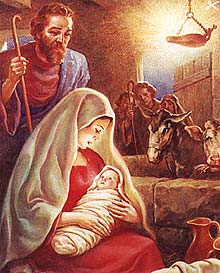 Closer to home, what about keeping the now homeless folks of Kampong Berembang, whose houses were razed to the ground in a merciless manner, and the victims of the current floods in several states of Malaysia, in prayer?
And we certainly must not forget the hundreds of thousands of migrant workers and undocumented persons, who clean our streets and build our houses for meagre pay. After all, nothing is more ironic for Christians than to not remember infant Jesus as a refugee in Egypt shortly after his humble birth in the manger. Being a Christian never means to be a life of comfort and glory, but it is in realising one's spiritual dearth that the ultimate meanings of life make sense.
If we are willing to put in some effort, we may see a very different Yuletide next year. And, really, one does not have to be Christian to enjoy a blessed Christmas.


Are you sure you want to delete this comment?
This action cannot be undone.