




The charity of sacrifice
(Speech given on the occasion of the Eidul Adha, Sunday Dec 31, 2006 at Gavilan College, Gilroy, California.)
Praise be to Allah that we are able to gather on this crisp Sunday morning of the last day of the year to celebrate Eidul Adha, the Feast of Sacrifice, in peace and prosperity! We are fully aware that there are millions elsewhere who are not so blessed or fortunate.
We are able to enjoy our freedom, peace and prosperity today because those before us have made their sacrifices. When Prophet Muhammad (May peace and the blessings of Allah be upon him!) received his first revelation from Allah, he was fully aware of the awesome responsibilities and the needed sacrifices that he would have to make to fulfill Allah's mission.
(Speech given on the occasion of the Eidul Adha, Sunday Dec 31, 2006 at Gavilan College, Gilroy, California.)
Praise be to Allah that we are able to gather on this crisp Sunday morning of the last day of the year to celebrate Eidul Adha, the Feast of Sacrifice, in peace and prosperity! We are fully aware that there are millions elsewhere who are not so blessed or fortunate.
We are able to enjoy our freedom, peace and prosperity today because those before us have made their sacrifices. When Prophet Muhammad (May peace and the blessings of Allah be upon him!) received his first revelation from Allah, he was fully aware of the awesome responsibilities and the needed sacrifices that he would have to make to fulfill Allah's mission.
Those early Muslims sacrificed much and endured monumental tribulations to spread the message of Allah. We owe them a considerable debt of gratitude. One central message of Islam is our equality in the eyes of God. This is symbolised by the pilgrims attired only in their white ahram performing one of the Hajj's important rituals: kings beside commoners, the rich alongside the poor, and the ulama side by side with the novice.
Greater sacrifice
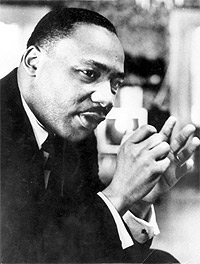 The Founding Fathers too gave much of themselves to rid America of the tyranny of colonialism, and thus ushered in our freedom. Later, leaders like Martin Luther King gave the ultimate sacrifice in bringing to reality the hallowed assertion in our Declaration of Independence. We hold these truths to be self-evident, that all men are created equal, that they are endowed by their Creator with certain unalienable Rights, that among these are Life, Liberty and the pursuit of Happiness.
Through their sacrifices, today we get to enjoy these freedoms. Our forefathers too gave much of themselves. It took more than just courage to uproot themselves from the warmth of their family, friends and familiar surroundings in search of a better future in a distant country. They had faith in themselves and in God that their sacrifices would have meaning and bring positive consequences. That sustained them in the ensuing uncertainties.
Those like me who were not born in this country but choose to live here share that sentiment. It is a tribute to the greatness of this nation that it is welcoming of new immigrants. The only difference my great grandchildren could rightly claim decades hence would be that their ancestors came to this great country in a Boeing 747 instead of a steamship or schooner.
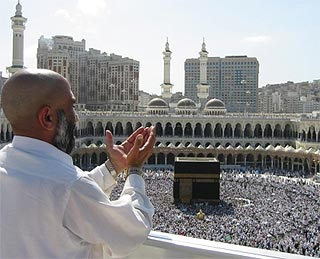
Today we celebrate with our fellow faithful in Mecca as they complete their pilgrimage. May Allah accept their pilgrimage and give them safe passage.
As part of the rituals, the pilgrims will reenact the ultimate sacrifice that was asked of Nabi Ibrahim. What made Nabi Ibrahim endure the searing emotion of having to sacrifice his only son was the supreme belief in Almighty Allah and in the justness of His command. There must be a greater meaning to the sacrifice.
Following this congregational prayer, we too will ritualistically reenact that ultimate sacrifice by slaughtering an animal and sharing the meat with our friends, family, and the needy. This act of sacrifice is thus also an act of charity, and charity is a major pillar of our faith.
The physical aspect of the sacrifice is readily apparent and appreciated. More important would be the sacrifices we must charitably make in our spirit, deeds, and words. While it would be easy for us to make the sacrifices for and be charitable to our own kind or those we like and agree with, the greater sacrifice would be to do the same to our adversaries and those other than our own kind.
A kind word to or deed upon them would require much greater sacrifice on our part precisely because it is so much more difficult to undertake. Yet those are the most charitable of deeds that we can perform. The potential benefits that would accrue not only upon us but also on the recipients of our generosity, as well as on our community, are immense. At the personal level we could then at least reassure ourselves that we have done our part and salve our conscience. At best it may very well change minds and behaviors.
Good begets good
 The effect on our community of such individual acts of charity and sacrifice is self-reinforcing and self-multiplying. The adage, good begets more goodwill, rings true.
Just as the freedom and prosperity we enjoy today are the consequences of the sacrifices of those before us, so too we must contribute our share of sacrifices so those following us would also get to enjoy theirs.
Today we have our Eid prayers in a rented hall. Insha Allah, we look forward to one day of having not only our own masjid but also a facility to educate our young and house our elders. Our community has embarked on the ambitious Cordoba Project on a 16-acre parcel in San Martin. We envisage a community center in the fullest sense, a place for learning, for our congregational prayers, to take care of our elders, and a center of our community s activities.
Our goals are lofty and the challenges great. They demand much of us: much work and even greater sacrifices. Let us all do our part. I wish you Eid Mubarak and Happy New Year!
(The writer has just released his latest book, Towards A Competitive Malaysia: Development Challenges in the Twenty-First Century .)


