


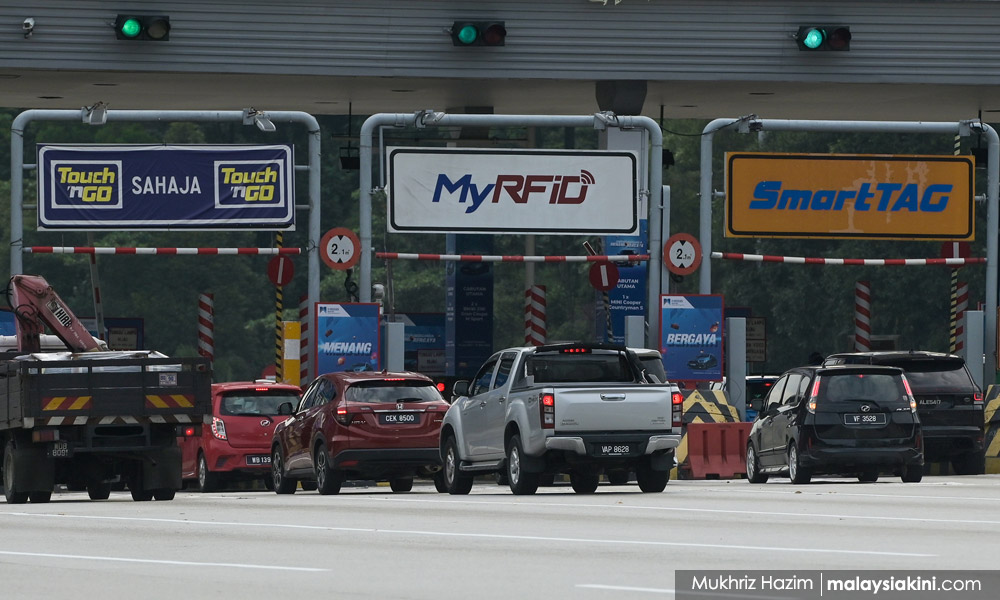

COMMENT | Beware of ‘potholes’ in toll road restructuring
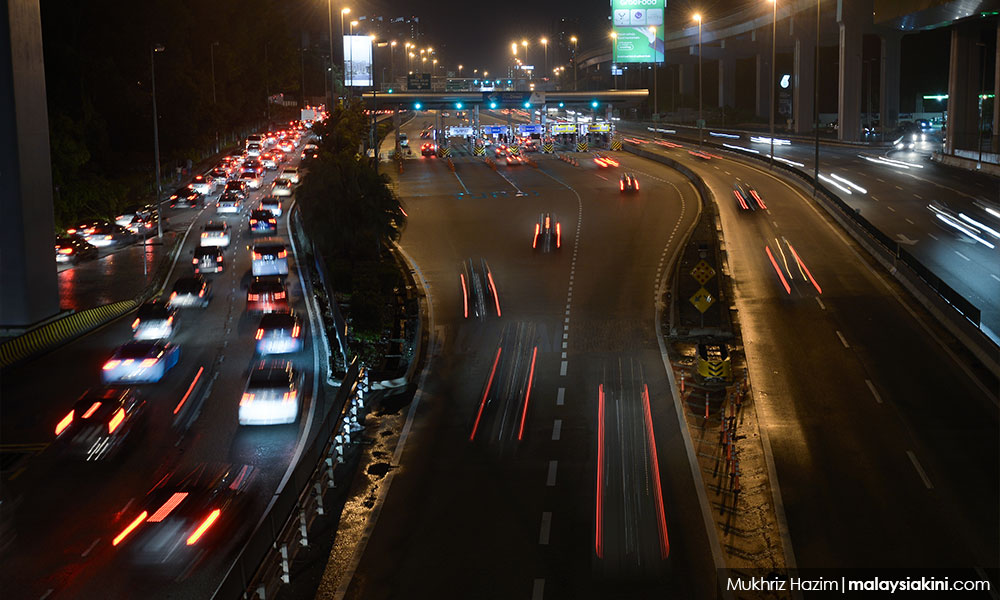
COMMENT | On April 4, Prime Minister Ismail Sabri Yaakob proudly announced toll rates for Klang Valley highways will be fixed until the end of the concession period.
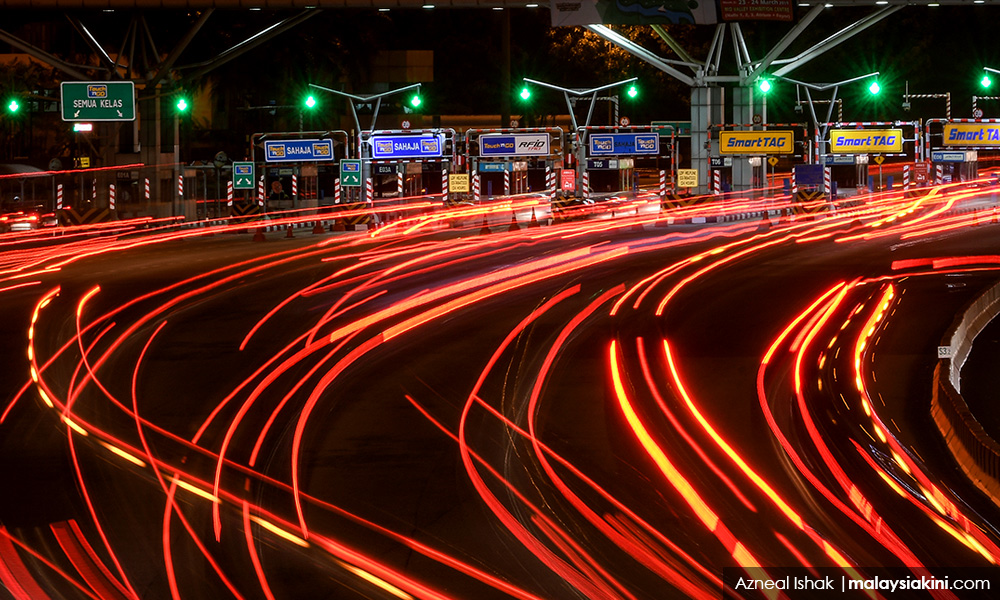
This involves the Kesas (concession expiry date: 2028), LDP (2030), Sprint (2034), and Smart (2042).
The announcement struck all the right cords: no hike in toll rates, no government guarantees or any other financial liabilities, the government saves RM4.3 billion in compensation, a win-win proposal for the rakyat, concessionaires, and all other stakeholders, no employee layoffs, and the highways returned to the government free of encumbrances at the end of the concession period.
The icing on the cake is all these goodies will be delivered by a not-for-profit private entity called Amanat Lebuhraya Rakyat Bhd (ALR).
This seems like a perfect plan. In one strike, it ended the toll concession quagmire, or nightmare, the rakyat has endured since highways were privatised in the 1980s. Why didn’t anyone think of this earlier?
The plan seems to be well received. Even the Pakatan Harapan opposition claimed credit as a copycat of their proposal, albeit with minor modifications. The concessionaires, analysts, and capital markets loved it.
But there is a saying, the road to hell is paved with good intentions. The devil is in the details....COMMENT | On April 4, Prime Minister Ismail Sabri Yaakob proudly announced toll rates for Klang Valley highways will be fixed until the end of the concession period.
This involves the Kesas (concession expiry date: 2028), LDP (2030), Sprint (2034), and Smart (2042).
The announcement struck all the right cords: no hike in toll rates, no government guarantees or any other financial liabilities, the government saves RM4.3 billion in compensation, a win-win proposal for the rakyat, concessionaires, and all other stakeholders, no employee layoffs, and the highways returned to the government free of encumbrances at the end of the concession period.
The icing on the cake is all these goodies will be delivered by a not-for-profit private entity called Amanat Lebuhraya Rakyat Bhd (ALR).
This seems like a perfect plan. In one strike, it ended the toll concession quagmire, or nightmare, the rakyat has endured since highways were privatised in the 1980s. Why didn’t anyone think of this earlier?
The plan seems to be well received. Even the Pakatan Harapan opposition claimed credit as a copycat of their proposal, albeit with minor modifications. The concessionaires, analysts, and capital markets loved it.
But there is a saying, the road to hell is paved with good intentions. The devil is in the details.
I will attempt here to look beyond the headline news, figures, and promises, and try to envisage how the whole exercise will be carried out till its end.
Invariably, I have to fall back on the basics and conduct a lesson on business or accounting made simple. I will unravel what the often-quoted technical jargon such as the sanctity of contracts, and discounted cash-flow valuation really means.
I will cluster the analysis around the four main stakeholders - ALR, the government, the concessionaires, and the rakyat. Based on this analysis, I will offer the most simple and obvious solution which everyone, unfortunately, skirts around.
ALR – is it fit for purpose?
Amanat Lebuhraya Rakyat Bhd is being touted as the proverbial knight in shining armour that came to the rescue of distressed highway users.
Apart from being a not-for-profit private company with limited liability, further details that trickled in indicate ALR is owned and managed by five persons as shareholders and directors.
Each of them contributed RM1,000 as share capital. It seems they are acting more in their personal capacity for the entire duration of its mandate.
A private business is in the business of making money. Its sole mission is to make a profit for its own survival within the bounds of the law.
Profit is when revenue exceeds expenditure. If expenditure exceeds revenue, then a loss is incurred. Either can occur.
ALR is working on a scenario where revenue will always exceed expenditure for it to pay back all loans and operational expenses, and return the highways within a certain period.
But it is non-profit, so how can it generate the surplus? Please bear this in mind, as I will argue further on, all indications are expenditure may exceed revenue, and if the toll concession is not extended, ALR may become insolvent.
ALR tells us their version of “not-for-profit” is they don’t claim any dividends as shareholders.
Dividend is not profit, based on the accounting I learnt. It is a component of the profit that a company distributes to shareholders.
A start-up would generally not distribute any dividends but retain the money for growth until the business is stable.
In any company, ownership is usually separated from management. There are executive directors, non-executive, and independent directors to provide checks and balances. It seems in ALR all these functions are rolled into one.
More importantly, a start-up needs capital to operate. Would anyone invest equity in ALR if they don’t get returns? It seems ALR is structured to operate solely on RM5,000 equity capital.
My initial hunch was ALR will be set up as a trust, a foundation, a corporate social responsibility (CSR) outfit, or a non-governmental organisation (NGO).
This seemed to be confirmed by the government when it stated ALR is the “custodian” or “guardian” of the highway concessions.
However, this would then raise the spectre of the controversial MySejahtera which the government is now negotiating on a deal that was said to be “far lower” than RM338.6 million.
ALR has assured us that the five persons shall uphold high standards of corporate governance and integrity, are independent of any vested interests, nor are nominees of any parties or have any political affiliations.
But aren’t all these the qualities anyone in public service should have? In hindsight, those responsible for 1MDB should have given us this assurance.
But ALR’s mandate is to operate like any other private business company. This includes taking over all debts of concessionaires, restructuring and reorganising the management and operations (much like an acquisition and merger exercise), managing and operating, settling debts, and hand over the highways to the government within a certain period.
So is ALR fit for purpose? It is akin to a RM5,000 IT start-up taking over Amazon, Facebook, etc.
Under this framework, let’s analyse how the management and operations of ALR may look like. Before that, let’s ask the next question, can the government take its hands off and leave the rakyat at the mercy of ALR?
Govt absolved of all financial liabilities?
The striking feature of this deal is that the government is absolved of providing any financial guarantee or incur any other financial liabilities. It is termed a private-to-private sector deal, not nationalisation.
To be fair, as acknowledged by ALR, the assured steady stream of toll revenue acts as the financial guarantee for ALR’s loans.
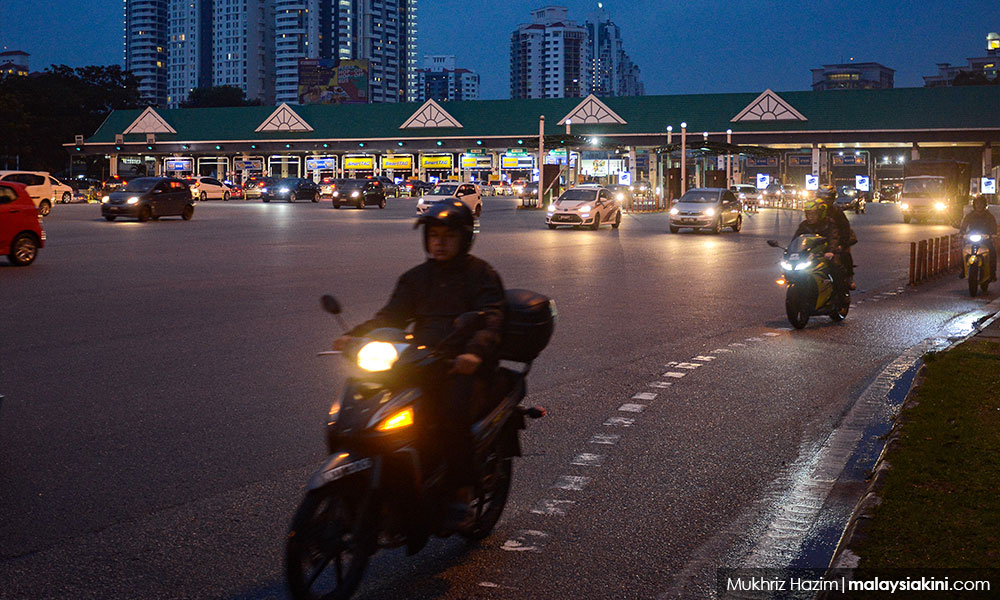
In fact, road users have to pay each time they use the highways, and now with e-wallets, most pay in advance.
In effect, this means the rakyat acts as the collateral, instead of the government. ALR is thus assured of the best local AAA credit rating.
However, analysts also claim ALR will score the best rating for ESG (environment, social, and governance). It boggles my mind how traffic-choked highways burning fossil fuels could be rated high for environment scores.
Then there may be policy conflicts like encouraging mass public transportation that may put a drag on revenue from tolls.
The key question that remains unanswered is when the concession period will end, and whether it will be extended. But so far, the government and ALR has been vague on this.
ALR says the “the exercise is to maintain the toll rates until the end of their concession period”, that the highways will be handed over “once the debts are fully repaid”, the more revenue it collects the shorter the concession period, and that the highways “will be handed over in a timely manner”.
One would have expected the government and ALR would have conducted extensive studies to give an indication of when the tolls will end.
This restructuring is self-defeating if the concession is extended beyond its expected date, prolonging the pain of toll users.
Then again, as discussed next, the costs may not be within the control of ALR.
If ALR is not able to achieve its target, the government will have to step in. It cannot just abandon the highways in our commercial and business capital, saying that is under the purview of ALR.
Double-dip for concessionaires?
It is now pertinent to look at how the whole deal is valued and structured. ALR is paying RM5.48 billion to take over the debts and equity from the four concessionaires. Immediately, the debt servicing costs will be a major liability of ALR.
Gamuda, the main beneficiary, is projecting it will be able to turn its net debt position of RM1.7 billion into a net cash position of RM600 million. Shareholders are expecting a special windfall dividend from this deal.

Gamuda extolls the virtue of ‘sanctity of contract’ arising from this deal.
In the first place, the concession contracts are secret, and many believe it is lopsided in favour of the concessionaires. What this actually means is the affected party gets the full compensation if the contract is disturbed in any way.
To understand this, let’s look at what the discounted cash flow valuation used to price this takeover means.
It simply means that all future cash flows will be discounted to the present value, normally using the cost of capital at about five percent.
If the contract has 10 years left, the discounted profits of 10 years is paid now. When the concession ends, there is no cash flow, no compensation is payable, and the government takes over the highways free.
So the concessionaires are essentially compensated for profits which they would earn in the future, without having to work for it. I presume such were the terms in the concession agreements. This is first dip.
Now let’s speculate on the management and operations of the highways once ALR takes over.
Given the status of ALR as a “non-profit” custodian or guardian, ALR would not have the capacity and capability to merge, reorganise, rationalise, cut out all fats, and launch its own management and operations.
The fact that ALR says no employee “will be left behind” alludes to this fact.
ALR would not able to capture the synergies and costs savings from economies of scale that would accrue from a real acquisition and merger. There is no way highway operations can be interrupted for any major restructuring exercise after being taken over by a new entity.
The most likely scenario I can foresee is to let the existing concessionaires continue to manage and operate their highways respectively.
After all, they are the best entities to do that. So we may just see a rebadge of highway management and operations in the name of ALR, but with the same concessionaires operating the highways.
But now, the concessionaires as the service providers and operators may dictate their price to ALR, the new owners.
Unlike ALR, the concessionaires are profit-motivated. It should also be remembered the highways are aged assets nearing the end of useful life, and the cost of extensive upgrading, operations, and maintenance will increase further.
The above scenario does seem to make sense when ALR, in its April 8 clarification, said its role will be to “act as the private sector intermediary to facilitate the transactions”.
These are pitfalls that ALR has to encounter in terms of increasing costs which may not be in its control.
A pro-rakyat solution
While Malaysia boasts a robust highway network thanks to its privatisation policy, it has also become a heavy burden for the rakyat.
Just when the rakyat were expecting a respite from paying tolls with the concessions ending soon, another restructuring is announced but with vague assurances.
It seems parties with a vested interest can never let go of this cash cow after milking it for so long. This is one road that never ends. This restructuring seems to be made by and for the concessionaires.
Can the government now say with certainty that all concessions after restructuring will end by 2030 as claimed by Gamuda? Worse still, what happens if the not-for-profit ALR cannot deliver?
As a concerned citizen, I have raised the above issues, not to criticise, but to highlight the pitfalls, and for which very little information is forthcoming.
Now the government and ALR seem to have gone on the defensive mode, telling us we should just trust them.
My humble opinion is, why fix something that is not broken?
I would therefore propose the government proceed with the concessions as agreed upon initially.
The concessionaires should welcome that, since they are extolling the virtues of sanctity of contracts. Let them complete the contracts as they initially agreed upon.
The only hurdle is the RM4.3 billion compensation to be paid to concessionaires. Honestly, I would say this would be the best use of our public funds.
Just imagine the billions we pay in interest for 1MDB, and other wasteful expenditures incurred. The government can budget this over the remaining period of the concessions.
The rakyat can look forward to the Kesas toll ending in 6 years’ time, and the other highways following thereafter. Our future generation will be grateful we are not kicking the can down the road.
I believe this is the best gift the present government can give to Keluarga Malaysia.
RAMAN LETCHUMANAN is a former senior fellow at the Nanyang Technological University of Singapore, a former director at the Ministry of Science, Technology and Environment, and a former head of environment at the Asean secretariat in Jakarta. Contact: raman.asean@gmail.com
The views expressed here are those of the author/contributor and do not necessarily represent the views of Malaysiakini.


Report this comment
Are you sure you want to delete this comment?
This action cannot be undone.