




Planning for the future of public transport
Last year there were reports about successful projects to improve the transportation system in areas around Kuala Lumpur. The Duta-Ulu Klang Expressway (DUKE) is under construction. The Jln. Awan Besar interchange has finally been opened to residents of Sri Petaling, and rapidKL is working hard to bring bus service to the 979 housing estates surrounding the city of Kuala Lumpur.
All of these transportation projects are important elements of a solution to the gridlock that the Kuala Lumpur area is facing. Unfortunately, the most important solution - good development planning - is often treated as an afterthought.
Last year there were reports about successful projects to improve the transportation system in areas around Kuala Lumpur. The Duta-Ulu Klang Expressway (DUKE) is under construction. The Jln. Awan Besar interchange has finally been opened to residents of Sri Petaling, and rapidKL is working hard to bring bus service to the 979 housing estates surrounding the city of Kuala Lumpur.
All of these transportation projects are important elements of a solution to the gridlock that the Kuala Lumpur area is facing. Unfortunately, the most important solution - good development planning - is often treated as an afterthought.
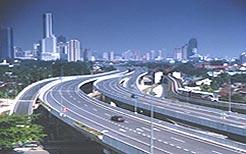 This quote from Dr Barry Wellar, a retired professor from the University of Ottawa, Canada expresses the problem well: "When you're doing your development planning, if you try to correct a land use problem with transportation, it never works. It has never worked in the history of mankind. If you make errors as to where you locate things, you end up literally having to pave the entire region in order to deal with your land use-planning problem. And by then you have no land use left. It's all covered in asphalt."
Today there are 979 housing estates around the city of Kuala Lumpur and more estates are being built. If the transportation infrastructure around Kuala Lumpur cannot handle the needs of 979 housing estates, what will happen when there are 1000, or more? Consider the amount of growth just in the Klang Valley, around Kuala Lumpur and in smaller satellite cities like Seremban, Rawang, Shah Alam, and Klang. Then consider the growth around Johor and Butterworth. These areas are all growing much faster than we can plan for them.
The consequences of bad development planning are serious. The consequences of bad transportation planning are also a cause for concern. Here are just a few examples:
1) To date, few of the traffic management solutions that have been outlined for the Klang Valley include serious, realistic plans that will encourage people to use public transit. Instead we have more expressways. This shows that the goal of the transportation department is simply to disperse traffic, not actually reduce it.
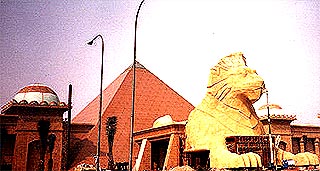 2) Sunway Pyramid, which is going to build 4 ramps to connect the NPE directly to its parking garage, and connected its monorail to the KTM system. Sunway Pyramid has no plans to build a safer bus station, despite the fact that many customers come to Sunway Pyramid by bus. Many of these buses park dangerously along the side of the NPE, and expect passengers to walk through heavy traffic.
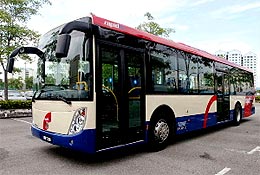
3) Despite their efforts in creating a new bus system, RapidKL will only be able to service the main roads of some of the newer communities like UEP Subang Jaya. The reason given is that the roads are too narrow for their buses, and they cannot enter these communities. Thus, they cannot truly bring their service to the people who need it, or wish to use the service. Passengers, on the other hand, are unsatisfied because they expect to be able to take a one-seat trip from the suburban areas to KL, not knowing that this is no longer possible thanks to serious traffic congestion and increased costs.
4) In the name of competition, many bus companies operate routes that are very similar to each other. In order to maintain proftits or even to just meet costs, the number of buses on other routes declines. Sooner or later, the resources of these companies (the buses and the drivers) are not properly used. Congestion on city streets and at bus stations increases, as the buses wait for passengers. Quality and safety declines, as less money is spent on maintenance. Pollution increases, as clouds of diesel exhaust are pumped into the atmosphere. The result is that huge amounts of money are lost to the economy, as productivity is lost in traffic jams and lost work days.
 5) The planned extension of the Kelana Jaya LRT line to Subang Jaya and the Seri Petaling LRT line to Puchong, appear to be great ideas. However, there appears to be no overall master plan for all the communities in the Klang Valley to become connected to public transit. One wonders if the government really believes that "if we build it, they will come," is enough of a vision for public transport.
6) In this flurry to build LRT and rail lines, it also seems that the simplest, easiest, and most cost effective solutions have been immediately discarded. The idea of expanding the bus lanes along the major roads around the Klang Valley has not been mentioned. Lower-cost alternatives to LRT, like Bus-Rapid Transit and Rapid Trams, are being ignored. In addition, LRT extensions are being designed to cater to "lower-income" areas, perpetuating the myth that "lower-income" people are the only ones who will use public transit.
If the government intends to make plans for the future of public transport in this country, they will have to change the mindset of the average Malaysian. It would help if they were consistent in their planning and their actions. After all, how can successive governments allow the development of communities with roads that are too small for buses, or encourage more and more property development that makes no space for buses, or allow urban growth without plans for public transit, and then claim that they are supporting public transportation?
This attitude can no longer continue. It is time for change. It is time for the Ministry of Transport, the Housing and Local Government Ministry, and the local governments to sit down together and properly plan the growth of our communities. Each community in Malaysia must now commit themselves to creating a serious, effective, and balanced development plan that includes and encourages the use of public transport.
MOAZ YUSUF AHMAD is a regular user of public transport who is deeply concerned that government plans to encourage people to use public transport will ultimately fail because of poor planning and a lack of support from the public.


Are you sure you want to delete this comment?
This action cannot be undone.