


/file/publisher-c1a3f893382d2b2f8a9aa22a654d9c97/2022/10/403bed420695b920811d59a458fff162.jpg)

COMMENT | Challenges await monsoon election
COMMENT | It really should not come as a surprise that a government that thinks that Malaysia is "not that badly" affected by climate change and refuses to declare a climate emergency would want to hold an election during the country's annual monsoon season.
This is, of course, taking into consideration that the floods have worsened exponentially over recent years, and have now started to affect areas that were not previously impacted.
The cost of a general election during the annual monsoon...
COMMENT | It really should not come as a surprise that a government that thinks that Malaysia is "not that badly" affected by climate change and refuses to declare a climate emergency would want to hold an election during the country's annual monsoon season.
This is, of course, taking into consideration that the floods have worsened exponentially over recent years, and have now started to affect areas that were not previously impacted.
The cost of a general election during the annual monsoon season will be phenomenal.
And I am not just talking about the cost of certain candidates plastering stickers of their faces on flood relief aids and doing flood relief photoshoots.
After revealing the biggest budget ever, we are heading towards what could be the most expensive elections ever as government machinery now needs resources to operate polling centres amidst thunderstorms, rain, and flood conditions and get the people there.
The floods that inundated us at the end of 2021 and the beginning of 2022 caused an estimated RM6 billion in damages.
Schools that have functioned as important lifelines and relief centres will now have to standby to become polling centres.
This makes the logistics of both functions far more complicated.
Will the relief centres be moved? Or will new polling centres be designated?
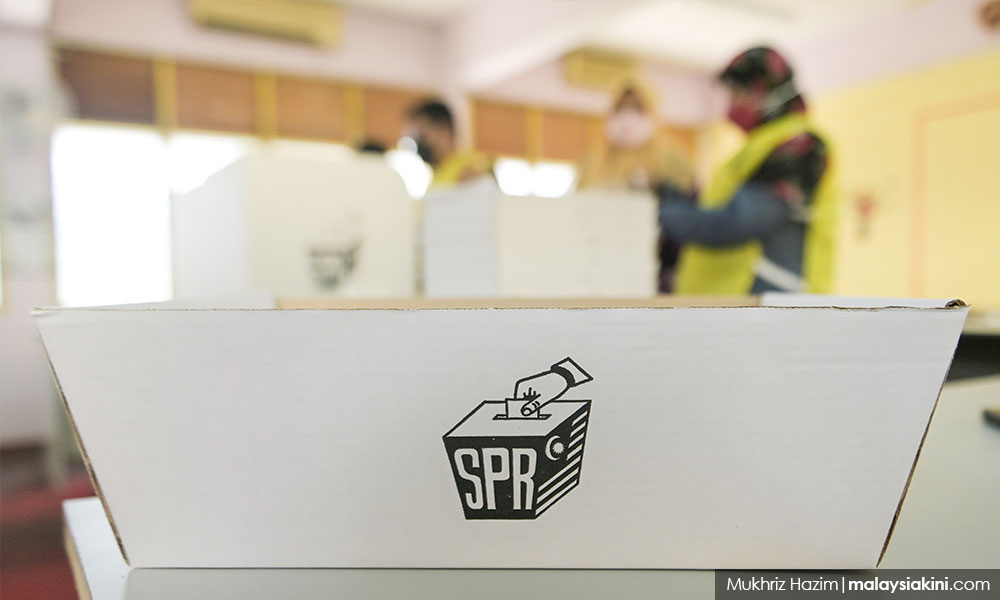
How and where will aid be sent in preparation for the floods and when it is needed most? And most important of all, how and who will be communicating this to the people?
Even in non-election years, some places get completely cut off during the floods, physically road-wise and communication-wise.
I hope not to hear rumours of some black boxes drowning in the flood as means of "mysteriously disappearing."
Both flood and polling are not events that happen in isolation.
Cost of waste
Authorities, uniformed bodies, and voluntary forces, including socially organised ones, should be helping people escape and recover from floods during these events.
Instead, we will be using them for polling duties - aside from their own obligation to cast their ballots.
The annual monsoon flood is just as much a social catastrophe as an environmental one, one which a nationwide event such as a general election does not help.
Campaign materials are among some of the most unnecessary wastes and it is amazing how much is generated during election periods (and how much all this waste costs).
Flyers, brochures, newsletters, flags, banners - all these to be printed for various candidates in every jurisdiction.
Importantly this time though, no matter where in Malaysia, they will need to withstand being battered by the rain and thunderstorms.
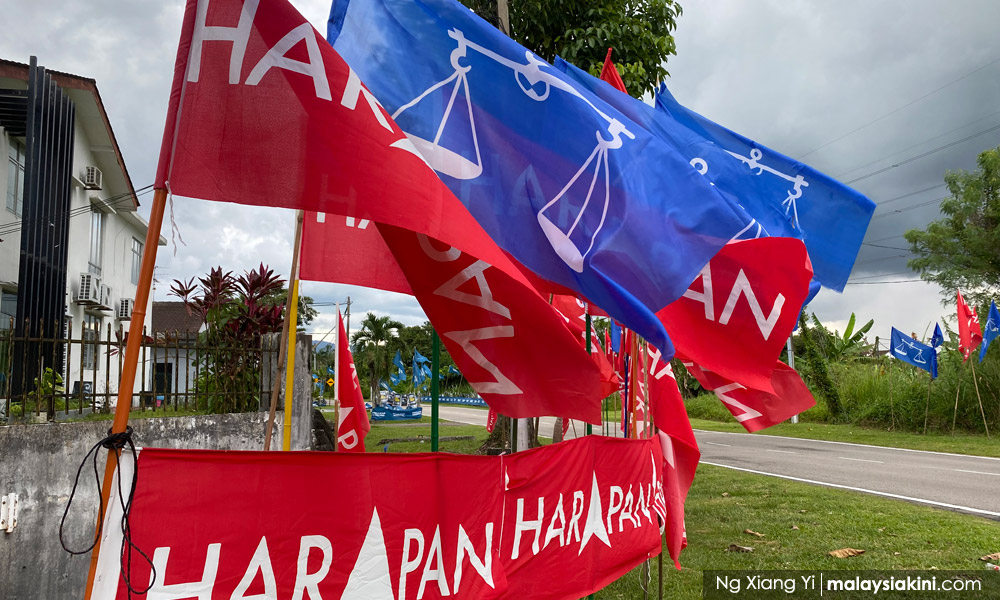
They will "decorate" every traffic corner but can also dangerously clog up monsoon drains and irrigation pathways in flood-prone areas.
I would like to tell people to litter responsibly but the fact that this waste will be produced in the first place already creates the problem.
From an environmental standpoint, candidates need to be responsible for the generation of campaign waste and find a way to reduce its impact - and these things are not easy to be collected for recycling during the monsoon.
The economic, social, and environmental impacts of having elections during the monsoon are quite grave.
But I guess the wheels are already in motion.
This is why declaring a climate emergency is fundamental in getting the government to prioritise the climate when making decisions that will have serious social repercussions.
MAJIDAH HASHIM is a certified sustainability professional with an interest in human rights, circular economy and disruption. She can be reached via Twitter at @majidahhashim.
The views expressed here are those of the author/contributor and do not necessarily represent the views of Malaysiakini.
/file/publisher-c1a3f893382d2b2f8a9aa22a654d9c97/2022/09/a284451e71d8966a19d6c0961851e506.jpg)
/file/publisher-c1a3f893382d2b2f8a9aa22a654d9c97/2022/10/92749bc152d9687c50c0a5651bd16281.jpg)
/file/publisher-c1a3f893382d2b2f8a9aa22a654d9c97/2022/10/d26447fa375600501894e3fbf7d40c9e.jpg)
/file/publisher-c1a3f893382d2b2f8a9aa22a654d9c97/2022/09/29e18440edb6d497c4feb333d9bfe07a.jpg)
/file/publisher-c1a3f893382d2b2f8a9aa22a654d9c97/2022/04/2e9053d4b8057577aecf93b74a23407b.jpg)
/file/publisher-c1a3f893382d2b2f8a9aa22a654d9c97/2022/10/1f1a26e93cd3fc2a93a8e8de7ca7f14d.jpg)
/file/publisher-c1a3f893382d2b2f8a9aa22a654d9c97/2022/10/587e769a3d8583032624bf90bc179ffb.jpg)
/file/publisher-c1a3f893382d2b2f8a9aa22a654d9c97/2022/10/2303a4d191b39bbbe0029f418db6e3df.jpg)
/file/publisher-c1a3f893382d2b2f8a9aa22a654d9c97/2022/10/bf479c471652d3570981e917fef690e7.jpg)
/file/publisher-c1a3f893382d2b2f8a9aa22a654d9c97/2022/10/820bbb8ba5957ed901e169e79ecee35a.jpg)
/file/publisher-c1a3f893382d2b2f8a9aa22a654d9c97/2022/10/6f22c5d2f8664198571cef4638035b55.jpg)
/file/publisher-c1a3f893382d2b2f8a9aa22a654d9c97/2022/10/2d35a816f5ba9c68e7bfe851be90a2f4.jpg)


Report this comment
Are you sure you want to delete this comment?
This action cannot be undone.