


/file/publisher-c1a3f893382d2b2f8a9aa22a654d9c97/2021/11/212a101e4c2dca8586c9c5f6fc3b228f.jpg)

COMMENT | Why we should come out and vote
We travelled back from Singapore and other places where we worked to cast our votes.
We were fired up by the necessity to vote in what we thought was the most important election of our lives. At that time, it was clear to many of us what the right side was.
COMMENT | In the 14th general election, we all came out to vote with great enthusiasm. We travelled back from overseas. We collected votes from overseas voters and brought them back.
We travelled back from Singapore and other places where we worked to cast our votes.
We were fired up by the necessity to vote in what we thought was the most important election of our lives. At that time, it was clear to many of us what the right side was.
Back then, many political stalwarts like former prime minister Dr Mahathir Mohamad, Anwar Ibrahim, Dr Wan Azizah Wan Ismail, Nurul Izzah Anwar, Mohamad Sabu, Muhyiddin Yassin and Lim Kit Siang came together to take on BN by forming Pakatan Harapan.
The big issue was the 1MDB scandal, which was described by the US Department of Justice as the greatest act of kleptocracy in the world.
It was an unlikely alliance. It was an improbable coalition of previous adversaries coming together to fight a party that had lost its way.
By the narrowest of margins, they won the election. The Malay vote was split between PAS, Umno and Harapan. Some 80 percent of the electorate turned out to vote.
Mahathir became prime minister and Wan Azizah became his deputy. Anwar was pardoned. The nation was euphoric. Well, at least some of the people were.
A good beginning
The Harapan manifesto promised much. They began well. New people were appointed to become chief justice, chief secretary to the government, police chief, MACC chief and attorney-general.
A Council of Elders was set up to study and make recommendations for change. They, in turn, appointed two committees, one to look at the 1MDB headed by former AG Abu Talib Othman and the other headed by judge KC Vohrah to consider legal reforms.
They started well. Their recommendations were made and given to the prime minister. For some unknown reasons, Mahathir sat on the recommendations.
1MDB scandal
Abu Talib and the MACC completed their investigations and made recommendations for the charging of individuals involved in the 1MDB scandal.
The AG then commenced the prosecution of a number of people, including former prime minister Najib Abdul Razak.
Others such as former deputy prime minister Ahmad Zahid Hamidi, wife to former premier Rosmah Mansor, Umno’s Tengku Adnan Mansor and others were hauled up on graft charges.
The new Harapan ministers, excited about being in government, worked with great excitement. Nothing was done without Mahathir's approval.
Those who had fought him for so many years - even those who had been detained by him under the now-defunct Internal Security Act (ISA) were respectful and deferential to him.
Some mistakes
In their newness some made mistakes. Some did not work well with the civil service and some made decisions or statements that upset civil servants, fisherfolk and farmers.
Two appointments upset many Malays and gave grist for the opposition mill. That is the appointment of Lim Guan Eng as the finance minister and Tommy Thomas as the AG.
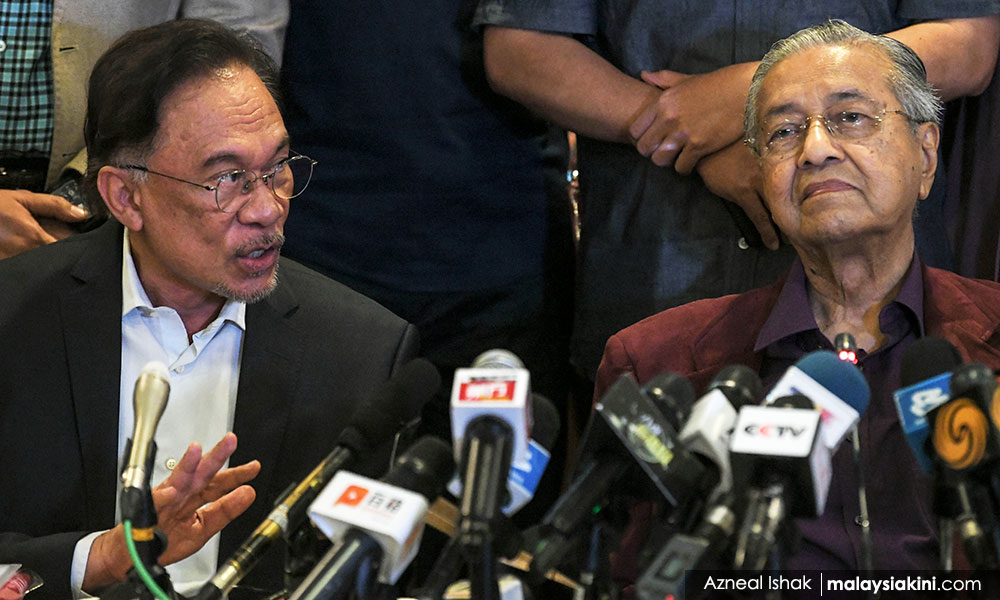
Some Malays felt that these positions should only be filled by those from their community. The government sought to become signatories to a number of human rights conventions. That sparked protests from some segments of the Malay community who were told that those conventions threatened preferential treatment of the Malays.
Dissension within ranks
There was dissension within the Harapan coalition and there was plotting and planning. The Malay Dignity Conference gave some insight into the undercurrents within the coalition.
Mahathir had tried to encourage crossovers from Umno to bolster his strength within the coalition. And at the conference, he said that he had to concede more power to the non-Malays because the Malays were not united.
That was a strange statement to make as a leader of the Harapan government and as nothing had been done without his approval.
Sheraton Move
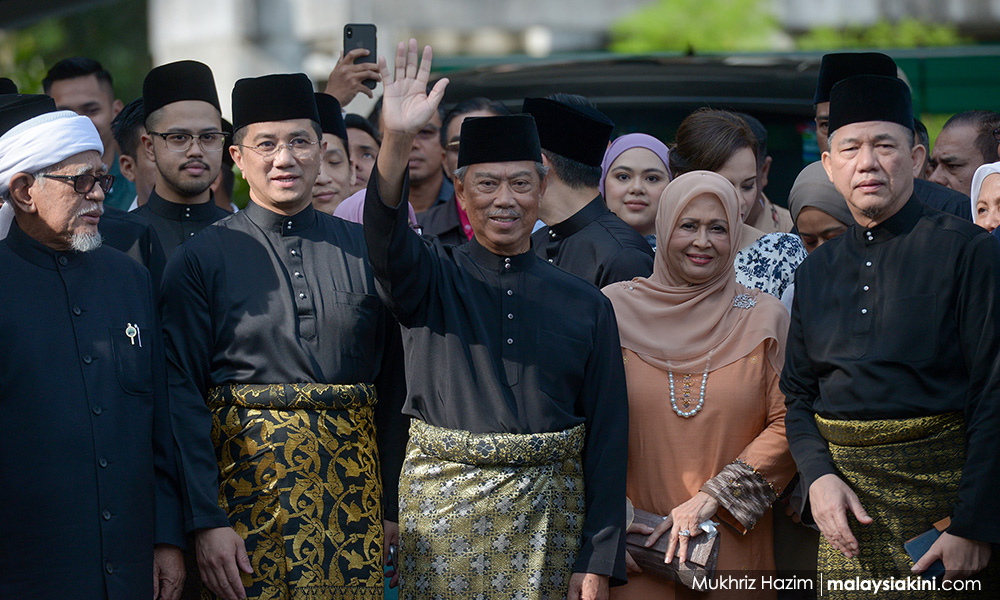
Then the Sheraton Move took place. Muhyiddin, Azmin Ali and Hamzah Zainudin left the coalition, and Mahathir met the king and resigned as prime minister.
He sought to become caretaker prime minister. The government collapsed and a new one was formed with Muhyiddin as premier.
Umno pushed and jostled and then Muhyiddin resigned and Umno vice-president Ismail Sabri Yaakob took over. Umno was now back in power. This was a government not elected to power.
The mandate of the electorate had been frustrated. Many felt betrayed by the very people they elected to power. Mahathir continues to maintain that he was not responsible for the collapse of Harapan. He said that it was Muhyiddin, Azmin and others who followed them. He continues to oppose Umno.
The government in power is a weak one held together by the slenderest of margins. There has been a continuing contest for who has the most support from MPs.
The pressure was relentless on Ismail Sabri to hold an early election and it came from Umno leaders. There seemed to be a race to hold a general election before courts can finish hearing cases involving the “court cluster”.
15th general election
Ismail Sabri finally succumbed to the pressure and dissolved Parliament.
There is a video clip making its rounds where Zahid spoke to leaders of all three BN parties, warning them that their turn to be charged will come if they do not win the election.
Zahid said the clip was taken out of context. Whatever the context in which that statement was made, there is a widespread belief that if Umno-BN comes back to power, there would be changes made and these changes would be aimed at slowing the pace of certain investigations and prosecutions or stopping them altogether.
And that is where things are now.
Part 2 of this article will be published tomorrow and explore how different communities will vote.
DAVID DASS is a lawyer, Malaysiakini subscriber and commentator.
The views expressed here are those of the author/contributor and do not necessarily represent the views of Malaysiakini.
/file/publisher-c1a3f893382d2b2f8a9aa22a654d9c97/2022/09/a56a41a018f83f9e2d26444a06219f2c.jpg)
/file/publisher-c1a3f893382d2b2f8a9aa22a654d9c97/2022/10/f90f5171409b048aedc928461129b52f.jpg)
/file/publisher-c1a3f893382d2b2f8a9aa22a654d9c97/2022/10/7338f9c95e2c929e952611f54132e5a2.jpg)
/file/publisher-c1a3f893382d2b2f8a9aa22a654d9c97/2022/10/89dd9c0d81d88730383ea09e5e1eb0fe.jpg)
/file/publisher-c1a3f893382d2b2f8a9aa22a654d9c97/2022/10/26e0177e66cc03c81bacb9117eb4a021.jpg)
/file/publisher-c1a3f893382d2b2f8a9aa22a654d9c97/2022/10/a77e1f8df8b00443e3a88e633359434b.jpg)


Are you sure you want to delete this comment?
This action cannot be undone.