


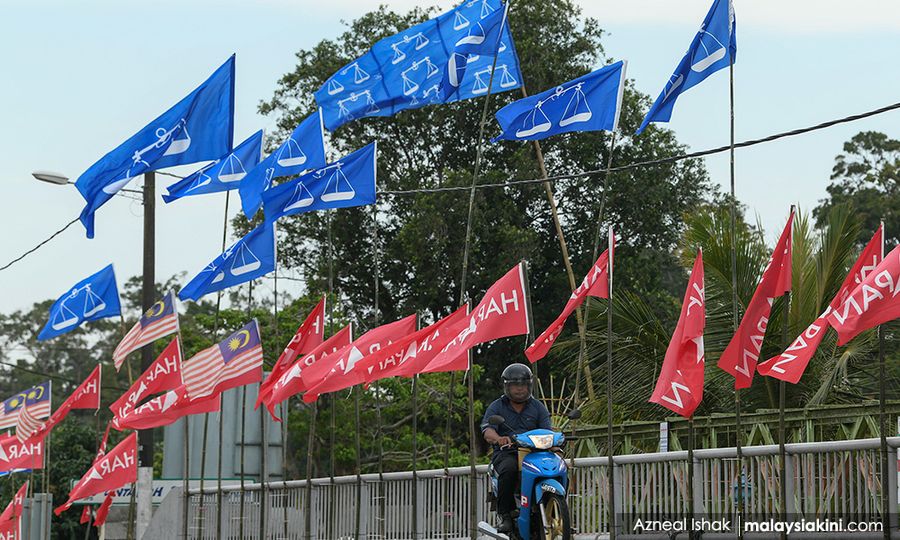

COMMENT | Vote to stave off another leadership flop
Three changes in prime ministers from three different parties and opposition are in splinters. All these happened over four years.
Are we are condemned to receive more of the same after Nov 19?
COMMENT | An unrepentant former prime minister is in jail. His former deputy is facing corruption charges.
Three changes in prime ministers from three different parties and opposition are in splinters. All these happened over four years.
Are we are condemned to receive more of the same after Nov 19?
Here, I defer to an analysis by James Chai, a Malaysiakini columnist and Visiting Fellow of the Malaysia Studies Programme at ISEAS, Singapore.
Chai cites the practice of “malapportionment”. The system divvies up the electoral districts in the government’s favour. In our context, the division is usually circumscribed by racial demographics.
For example, a vote in a rural district of 15,000 voters, majority of them being Malays, is nearly 10 times as influential as a vote in an urban district of 150,000 voters, the majority being non-Malays.
Chai writes that malapportionment comes with unintended consequences. It violates the principles of a fair election. It causes lower turnout of voters in large urban safe seat constituencies because they “will see their votes as less consequential”.
The long-term effects? Political apathy and cynicism among voters.
“Why vote? All politicians are the same,” so they say. Of course, they are because the system allows them to.
Yes, we will be condemned to a repeat of the same system after Nov 19 - unless a certain visionary statesman appears to get us back on the tracks of reformation.

Singling out a visionary leader from the cohort of lacklustre candidates, however, is hard. It is as hard as a colour-blind voter figuring out the green and red dots from a colour plate.
Where is the leader with the soft power to convene different minds from different political camps to solve our problems?
Until a visionary leader with a unity of purpose comes along, we could well be living with more of the same talk-only-no-action politicians.
Politicians reaching out to the other side has rarely been attempted, if ever. Why? Here’s a plausible cause. They are weak.
“Weak leaders are too timid to do it,” according to Rosabeth Moss Kanter, a Harvard Business School professor, and author of “Think Outside the Building: How Advanced Leaders Can Change the World One Smart Innovation at a Time”.
Writing about the strengths of “convening power”, Kanter said leaders who have it tend to “think big, think beyond the usual suspects, (and) get to action”.
Alluding to former US presidents Bill Clinton and Barack Obama, she said: “The best leaders convene conversations. They set the stage that enables others to develop solutions.”
Mandela’s ideals
While Clinton’s and Obama’s track record in improving race relations during their presidency is more academic than real, international media do acknowledge their aptitude in reaching out to the other side.
Who among our leaders had demonstrated this capacity to convene different minds in tackling the rising costs of living, youth unemployment, labour (un)productivity, declining education standards, social welfare, and so forth? None.
To stave off another leadership flop, we need a certain statesman. Someone with a clear vision of where we are going. Someone with the soft power to convene and lead with strategies on how we can get there.
Here, I turn to a leader of a nation divided by race and oppression - the late Nelson Mandela. A story about Mandela growing up herding cattle during apartheid goes like this:
“You know, when you want to get the cattle to move in a certain direction, you stand at the back with a stick,” he was quoted as saying in Richard Stengel’s book, “Mandela’s Way: Lessons in Life, Love and Courage”.
“And then you get a few of the cleverer cattle to go to the front and move in the direction that you want them to go. The rest of the cattle follow the few more energetic cattle in the front, but you are really guiding them from the back. That is how a leader should do his work.”
Tributes to Mandela’s leadership often cite his spirit of ubuntu in piecing together a broken post-apartheid South Africa.
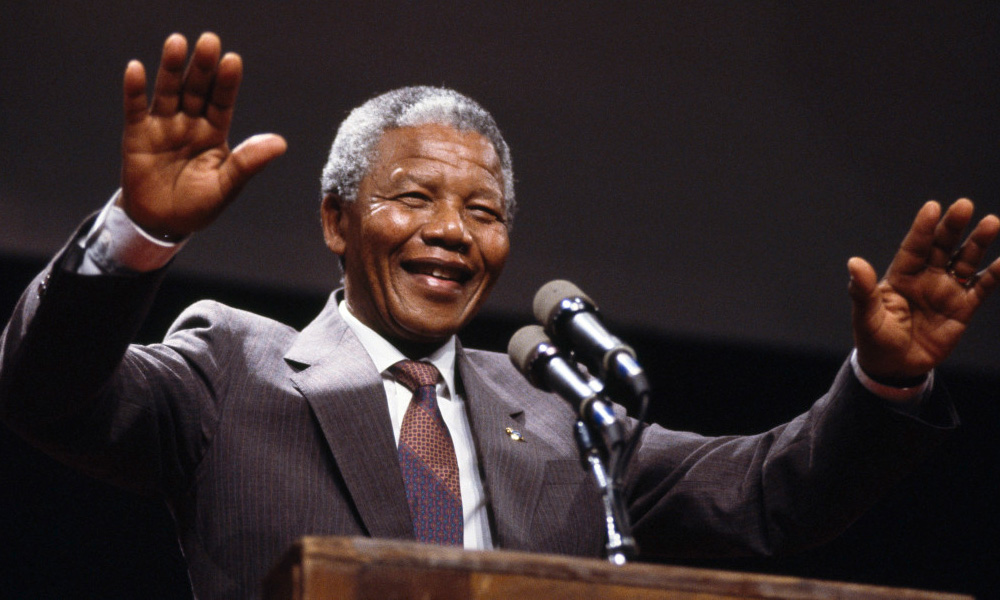
An ancient word of the Bantu peoples in South Africa, ubuntu essentially means “'I am what I am because of who we all are”.
Ubuntu manifests itself in our individual actions, in our family, in society, and on a larger scale, in our politics.
When we work together in the ubuntu spirit to oil the squeaky wheels of reforms and keep them turning, we stand a greater chance of transforming our communal mindsets to one that convenes on a unity of purpose.
Come Nov 19, we can possibly invoke the ubuntu spirit that dwells in us. We will not be condemned by a repeat of the past four years.
ERIC LOO is a former journalist and educator in Australia, and a journalism trainer in parts of Asia.
The views expressed here are those of the author/contributor and do not necessarily represent the views of Malaysiakini.



Report this comment
Are you sure you want to delete this comment?
This action cannot be undone.