




A blueprint of neglect
The National Education Blueprint 2006-2010 intends to propel our education system to world class standards and make our children think out-of-the-box. It however overlooks an unintended consequence - the blueprint will result in marginalising and destroying multi-lingual education and pose threats to the continued cultural sustainability of our multi-cultural nation.
Thus, while the blueprint is based on good and practical intentions, the assumptions it is based on and the vision of Malaysia it projects seems neither to take into serious consideration local educational development, histories and aspirations nor international concerns.
A whopping RM23 billion is in the budget for the next four years and more is to come for the remaining period of 2020.
The National Education Blueprint 2006-2010 intends to propel our education system to world class standards and make our children think out-of-the-box. It however overlooks an unintended consequence - the blueprint will result in marginalising and destroying multi-lingual education and pose threats to the continued cultural sustainability of our multi-cultural nation.
Thus, while the blueprint is based on good and practical intentions, the assumptions it is based on and the vision of Malaysia it projects seems neither to take into serious consideration local educational development, histories and aspirations nor international concerns.
A whopping RM23 billion is in the budget for the next four years and more is to come for the remaining period of 2020.
All ambitious projects need to start somewhere, the blueprint, having been crafted at the drafting table of the Education Ministry for the last two years, made its colourful debut on the Jan 16. At the launch, the prime minister was hopeful that the future human capital of the country is not only literate but can think creatively and critically. Not only should they use technology but also create technology. He wanted a value added transformation of knowledge for global competition.
The aspirations augur well for the nation. It demands the best out of everyone. The plan identified six thrusts for all to relate themselves in one way or the other either in nation-building, developing human capital, strengthening national schools, narrowing the education gap, improving the teaching profession or accelerating excellence at educational institutions.
Obvious divide
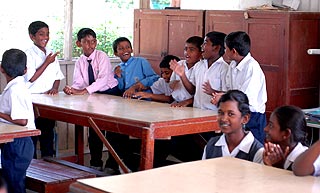 But, there is an obvious divide in the minds of the policy makers. While they want children to think out of the box, they left out something significant. Our system of education at the primary level is a combination of national schools and vernacular schools. About 93 percent of the Chinese children and slightly more than 50 percent of the Tamil children are schooling in Chinese and Tamil primary schools respectively.
Their enrolment is increasing and there is no sign of any dwindling. In addition, the number of non-Chinese children enrolled in Chinese medium primary schools is increasing and it is more than 100,000 in 2007. These are hard facts that are not adequately dealt with in the blue print. In fact the blueprint is all about giving the best attention to national schools with the hope of creating them as a school of first choice for the Chinese and Tamils. In this context, vernacular schools are left out in the blueprint and are at the verge of neglect.
The vision to create national unity through education requires broad and clear thinking. They cannot be achieved covertly. In the past, vernacular schools were regarded as tools by the British to divide and rule. Despite such arguments, the nation was united in demanding for self-rule with a multiethnic political fabric. We survived all trying moments as a multilingual, multicultural and multireligious country and had enriched ourselves in the process and made them as our strengths.
Together we recognised the constitution as the supreme law guaranteeing the tenets of these strengths. The growth for the last 50 years is enviable. The co-existence nurtured by tolerance and acceptance opened up avenues for respect and dignity.
In the process, the notion of a nation-state concept of a single identity proved illusory and is fast becoming history. Assimilation is no longer an option for Malaysia, anyone who demands that today shall be frowned upon as being a demagogue in the modern state Malaysia.
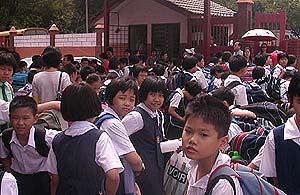 The time has come for us to bury our fears of losing our self identities. Malay language is spoken in every nook and corner. The English language is finding its way into our lives as much as the need to link with the world. Why then are we stooping low in esteem to recognise roots of our own ethnic culture and languages?
There are enough experiences around the world to show that multiculturalism can expand opportunities for people in many ways. Restrictive policies that deny growth of ethnic identities are becoming less popular. People want a sense of belonging to be proud of their origin, culture, religion and language. This is an intrinsic phenomenon, emblematic of human progress. Its inalienability surfaces as the self worth of their individual roots which are undiscovered from the savage of time.
In Malaysia, we are fortunate to have this happening in our own lifetime. The cooperation and peaceful coexistence in a single state polity is an excellent example in the world. We are proving that national identity need not imply a single homogenous cultural identity. We understand its divisive nature and the potential tensions and conflicts associated with such position.
We are there but yet far away from a demonstrative ideal. There are skirmishes of neglect and marginalisation. The political will to define a multicultural Malaysia is elusive and the expectation from the present government to commit itself is a well deserved demand.
Blueprint or blindness?
The Education Blueprint in this context requires some strong rebuttal for its evasiveness of multilingualism. One of its thrust is to strengthen national schools by making it the school of first choice at primary school level. The rational is to achieve national unity by getting the children of all races to go to national schools. But the practical reality is that a substantial number of children are enrolled in vernacular schools. The parents want mother tongue education for their children for the building and preservation of cultural heritage, identity and dignity. One cannot dismiss this as being divisive or that it promotes polarisation.
Identity politics is the nature of life in Malaysia where the Federal Constitution has 17 articles and three schedules that expressly recognise identity of the race, religion and language of the majority ethnic community. It needs to be taken as given that identity on the basis of race, religion and language are here to stay unless we are ready to look at amending the Constitution. That is like putting a hand into the hornets nest.
Therefore, the neglect by the government to address the vernacular education system in its blueprint is a fundamental violation of the rights of the children who are enrolled in these schools. There is ample evidence to suggest that at primary level mother tongue education is pedagogically the best medium for the wholesome development of children.
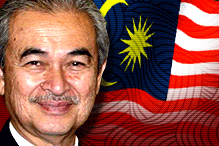 The prime minister's vision to create children who are creative, critical and who can compete globally needs what the best the government can provide. The government cannot be selective in its policies. If a child aspires to acquire his/her human capital advancement in a Tamil school or in a Chinese primary school, are we to condemn his/her progress for an imagined fear of racial disunity? In fact least should we realise that only such neglect and marginalisation will create discord and disunity among the races.
The United Nations Development Report 2004, captures the need for multilingual education aptly. It argues that efforts to impose homogeneous cultural identity can lead to social tensions and conflicts. It articulates Unesco's proposal of a three language policy, one international language, one lingua franca and mother tongue language. It calls for recognising all the three as official languages.
For Malaysia, we need not go that far, but to recognize the right for mother tongue education, to embrace it and to enhance the existing vernacular system with adequate funding and support. For the sake of our nation's human capital development, the country can ill-afford to neglect the vernacular system. Such a decision is penny wise, pound foolish.
I think in addressing the National Education Blueprint, the relevant authorities should ask the following questions to themselves and put them to public debate:
(i) Must the drive to build a more creative and dynamic human capital in Malaysia necessarily mean the eventual death of the vernacular system of education?
(ii) Is it creatively impossible to build a multi-lingual educational system that produces world-class standard students?
(iii) What vision of Malaysia and its citizenry must the National Education Blueprint enshrine?
K ARUMUGAM is Secretary General of the Tamil Foundation.


Are you sure you want to delete this comment?
This action cannot be undone.