


/file/publisher-c1a3f893382d2b2f8a9aa22a654d9c97/2022/03/044747ea9d8da7a54317e9806726ffa0.jpg)

COMMENT | Play your part in this watershed election
COMMENT | We are facing GE15 on Nov 19. It is a watershed election and our future depends on the choices we make when we go to the polls.
The strongest party is Umno and the most likely outcome will be a BN Government.
Sabah and Sarawak will probably go with the winner. If Umno needs more seats its first choice after PAS will be Perikatan Nasional (PN).
There are rumours of...
COMMENT | We are facing GE15 on Nov 19. It is a watershed election and our future depends on the choices we make when we go to the polls.
The strongest party is Umno and the most likely outcome will be a BN government. Sabah and Sarawak will probably go with the winner. If Umno needs more seats, its first choice after PAS will be Perikatan Nasional (PN).
There are rumours of conversations between opposition leader Anwar Ibrahim and BN chairperson Ahmad Zahid Hamidi, and DAP with Umno. They are probably untrue but Pakatan Harapan appears to have had a slow start. The atmosphere is lethargic, sullen, and despondent.
What fate awaits our nation after Nov 19? Why would the electorate choose a party that is being led by leaders associated with financial scandals?
Umno is the party that has long been regarded as the protector of the Malays but some of its leaders face charges for one thing or another. It is seriously in need of reform and leadership change. When will that reform take place?
Malaysiakini columnist P Gunasegaram in a recent article asked the question - should those facing serious criminal charges stand for election?
Voting factors
The last few years have been turbulent. Financial scandals have dominated the political and legal landscape. We have had three prime ministers in the last four years. Even as the Covid-19 pandemic raged on destroying lives and businesses.
How will the voters vote? Will race and religion be the only determinants? Why do so many Malays appear so afraid of non-Malays that issues of governance seem less relevant?
The cost of living, wealth inequality and poverty are the main issues. Don't the people realise that the correlation between our economic problems and bad governance is a direct one? What the country now needs are honest leaders committed to the welfare of its people.
In the past, Umno was accepted as a good party. Former premiers Tunku Abdul Rahman, Abdul Razak Hussein and Hussein Onn were regarded as good honest leaders. Even Dr Mahathir Mohamad when he first came into power was regarded as a brilliant leader. However, his mistakes were costly.
Today, the question must be asked - do our politicians represent all the people of our country? Part of our problem is effective political representation. We have a diverse population. Are all segments of our population adequately represented?
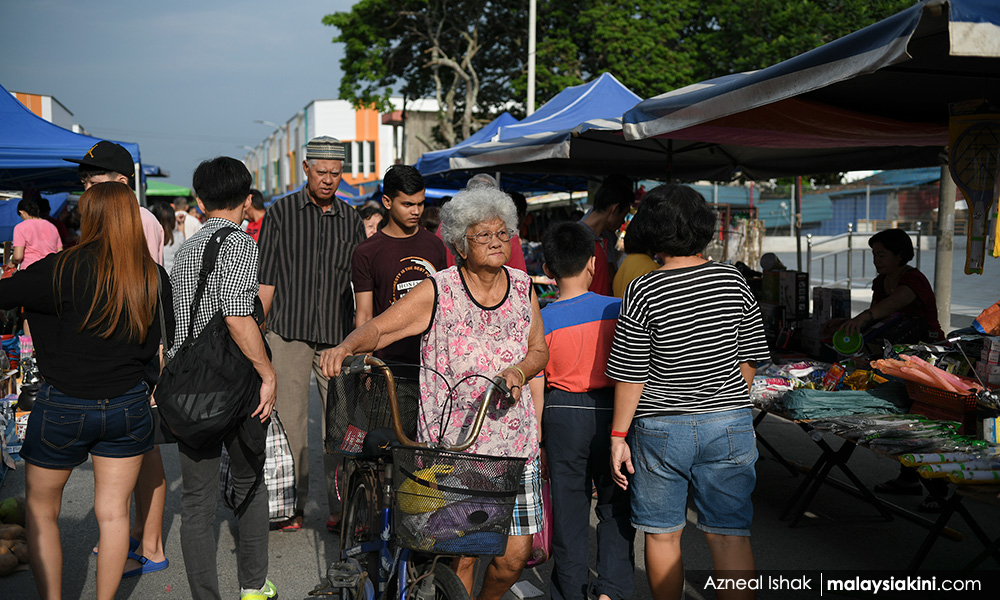
Gerrymandering exacerbates the issue. Weightage is given to rural constituencies. Some 15,000 voters or less make one constituency.
In Chinese majority urban areas between 90,000 and upwards make up a constituency. So, the Chinese are squeezed into 30-odd constituencies. There is not a single Indian majority constituency in the country although Indians may tilt the balance in some constituencies.
Why do so many Malays appear to fear non-Malay dominance? The Chinese are only 26 percent of the population and the Indians 7 percent. The Malays need never fear Chinese or non-Malay domination. The Chinese and Indian vote will never give them the numbers they need to form the government.
Malay support
In any configuration, substantial Malay support will be required for any party to form the government. In fact, as the Harapan government showed, without substantial Malay support the government would not last.
Sabah and Sarawak live in worlds of their own and will in the end probably align themselves with whoever is in power in the peninsula.
Umno and PAS continue to stress to the Malays the importance of Malay dominance. Umno pushes ketuanan Melayu (Malay supremacy) and PAS pushes ketuanan Islam.
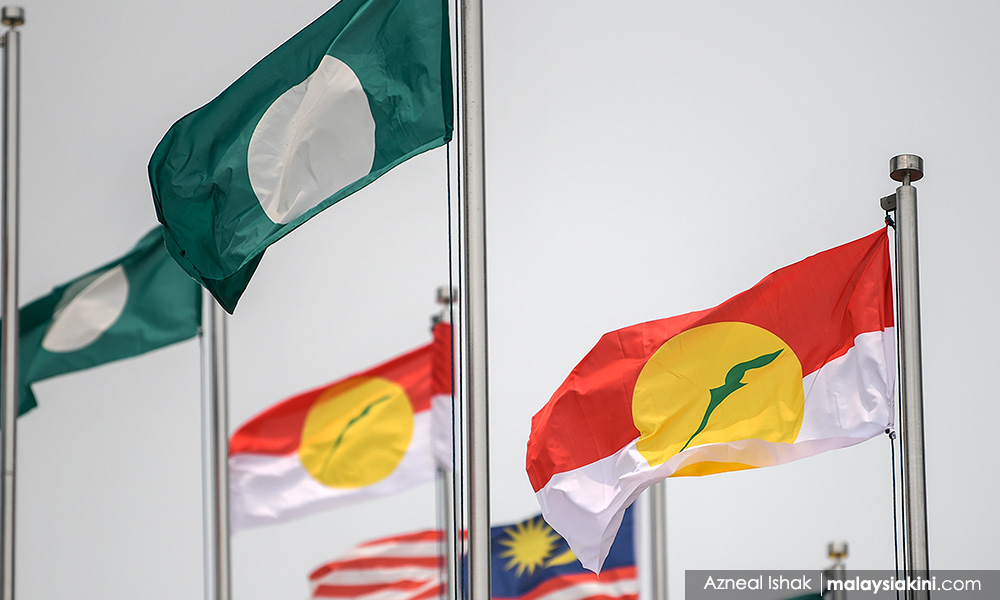
To the Malay audience, they say that they are able to give Malays many privileges and preferences because of their dominant position in government. They point to the exclusively Malay schemes, funds, institutions and projects, and say that all this will not be possible with a stronger non-Malay presence in government.
They also point to the Harapan government and say that it threatened to undo many of the achievements and safeguards put in place for the Malays by the BN administration.
The truth is, no Malay institution is under threat. Malays are 58 percent of the population. They have the majority of seats in Parliament and state assemblies.
The civil service, the police and the army are more than 90 percent Malay. The special position of the Malay rulers, the Malays, and the indigenous people of Sabah and Sarawak are entrenched in the Constitution. No change can be made without the approval of the Malays and of the Malay rulers. There is accordingly no group that can threaten Malay interests.
But it appears not to matter that these allegations about the Harapan government are untrue. These assertions are made to distract the Malays from the truth of poor governance.
Non-Malays simply want the government to be fair and inclusive. They accept that the Malays are the majority population and will have a greater say in government. All that they want is fairness and justice in accordance with the Constitution and the law. They want to be treated as equal citizens under the Constitution. They also want peace, stability, and racial harmony.
Poor governance, corruption
Poor governance is the issue. The state of our economy is the problem. The bumiputera should ask the question - why are there more poor bumiputera households in the country than Chinese or Indian households? Why are there more poor Malays than non-Malays?
Our government has been led by Malays since independence. The non-Malays cannot be blamed for the Malay predicament. In fact, the Chinese pay a substantial amount of income tax, and Chinese industry and enterprise are good for the country. The collective skills, intelligence, and talents of all our people are required.
What will it take for our people to accept that corruption, incompetence, and low standards of education are the cause of Malaysian malaise?
Corruption is not just a Malay problem. It is a Malaysian problem. Prosecute those who give bribes as well as those who receive bribes.

Corruption produces inflated prices, inferior goods and services, and non-viable or failed projects. The nation suffers. The people suffer. The race of the corrupt is irrelevant.
Corruption undermines the moral fabric of the nation and results in the loss of billions. An economist said that it will take us until 2034 to pay off the 1MDB debt.
Our national debt exceeds one trillion ringgit. And our household debt exceeds 1.17 trillion, the second highest in Asia. The depreciation in the value of our ringgit is worrying. Our poverty rate exceeds 15 percent of all households.
We should be worried about this. We should be worried about our economy. We should come together to deal with the issues that are affecting our economy.
Our problem is not our diversity. Our problem is corruption and low standards in many sectors, especially education. We want all our people to advance together and we should leverage our diversity.
China and India are rising economic powers. They are major trading nations. The Chinese and Indian diaspora can be utilised to work for us in this globalised world.
The concern of our politicians is to get into power or to stay in power. Our racial politics distracts and divides us. The real issues are never addressed. The linkages between big business and government are a cause for concern.
Professor Terence Gomez in a recently released paper entitled "Business in Politics" shows the relationship between businesspeople or their families and politicians. Businesspeople are concerned with the short term whereas the government should plan and act for the long term.
We must move away from race-based parties and race-based politics. All politicians must serve all our people no matter what their race. We must elect people who are honest and committed to the welfare of the people.
Politics should no more be the path to riches. All government contracts should be given out by open tender or through processes that are open and transparent.
The MACC and police should be given a free hand to investigate corruption and the attorney-general should be independent of political control and free to charge anyone the police recommend following their investigation. Honest, competent, and independent judges will hold the balance.
People power
Democracy means that we, the people, can change our government when they are dishonest, incompetent and do not serve our interests. This we do by coming out to vote for the general election. If we do not vote or vote in the wrong party or the wrong people, then we are responsible for whatever happens.
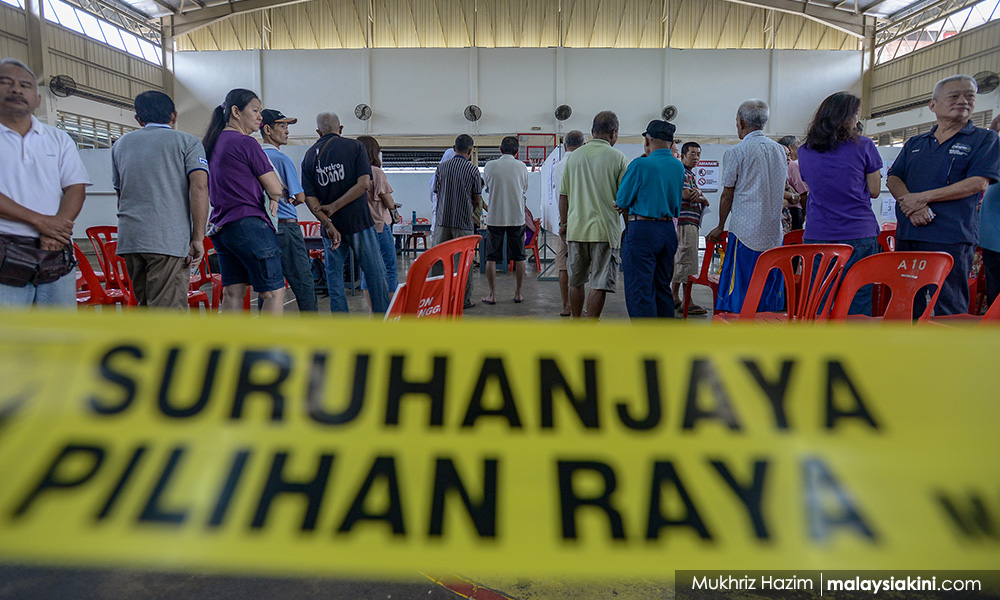
So, pay attention to what happens in the next few weeks. Go attend ceramah, look at the records of the people standing for election and read the party manifestos.
Choose only people who are not tainted by scandal and who are honest and are in politics to serve the people. Come polling day, go and vote.
In the end, perhaps the party is less important compared to the individuals you elect. Hopefully, the cumulative effect of good people in Parliament and the state assemblies will bring about the changes we need to move our beautiful country forward and bring our people together.
DAVID DASS is a lawyer, Malaysiakini subscriber and commentator.
The views expressed here are those of the author/contributor and do not necessarily represent the views of Malaysiakini.
/file/publisher-c1a3f893382d2b2f8a9aa22a654d9c97/2022/10/b67a1190200cebba3f88f23005e5c0b1.jpg)
/file/publisher-c1a3f893382d2b2f8a9aa22a654d9c97/2022/11/e9c07a44fcdf58f5b622079f5b4b81b4.jpg)
/file/publisher-c1a3f893382d2b2f8a9aa22a654d9c97/2022/11/30f007a956873ec5f21d4c5f2de2e16d.jpg)
/file/publisher-c1a3f893382d2b2f8a9aa22a654d9c97/2021/03/3425c9e58102a66d44c3f648e70ac1ad.jpg)
/file/publisher-c1a3f893382d2b2f8a9aa22a654d9c97/2022/04/2e7dd847d8693bf578d6dc8080b91e29.jpg)


Are you sure you want to delete this comment?
This action cannot be undone.