




Deal-ers and win-ners are grin-ners?
And so it's done. After years of wrangling with successive US administrations and missile testing into the Sea of Japan in acts of geopolitical brinkmanship, North Korea's ruler Kim Jong-il entered into a historic deal with Washington in six-party talks (including Japan) in Beijing mid February.
 Pyongyang will stop enriching plutonium, dismantle its main nuclear reactor in Yongbyon, freeze its nuclear weapons programme, allow inspections of its facilities by UN International Atomic Energy Authority experts, and declare where else in the world's only hereditary communist dynasty other nuclear materials and facilities may be hidden. In return Kim will secure guarantees of energy aid to the totalitarian regime from the US, China, Russia and South Korea.
President George W Bush is exalted. Naturally. This is one of his three "axis of evil" states, which has finally caved in to US pressure, including economic sanctions. Secretary of State Condoleezza Rice, who was in the Middle East desperately trying to salvage the long-stalled peace process between the Israelis and the Palestinians, called the Beijing deal the first step towards de-nuclearising the Korean peninsula. The next step is bilateral talks between Washington and Pyongyang to normalise relations, followed by Tokyo and Seoul, and the ending the US-led trade embargo.
All's hunky-dory? Not so fast.
And so it's done. After years of wrangling with successive US administrations and missile testing into the Sea of Japan in acts of geopolitical brinkmanship, North Korea's ruler Kim Jong-il entered into a historic deal with Washington in six-party talks (including Japan) in Beijing mid February.
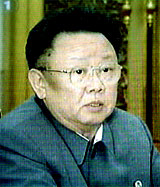 Pyongyang will stop enriching plutonium, dismantle its main nuclear reactor in Yongbyon, freeze its nuclear weapons programme, allow inspections of its facilities by UN International Atomic Energy Authority experts, and declare where else in the world's only hereditary communist dynasty other nuclear materials and facilities may be hidden. In return Kim will secure guarantees of energy aid to the totalitarian regime from the US, China, Russia and South Korea.
President George W Bush is exalted. Naturally. This is one of his three "axis of evil" states, which has finally caved in to US pressure, including economic sanctions. Secretary of State Condoleezza Rice, who was in the Middle East desperately trying to salvage the long-stalled peace process between the Israelis and the Palestinians, called the Beijing deal the first step towards de-nuclearising the Korean peninsula. The next step is bilateral talks between Washington and Pyongyang to normalise relations, followed by Tokyo and Seoul, and the ending the US-led trade embargo.
All's hunky-dory? Not so fast.
In most respects, this is Clayton's deal a deal when you don't really have one. It's far from signed, sealed and delivered, no matter what US chief nuclear negotiator Christopher Hill says. In fact, even at this moment, the Americans and North Koreans are still haggling over the minute details of the agreement while at least one million North Korean women and children, cut off from international aid, slowly starve to death. And Hill knows all of this better than most.
The agreement is not without its critics. John Bolton, possibly the most hawkish of US diplomats who was rightly dumped by Bush as UN ambassador, told CNN: "It sends exactly the wrong signal to would-be proliferators around the world. [It says] 'if we hold out long enough, wear down the State Department negotiators, eventually you get rewarded,' in this case with massive shipments of heavy fuel oil for doing only partially what needs to be done." And that, he said, gives hope to rogue states like Iran and other pro-nuclear proliferators. Presumably Bolton would add to his list India and Pakistan arch enemies on the Indian continent since Partition in 1947 who have powerful nuclear ambitions, and Pakistan having been accused more than once of having sold nuclear weapons know-how to North Korea and Iran.
Hypocritical policy
There's hypocrisy in US policy regarding nuclear proliferation, and it goes mostly along racist lines. According to the US calculus, only white nation states are allowed to have nuclear weapons since only white nation states are considered civilised and so they're also responsible human beings. The others are less civilised, even uncivilised, and cannot be trusted to develop let alone possess nuclear technology. But when Iran's president, Mahmoud Ahmadinejad, blatantly uses nuclear threats to wipe out his most hated enemies, somebody has to worry and find a solution. In the case of Iran that solution will come once the mullah's who rule Iran with communist-like fists have the spine to remove Ahmadinejad, followed by an overthrow by popular revolt of the mullah's themselves. Because it's regimes like Iran's, like the Taliban, who are consciously and manically militarising Islam.
Nevertheless, the North Korean deal has to be made to stick, and that'll be seen in the months to come once critical bilateral talks begin. At this stage, there's no agreement for Pyongyang to dismantle its Yongbyon facility. Already negotiations over this look likely to be protracted. And there is no set timetable when the IAEA will inspect nuclear facilities in the hermit kingdom. Presumably it'll be within six months, by which time the regime has to declare all its nuclear assets and their location.
Other sticking points also need to be ironed out before any real deal is achieved. Being a nation that is broken, literally, whose people are needlessly starving and dying, except for the regime's elites and the military which protects it from mass dissent or revolt, dictator Kim has used his nuclear asset to leverage the US-led delegation into providing multi-million dollars of fuel aid every year just so it can light the nation and provide energy for the scant industry that still exists inside its borders. Much of the industry is presumably heavy industry linked to military procurement, and possibly a relic of that left behind by the colonizing Japanese before World War II ended Japanese occupation.
But even the Japanese have old scores to settle. Throughout the 1970s and 80s, Tokyo claims Pyongyang agents kidnapped 11 Japanese who have since been taken to North Korea. It wants them back, safe and sound, and until that's done, Japanese prime minister Shinzo Abe does not think bilateral talks would be particularly helpful. Certainly no Japanese aid will be sent to North Korea, and Tokyo would put enough pressure on South Korea, which Japan had also colonized and brutalized, to stand by Tokyo's demands.
But South Korea too has lost its citizens by abduction to the North, many more than Japan has, but it's unlikely to foot the Japan's aid to Pyongyang until the kidnapped Japanese citizens are returned. More, if denuclearisation is achieved, it's South Korea that'll stand to benefit the most from the deal, since there's a potential of a "relinking" of the two hemisphere's economies, much like East and West Germany went through after the fall of the Berlin Wall. Ratings agency Standard and Poor's, within hours of the announcement of an impending breakthrough in Beijing, was predicting a possible rise in South Korea's credit rating.
Real deal
China is also set to benefit once the deal is finally secured. Since China crossed the Yalu River to come to North Korea's aid against the US and its allies in the Korean War in 1950, Beijing has been keeping North Koreans alive through food, medical and financial aid, though just barely. Much of the aid has been stolen by the regime's elites. North Korean soldiers are probably as well fed as the elites whilst the rest starved from hunger and illnesses.
As dissent grew and refugees began to flee the North, China has been the route to their freedom, where the refugees were housed in prison conditions or else sent back across the mountainous border regions. But now it will take the pressure of Beijing's purse, and even provide Chinese businesses opportunities for tie-ups with existing North Korean industries or develop new ones from scratch in direct competition with South Korea's money mandarins.
All this only will come after the real and final deal is done, and that's a long way off yet from being started. The devil's in the detail. Nevertheless, the White House has been quick to take the credit for bringing North Korea to heel. It's deluding itself, of course. This chain of events has only come about because of China. After Kim Jong-il fired his last missile with a nuclear warhead said to be powerful enough to blow up Tokyo, but which turned out to be a fizzler, Beijing immediately despatched its third highest ranking diplomat who shred Kim to ribbons over his stupidity.
Something worked. The talks between Pyongyang and Washington were hastened. However, it's becoming increasingly clear that these talks didn't start in Beijing in early to mid February but months ago in Berlin in secret at China's behest. A tentative agreement was sealed there, and perhaps Beijing turned out to be a little more than just a formality to show to the world.
Still, the world, and in particular East Asia, will have to wait until the real deal is done, and the winners and losers of the deal can be seen by all. If East Germans would offer North Korea a lesson, Kim will no doubt be wondering how to avert the kind of East German syndrome in his neck of the woods. Because it's been a disaster there while the West Germans grabbed everything from their Eastern citizens.
MANJIT BHATIA is an Australian writer who specialises in international and Asian economics and politics.


Are you sure you want to delete this comment?
This action cannot be undone.