


/file/publisher-c1a3f893382d2b2f8a9aa22a654d9c97/2022/03/e8d2e73cbf26776635fa39e1b50b4d04.jpg)

COMMENT | GE15: Opinions of a first-time voter
My first-ever memory of a general election is the 12th general election, where a seven-year-old me told my cousin that if I could vote, I’d vote for DAP as I liked the rocket emblazoned on the party’s flag.
Even in the 13th general election, I was unmindful of the importance of being politically aware. However, by then, I began reading some articles and spoke to my parents about who they would vote for.
It was not until the 14th general election that, as a 17-year-old, I became increasingly invested in the political state of our country.
I recall discussing and debating with my classmates and family members, speculating about the outcome of the elections and what it would mean for the future of the country.
Nevertheless, with the 15th general election looming on the horizon...
COMMENT | Watching all the campaign flags go up around me causes some vivid memories to come rushing back.
My first-ever memory of a general election is the 12th general election, where a seven-year-old me told my cousin that if I could vote, I’d vote for DAP as I liked the rocket emblazoned on the party’s flag.
Even in the 13th general election, I was unmindful of the importance of being politically aware. However, by then, I began reading some articles and spoke to my parents about who they would vote for.
It was not until the 14th general election that, as a 17-year-old, I became increasingly invested in the political state of our country.
I recall discussing and debating with my classmates and family members, speculating about the outcome of the elections and what it would mean for the future of the country.
Nevertheless, with the 15th general election looming on the horizon, the Parliament has finally lowered the minimum voting age from 21 to 18, which means there will be a lot more youth voters this time around.
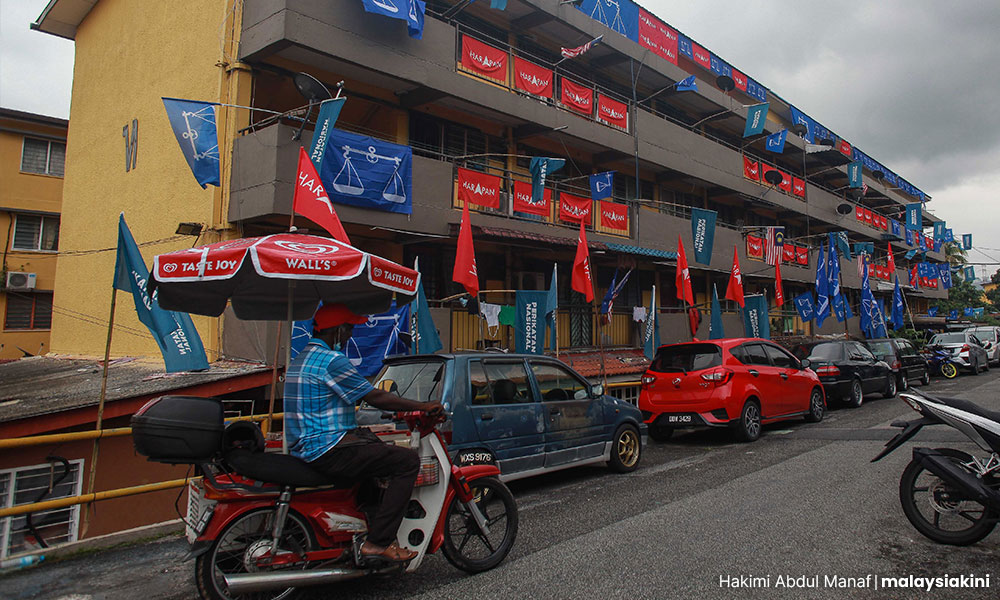
With the enforcement of Undi18 and automatic voter registration last Dec 15, there was an influx of 5.8 million additional voters, which includes 1.2 million youths between the age of 18 and 20.
This calls for the question: Are we youths ready to vote? Are we mature enough to properly choose the leaders of our country?
Personally, I think there are two ends to the spectrum.
For example, I was having a conversation with my friends at a mamak the other day, and naturally, we started talking about the impending election.
One friend said she was prepared and knew exactly who she was going to vote for.
On the other hand, another friend looked me dead in the eye and told me, “I will vote for whoever you vote for because I trust your judgement.”
While I did appreciate the humour, it shows there are still youths in this country who are severely undereducated on the importance of voting, while also unaware of the political occurrences in our country.
Personally, I feel this lack of education stems from the education system.
My entire schooling life in primary and secondary school has been with the government school system, and I do not recall ever receiving any form of political education at all.
If any, it would have been in subjects considered ‘minor’ to most school students, such as ‘Pendidikan Sivik’ (Civic Education).
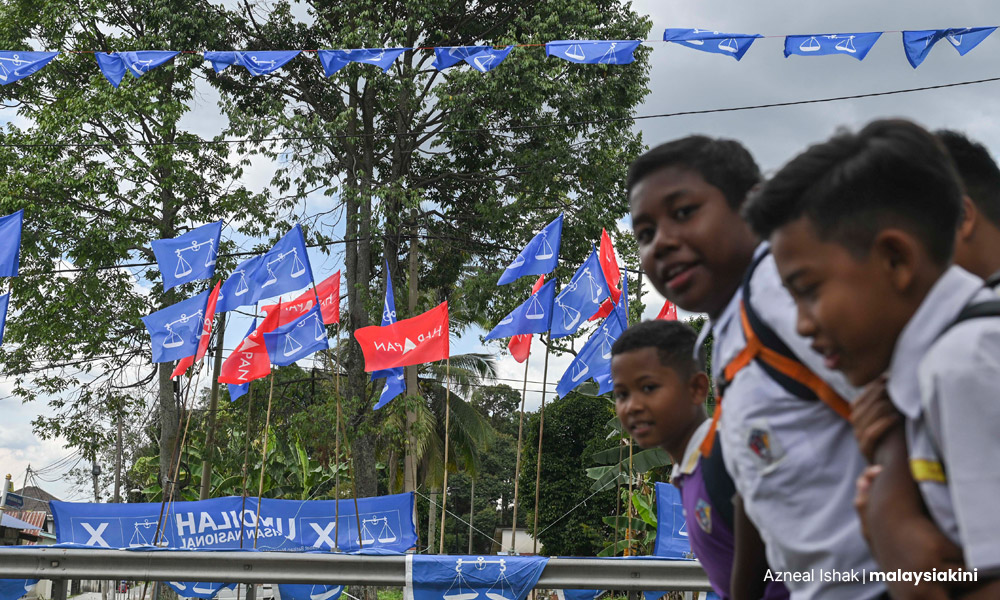
In fact, most of the knowledge my peers and I have received is through social media infographics and conversations with family and friends.
Hence, I firmly believe that we youths should be better educated, especially on the electoral process, the separation of powers in Malaysia, and more.
Basic political knowledge should be included in compulsory subjects, such as Pendidikan Moral or Sejarah (History).
This would essentially ‘force’, for lack of a better word, the youths to properly grasp the election process which would then provide them with sufficient knowledge to make an informed decision that would ensure a better future for the country.
Additionally, it would be fair to say that not many of the youths actually care about the policies offered by eager politicians.
Let us set the scene. You are a 19-year-old trying to decide who to vote for, and when looking at the policies being offered - reduction of house prices, subsidies on chickens - they do not affect us directly.
To resolve this issue, the education system should be reformed to educate school-going kids on the importance of these policies and how they would affect them when they are adults.
To wrap it up, there is not much point in allowing those between the ages of 18 to 20 to vote if they are not well-educated regarding the political landscape in Malaysia.
To ensure that this is not the case, those in power should ensure necessary steps are taken to prevent this issue from worsening and potentially putting this country in jeopardy.
GAJENDRA JEYA KUMAR is a final-year law student who is looking into a future in journalism.
The views expressed here are those of the author/contributor and do not necessarily represent the views of Malaysiakini.
/file/publisher-c1a3f893382d2b2f8a9aa22a654d9c97/2022/11/ae99e49fecd929ea2f47ca43afb92641.jpg)
/file/publisher-c1a3f893382d2b2f8a9aa22a654d9c97/2022/07/c04546cfd853101c4e0a2dea23df03a3.jpg)
/file/publisher-c1a3f893382d2b2f8a9aa22a654d9c97/2022/11/8cbd57b9ffaa6c0b6dfaa2093c8bf975.jpg)
/file/publisher-c1a3f893382d2b2f8a9aa22a654d9c97/2022/03/0da8742ad1847bb5837cbc574217cbd0.jpg)


Are you sure you want to delete this comment?
This action cannot be undone.