


/file/publisher-c1a3f893382d2b2f8a9aa22a654d9c97/2022/11/e8bebdaaf738f06fd0e71413673c23e1.jpg)

COMMENT | Qatar 2022: Will virtual kill the TV star?
When I was in my second last year of high school, there had been a push to start an all-girls football team. Hearing that the coach was having trouble identifying folks who wanted to play outside of class time, I accosted him in the school canteen to volunteer myself for the troops.
I was made a winger: not the most talented but definitely the most enthusiastic. Despite my clumsiness and penchant for tripping on my own feet, I learnt with great pleasure the rules of the sport, footwork and so forth, never once missing a practice.
COMMENT | I haven’t played football in seven years. There’s a lot that I miss about the sport - from the communal aspect of it down to the sheer breathlessness of running on a pitch, thinking, “Wow, isn’t it amazing to be alive?”.
When I was in my second last year of high school, there had been a push to start an all-girls football team. Hearing that the coach was having trouble identifying folks who wanted to play outside of class time, I accosted him in the school canteen to volunteer myself for the troops.
I was made a winger: not the most talented but definitely the most enthusiastic. Despite my clumsiness and penchant for tripping on my own feet, I learnt with great pleasure the rules of the sport, footwork and so forth, never once missing a practice.
These days, the hectic pace of work has beaten me into a sedentary lifestyle. No longer can I recall those halcyon days, or even the scent of morning dew on a wet football pitch.
Maybe I really do need to get out more...
Now, the best I can do is stare mindlessly at the four television screens hooked up to the games at my regular mamak restaurant or talk about them with my partner - who endearingly is a repository of football trivia - as the World Cup in Qatar rages on.
Beyond the controversies surrounding alleged human rights violations in its run-up and the exorbitant price tag to attend any one of these games, noteworthy is a series of shocking defeats taking place in the earlier games, as you, the reader, may already know.
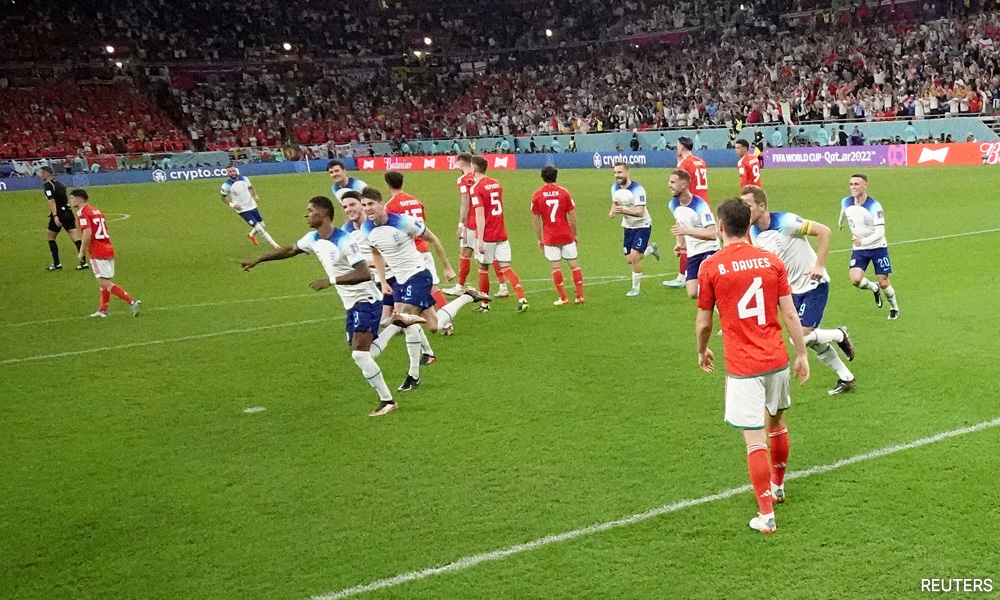
Even more noteworthy is the extent to which the World Cup has evolved into a big-scale production where matches take on an almost surreal quality as players are tracked by no less than 40 cameras in glorious high definition - with the “damage” likely running into millions of dollars.
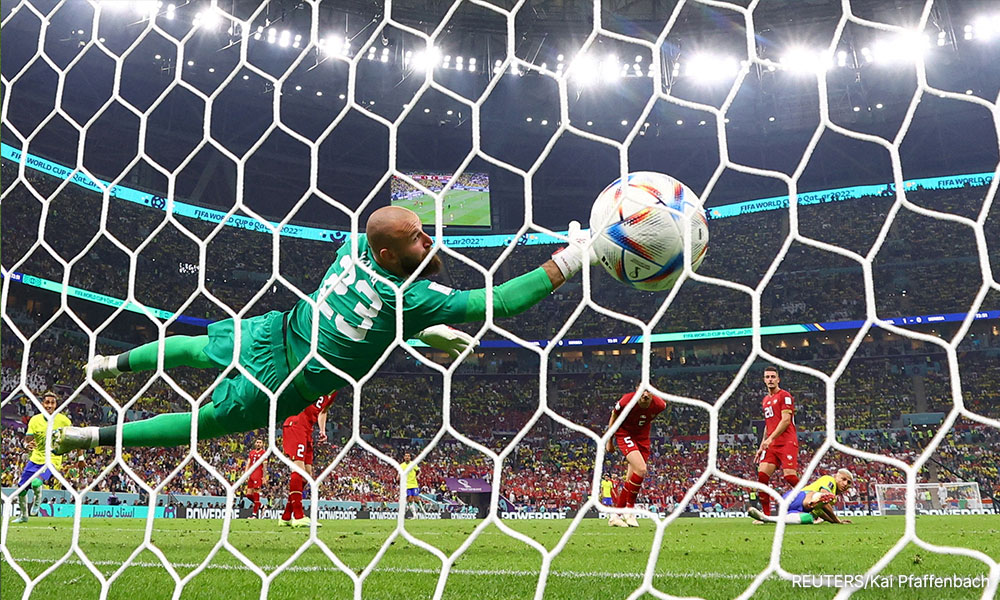
If you stick around long enough, you may find yourself captive to the endless zoom, now a common feature in televised games. Believe me, if you ever wanted to see up Son Heung-min's right nostril after a winning shot, now is the best time to grab a friend and watch a game.
As a casual fan, I know at least that a three-camera arrangement is typically the bar - if a low one - for the coverage of a standard game.
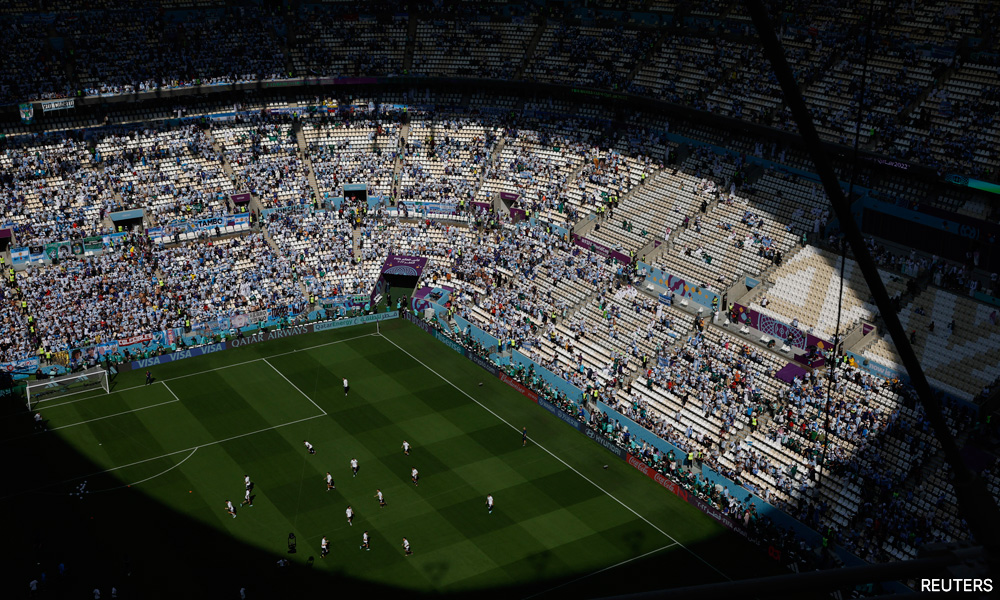
One focuses on the wide shot that gives a full picture of the action, the second camera goes at different angles for some variety, while the last takes in close-ups and goals.
With its assortment of casual and diehard fans alike, the World Cup this year throws its hat into the ring for garnering the attention of the younger generations using the whole shebang of computer-generated imagery, data visualisation and cinematic flair.
Football, like everything else in the age of social media, becomes a product curated in such a way that it amalgamates the live experience of being a spectator in a stadium, on television, and even in video games.
Perhaps, we have been spoiled by the excesses of modern-day technology, allowing the realm of the virtual to seep into the throbbing veins of the game.
It's not immediately as obvious but a YouGov study in 2021 showed that one-fifth of sports enthusiasts worldwide now watch sports on their mobile devices.
Notably, the study points to a wave of fans in the Asia Pacific region who rely on the small screen to follow their favourite games.
Yet, in another 2021 study conducted by YouGov, the numbers don't point to the demise of live TV at the hands of online live streams in the fast-paced world of sports.
In fact, it suggested that in every country, following sports on the telly still comfortably holds its place in the household.
Only in Sweden and Singapore did viewership of sports on live television see a dip below the majority.
So for now, it looks like there is no need to fear that virtual may kill the TV star. For now...Back to the mamaks and pubs, we go.
Televised moments captured for generations
Despite making light of such developments, the zoomed-in shots have proven to be useful for followers reflecting on the history of the game, which is often tied to money, politics, drugs and corruption.
When I was trawling the archives, I came across a 40-second clip of an infamous own goal taken by Colombian defender Andres Escobar in the 1994 iteration of the World Cup.
In a crucial moment during a group match between Colombia and the US, Escobar and a host of players were seen rushing towards the ball.
As they approached the goalpost, the Colombian defender suffered the misfortune of slipping and sliding back onto the pitch, accidentally guiding the ball into his own net.
He was then seen from a different angle, raising his hands in remorse as he descended onto the grassy pitch when realising his error.
The camera later cuts to a close-up shot of the defender, now standing, who was clearly disheartened by the turn of events.
The game resulted in a 2-1 loss for Colombia, in what would lead up to elimination from the World Cup that year for the South American team. In the 26 matches before USA '94, Colombia lost only once.
After the sour loss against its 1994 World Cup hosts, it snuck in a win in its last clamour for glory against Switzerland four days later, but the match was widely seen as a dead rubber due to the fumbling of its previous matches at the group stage.
"Life doesn’t end here. We have to go on. Life cannot end here. No matter how difficult, we must stand back up.
"We only have two options - either allow anger to paralyse us and the violence continues, or we overcome and try our best to help others. It’s our choice.
"Let us please maintain respect. My warmest regards to everyone. It’s been a most amazing and rare experience. We’ll see each other again soon because life does not end here," read a chilling statement from Escobar that was published in Bogota’s El Tiempe newspaper shortly after his team's defeat.
Assassination of Andres Escobar
This was the last time many would see the face of Andres Escobar, or ''El Caballero de Futbol (The Gentleman of Football)" as he was fondly called.
Little did he know, the accidental shot would prove to be fatal as the 27-year-old player was soon after gunned down in his own car, taking six bullets in the back.
It is rumoured that his assailant had shouted "Goal!" with every gunshot taken - one for each time South American broadcasters screamed it on the television broadcast - before Escobar was left to bleed to death.
The ill-fated player's life was taken outside a nightclub in his hometown of Medellín, Colombia during the wee hours of July 2, 1994 - a mere ten days after the unfortunate own goal.
His death - which was said to be revenge for his “contribution” to his team's boot from the World Cup that year - shocked millions and besmirched the country's name in the football world for years to come.
In the comments section of the archival footage that has since racked up 3.4 million views, it is clear that many football fans still replay the unfortunate scene captured immemorial that left the Medellín boy in cold blood.
His life, for many, has been reduced to that televised 40-second-snippet that captured his last days on the pitch and the mistake that led to it.
/file/publisher-c1a3f893382d2b2f8a9aa22a654d9c97/2022/11/f211d0c24fa1e6bc8dac036aafc23efb.jpg)
/file/publisher-c1a3f893382d2b2f8a9aa22a654d9c97/2022/11/f58ed42cd1a1d81c8418d09654baffe3.jpg)
/file/publisher-c1a3f893382d2b2f8a9aa22a654d9c97/2022/11/b40e89c3af5aea3b965aa640378dd13f.jpg)
/file/publisher-c1a3f893382d2b2f8a9aa22a654d9c97/2022/11/5059bb584701294446cf4921c9c0d35c.jpg)
/file/publisher-c1a3f893382d2b2f8a9aa22a654d9c97/2022/11/b63d1e5bcfb9c9d717aef0e48987d5d4.jpg)


Are you sure you want to delete this comment?
This action cannot be undone.