




Congestion pricing won't work for KL - yet
The Datuk Bandar of Kuala Lumpur (the other DBKL) has indicated recently that he wishes to go forward with the plan for congestion charging in the Kuala Lumpur city. The reasoning is that congestion charging will encourage more people to car pool into the city, reducing the number of Single Occupancy Vehicles (SOV) entering the city centre every day. In addition, the improvements to public transport will make this a better option for people to use to enter the city.
I would like to respectively suggest to the mayor that, while his aims are positive and laudable, the reality is that at the present time, congestion pricing will not be an effective measure to reduce traffic congestion in Kuala Lumpur.
The Datuk Bandar of Kuala Lumpur (the other DBKL) has indicated recently that he wishes to go forward with the plan for congestion charging in the Kuala Lumpur city. The reasoning is that congestion charging will encourage more people to car pool into the city, reducing the number of Single Occupancy Vehicles (SOV) entering the city centre every day. In addition, the improvements to public transport will make this a better option for people to use to enter the city.
I would like to respectively suggest to the mayor that, while his aims are positive and laudable, the reality is that at the present time, congestion pricing will not be an effective measure to reduce traffic congestion in Kuala Lumpur.
The mayor mentioned out that 70 percent of the two million vehicles that enter Kuala Lumpur are Single Occupancy Vehicles. Even with congestion pricing, would the number of SOVs be reduced enough to make an impact on traffic congestion? Even if the number of SOVs are reduced to one million, the streets of the city centre will still be congested, simply because they do not have the capacity for one million cars.
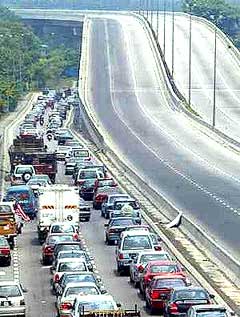 What is worse is that the public transport system will not be able to handle the overflow as people switch. There are simply not enough buses and trains to absorb the excess capacity. The last time there was a major shift towards using public transport - with the rise in fuel prices in March 2006 - the number of people using the service lead to numerous delays, reduced maintenance, and accidents. We do not want this to happen again.
What's worse is this scenario: A massive increase in public transit use which overloads its system capacity, leading to serious breakdowns and major accidents. As a result, more frustrated commuters move away from public transit, resulting in even more cars on the road.
The Datuk Bandar should accept that there is a major gap between his goals and the situation that exists on the streets of KL today. However, all is not lost. There is a place for congestion pricing in KL, for example, a surcharge on SOV, but this should be put in place in the future. Before that can happen, the Datuk Bandar and DBKL should work together with other local, state and federal government agencies, to achieve the following improvements:
Cameras needed
- Reduce traffic congestion in the city by keeping traffic moving. That means there have to be more cameras and more officers to keep watch on double-parked and idling cars, trucks and buses. Double parking and idling in the city centre should not be allowed at all.
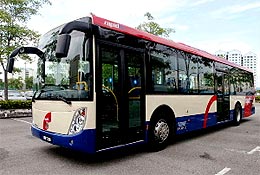 It is time to create a local Klang Valley Transportation Authority which will oversee route planning and fares for the entire Klang Valley. All bus companies will have to comply with the fare structure and the route plans developed by this authority. The advantage of having one authority doing route planning means that all corridors and routes will receive service. The advantage of having all companies using the same fare is that commuters can take the first bus that comes along, rather than waiting for Metro or RapidKL.
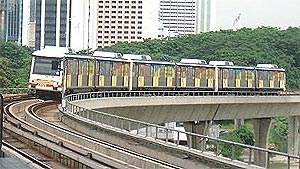
Ideally, the City Centre Line would be completed and the North South Line operating from Setapak down to Taman Desa or OUG, (with plans for future extensions north and southwards) before any congestion pricing is introduced.
Request advance first
The congestion pricing will bring money to the DBKL. Lots of money. Even if the number of cars is reduced to one million, that will still be a lot of money. If the charge is RM5 per entry per day, then the DBKL would collect RM5 million per day.
Ideally, that money would go towards public transit, as well as the maintenance of transportation facilities like roads, bridges, parking lots, bus stops, bus stations, transit malls, and pedestrian facilities like overhead walkways, benches, etc. Every sen of that money will have to be accounted for.
 The Datuk Bandar is trying to think creatively and be aggressive in his efforts. I'm sure that he has access to projected revenues and environmental and traffic impact studies. The Datuk Bandar should approach the Federal Territories Ministry, the Finance Ministry, and the Selangor State government one by one, with this information in hand.
Perhaps these government agencies will be kind enough to advance the money to him so that the DBKL can get started now in making those necessary improvements to public transit.
When the congestion charges are finally put in place, I'm sure that the Datuk Bandar will be more than happy to return the money to the various ministries and government departments.
Congestion pricing to reduce traffic congestion is a good theory. Unfortunately, by itself congestion pricing will not reduce traffic congestion. A combined, effective strategy featuring major, step-by-step changes to the way we move around the city is necessary before congestion pricing can be considered.
MOAZ YUSUF AHMAD is a regular user of public transport who is deeply concerned that government plans to encourage people to use public transport will ultimately fail because of poor planning and a lack of support from the public.


Are you sure you want to delete this comment?
This action cannot be undone.