




Pervez paranoia or pay-back time?
He's at it again. He just can't seem to help himself. It's like a second skin. Pakistan's military president, General Pervez Musharraf, is acting like most Third World dictators brutally. The ugliness of Third World tyrants, like Zimbabwe's Robert Mugabe, won't show off Musharraf as merely strong but always inherently conservative and rightwing. Despots remain in power by wielding it through state force or state terrorism. If anybody knows how to use the weapons of coercion and oppression, it's the likes of Mugabe and Musharraf.
Pakistan's major cities are again awash with street protests against the Musharraf regime. This time, though, the popularly fashioned 'black coats' - Pakistan's lawyers and barristers - are leading the demonstrations. And more and more state-appointed judges are quietly egging on the black coats from the sidelines. Whether these protests turn into a Filipino-style "yellow revolution", to potentially knock Musharraf off his pedestal, is left to be seen.
He's at it again. He just can't seem to help himself. It's like a second skin. Pakistan's military president, General Pervez Musharraf, is acting like most Third World dictators brutally. The ugliness of Third World tyrants, like Zimbabwe's Robert Mugabe, won't show off Musharraf as merely strong but always inherently conservative and rightwing. Despots remain in power by wielding it through state force or state terrorism. If anybody knows how to use the weapons of coercion and oppression, it's the likes of Mugabe and Musharraf.
Pakistan's major cities are again awash with street protests against the Musharraf regime. This time, though, the popularly fashioned 'black coats' - Pakistan's lawyers and barristers - are leading the demonstrations. And more and more state-appointed judges are quietly egging on the black coats from the sidelines. Whether these protests turn into a Filipino-style "yellow revolution", to potentially knock Musharraf off his pedestal, is left to be seen.
Since 9/11, Washington has forced Musharraf to pick a fight with Pakistan's hardline Islamic extremists who've been backing the Taliban within Pakistan's border regions with Afghanistan and inside Afghanistan. This time, though, Musharraf's new fight is with the judiciary and, in particular, Pakistan's Supreme Court chief justice, Iftikhar Mohammad Chaudhry. Musharraf, who always acts in haste and without a clear critical thinking faculty, has suddenly laid into Chaudhry before unceremoniously dumping him two weeks. Why? Nobody really knows. That's the problem. Only Musharraf does.
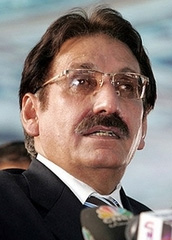 Chaudhry has not been one to baulk from taking on cases that challenge the Musharraf regime. Charges against Chaudhry weren't immediately made public, but Musharraf's thugs soon began to peddle rumours of Chaudhry's misconduct and misuse of authority. So much so Musharraf promptly suspended Chaudhry. The establishment's thinking is that the more mud is slung at Chaudhry over time, the man will be compelled to resign sooner rather than later.
Chaudhry, though, true to form, is holding his ground. He has refused to resign. If this isn't enough, Musharraf has been adding more theatrics to the bizarre Bollywood-style drama. He promptly declared Chaudhry "non functional" until wait for it a judicial panel can rule on the charges against him. Meanwhile Chaudhry has been placed under house arrest. That's not all. The hearing will be held behind closed doors - with no access to lawyers and the media.
Self-inflicted nightmare
For Musharraf, another self-inflicted nightmare looms large. The longer this standoff goes, the greater the possibility that it'll spiral into a full-blown constitutional crisis. And that's the last thing Washington wants. The Bush administration has long been critical of Musharraf's lack of willingness to rein in Pakistan's militant Islamists and their material support of the Taliban and Al-Qaeda.
There's more. US vice-president Dick Cheney, who made a brief stopover in Islamabad recently, says corrupt elements within Pakistan's military and intelligence agencies continue to lend material support to Islamic terrorists. A constitutional crisis in Pakistan would, Washington thinks, increasingly take Musharraf's eye off the ball in his role in America's war on terror, especially on the eve of a Spring offensive by the Taliban and Al-Qaeda against US-led forces in Afghanistan.
But how far is Musharraf willing to push Pakistan's legal fraternity, including the pliable judiciary, and not suffer politically from the fallout?
By the time the five-member Supreme Judicial Council, hurriedly established, said it was ready to hear the charges against Chaudhry, a growing wave of public sympathy for Chaudhry had swelled. Hundreds of black coats wearing black armbands and headbands had congregated outside the court building to give Chaudhry a hero's welcome, chanting "Go, Musharraf, go" and, in the face of the gathered riot police, chants of "a regime of bullet and baton will not do".
State-organised violence goes a long way in Third World countries to demand the acquiescence of anti-regime dissidents. A police contingent, in full riot gear, raided Geo News , a private television station, smashing glass doors and equipment and firing tear gas inside its offices. Media minister Mohammed Ali Durrani stood yards away, the police thugs ignoring his pleas for them to stop.
Musharraf said he had not sanctioned the raid and that it would be fully investigated, and that the culprits will be identified and punished "tonight". But two weeks later, the investigations are yet to start. He seemed to suggest that Geo News had brought it on itself. That's like Zimbabwe's Robert Mugabe saying the country's leading opposition leader Morgan Tsvangirai hadn't been beaten up by Mugabe's thugs but that Tsvangirai had beaten himself up as a ploy to win public and international sympathy.
Harsh public comments
Chaudhry's turmoil may have been self-inflicted. A cavalier fellow, Chaudhry has been enjoying unsurpassed popularity with Pakistan's anti-regime media. He's been making harsh public comments on Musharraf's political functionaries, and taking up human rights causes, such as the state-sanctioned "forced disappearances" of dissidents and suspected Islamic terrorists and their supporters by Pakistan's nefarious intelligence agencies, probably at American behest.
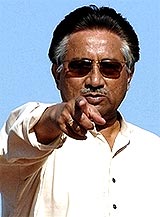 Musharraf increasingly felt Chaudhry had been taking his judicial independence far too seriously and far too far. Babar Sattar, an Islamabad lawyer and columnist, told the
New York Times
that Chaudhry had begun "to take the constitutional guarantee of judicial independence too seriously and began to poke the judicial finger into holy waters".
Musharraf increasingly felt Chaudhry had been taking his judicial independence far too seriously and far too far. Babar Sattar, an Islamabad lawyer and columnist, told the
New York Times
that Chaudhry had begun "to take the constitutional guarantee of judicial independence too seriously and began to poke the judicial finger into holy waters".
For one thing, Chaudhry had embarrassed the Musharraf government by overturning the much-publicised privatisation of a steel mill, for which Prime Minister Shaukat Aziz was tainted for having approving the underpriced sale of a major national asset. And he has taken up "forced disappearances" cases that assail the basic tenets of due process law.
With Chaudhry wielding that much political freedom and influence, Musharraf must have thought the former chief judge may get even bolder and attempt to stop Musharraf from winning the next presidential election, due soon. Informed lawyers close to the political machinations of the tightening Musharraf-Chaudhry rivalry say Musharraf has become increasingly paranoid about his political future.
Having installed himself as president after overthrowing a democratically elected civilian government, Musharraf is seen in Pakistan and elsewhere in the Muslim world as an American poodle who's prepared to violate the rights of Pakistanis and his critics if that would appease his political master George W. Bush and see multi-million dollar financial aid from the White House. And the one man who's prepared to openly criticise Musharraf is Chaudhry.
For Chaudhry, though, all this is the stuff of classic political ironies. Chaudhry was among half the Supreme Court judges who had backed and validated Musharraf's military coup in 1999 against an elected government while the other judges resigned in protest. When Musharraf held a general referendum to install himself as president, Chaudhry sat on the court's bench and inked his approval. His actions curried favour, making him instantly popular amongst Musharraf's national security far-right hardliners. He was seen by political dissidents as an erstwhile Musharraf supporter.
Now, however, in the face of a judicial hearing of the charges levelled against him, Chaudhry, regardless of his high-minded legalistic protests, probably realizes that he's like a pitiable character in a Shakespearean tragedy. If his case does turn ugly and spirals into a constitutional crisis as seems likely unless Musharraf comes to his senses for once Chaudhry is facing a judicial body who's appropriateness is highly questionable, who's legitimacy is equally highly questionable, and whose independent judicial standards have been severely compromised politically. It's a body that has become bigger by its own politically self-interested appropriation, and nastier. But, in the volatility of Pakistani body politics, it could also very likely bite Musharraf where it'll greatly hurt him all too deservedly.
MANJIT BHATIA is an Australian writer who specialises in international and Asian economics and politics.


Are you sure you want to delete this comment?
This action cannot be undone.