




No real thaw in Sino-Japanese relations
I once asked Lei Qili, a lecturer at Shanghai's Huadong Normal University, 'What were the peasants in the rural areas doing when the residents in Beijing and Shanghai were taking to the streets in protest of Japan's bid to join the United Nations Security Council as a permanent member in April 2005?'
Lei's frankness surprised me: 'Basically, they knew nothing about the angry protests the Communist authorities made sure they remained in the dark in order not to exacerbate the already tricky situation'.
The ruling elite of the Chinese Communist Party (CCP) have always regarded Sino-Japanese relations as the most delicate among all. The difficult history between the two countries over the past one century beginning from the first Sino-Japanese War in 1895 to the shifting, revisionist positions of the Japanese authorities since 1945 has kept Beijing and Tokyo apart for much of the post-World War II period.
I once asked Lei Qili, a lecturer at Shanghai's Huadong Normal University, 'What were the peasants in the rural areas doing when the residents in Beijing and Shanghai were taking to the streets in protest of Japan's bid to join the United Nations Security Council as a permanent member in April 2005?'
Lei's frankness surprised me: 'Basically, they knew nothing about the angry protests the Communist authorities made sure they remained in the dark in order not to exacerbate the already tricky situation'.
The ruling elite of the Chinese Communist Party (CCP) have always regarded Sino-Japanese relations as the most delicate among all. The difficult history between the two countries over the past one century beginning from the first Sino-Japanese War in 1895 to the shifting, revisionist positions of the Japanese authorities since 1945 has kept Beijing and Tokyo apart for much of the post-World War II period.
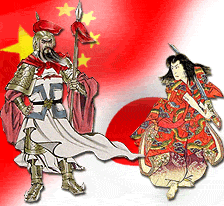 The Chinese government doesn't want the sentiments of the Chinese people to dictate its foreign policy towards Japan. While President Hu Jintao and Premier Wen Jiabao truly felt the wrath of Chinese protestors in Beijing and Shanghai two years ago (which also shocked the Japanese populace), this had to be properly managed to avoid an escalation into a nationwide movement that could eventually cast the legitimacy of the CCP in doubt. Nationalist sentiment, in China as in anywhere else in the world, is a double-edged sword that should not be trivialised at all times.
Mindful of the fickle feelings of the Chinese people, the Chinese government had been carefully manufacturing positive factors before the so-called 'ice-melting' visit of Premier Wen to Japan early this month, reminding the Chinese that a cordial Sino-Japanese relationship would benefit the two countries and the region in more ways than one.
As such, books and publications in praise of the centuries-old ties between the two nations flooded the market, and major TV stations were showing the story of Jianzhen, a legendary monk credited with bringing Buddhism to Japan and who is still widely revered in the Land of the Rising Sun today.
Wen's speech to he Japanese Diet was full of conciliatory words. Judging from the editorials of Japanese newspapers and the improved approval ratings of Prime Minister Shinzo Abe, the first visit by a Chinese premier to Japan since 2000 has been a success. But the distrust between the two most important countries in Asia cannot be removed with a few friendly exchanges, especially when their bilateral relations have deep implications across the region.
Fundamental problems
The rise of a major power invariably arouses anticipations as well as fears among the regional countries. Take Japan for example. While Asian nations continue to embrace the second largest economy in the world, some of them have failed to conceal their anxieties over Japan's attempt to play a more proactive role in global politics, all thanks to the failure of successive Japanese governments to face up to the nation's militarist past.
As for China, it is not to be denied that Beijing's growing economic clout has charmed the world in general and Southeast Asia in particular. Be that as it may, the Chinese leadership in constantly reiterating the country's rise as being 'peaceful' clearly indicates the uneasiness of the regional countries at China's military posture in the longer term.
Despite the success of the two leaders in putting Sino-Japanese relations back on track, the fundamental problems remain unresolved and the pitfalls along the path to re-normalise their bilateral ties can prove hard to overcome in the future.
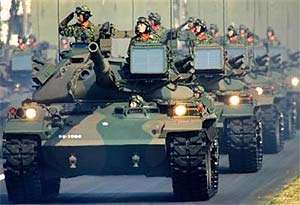 For one, while Wen and Abe did talk about establishing mutually beneficial strategic relations between the two countries, the fragile confidence-building is, however, manifest in the fact that no concrete actions have been proposed to co-develop the contentious natural gas reserves in the East China Sea oil. In other words, there is no light yet at the end of the tunnel.
Moreover, Japan is still the most valued strategic partner of the US in East Asia, and will remain so for a foreseeable future. In February this year, the US deployed several Patriot missiles at the Kadena air base in Okinawa, which hosts most of the 50,000 American troops in the country.
In late March, Japan also deployed two Patriot Advanced Capability-3 (PAC-3) surface-to-air interceptors at the Iruma Air Self-Defense Force base with a view to safeguarding the Tokyo area. It was also the first deployment by the Japanese military of missile interceptors since the Second World War.
Japan's newly upgraded Ministry of Defence aims to deploy more US-supplied PAC-3 launchers in 11 bases across Japan by March 2011. Fumio Kyuma, the defence minister, has just pledged to fully implement this plan.
It was also ironic to notice that the deployments came just days before Wen was to set foot on Japanese soil, which highlighted the dilemma of the Chinese leadership. Beijing knew full well it was done with US blessing, and there was little that the Chinese premier could protest about.
Ambiguous stance
It is true that the series of deployments are meant to protect Japan, and especially Tokyo, against missile threats from North Korea and this legitimate concern of the Japanese should be duly recognised by the international community.
Nonetheless, the ambiguous stance of Japanese leaders on Japan's ignominious history has clearly undermined the potential trust that the beautiful country could have gained from its neighbours.
To what extent will Abe defy the right wing forces in Japan is still unclear. Early this week, his government acknowledged that the notorious Nanjing Massacre indeed took place, while arguing that they could not ascertain the actual figure of casualties.
 To exhibit greater commitment towards excavating historical truths, Tokyo should at least propose the setting up of a study group involving both Japan and China to this effect.
Moreover, Abe appears to be steadfast in pushing for amendments to Japan's pacifist constitution. The lower house of the Japanese Diet has just approved the guidelines for that purpose, and Abe is determined to give his military a larger global role. The litmus test would be Article 9 that bans Japan from resorting to military action in solving disputes with other nations.
The US has from time to time urged Japan to deal with the issue of its history in a manner acceptable to the neighbouring nations. Yet Washington is the single most important backer for Tokyo to play a more prominent military role around the globe, and this is seen from the proposed constitutional amendments to the ambivalent position of the Japanese government regarding the Taiwan Straits. Sino-Japanese relations will never be normalised so long as the US looms large behind them.


