




Thawing
It doesn't always happen in international history, but when it does, people look in wonderment, sometimes glee, and relief. So when last month China's Premier Wen Jiabao walked briskly into Japan's Diet, the country's parliament, the chamber was filled with anticipation. Most times in international diplomacy, the road paved with good intentions is made clear long before it happens. People knew what to expect. Just as the chamber knew what Wen was about to say. And when he and Japanese prime minister Shinzo Abe would raise their wine glasses in a toast, it would mark the beginning of the warming of diplomatic relations between two arch enemies in East Asia. Or so some commentators think.
It doesn't always happen in international history, but when it does, people look in wonderment, sometimes glee, and relief. So when last month China's Premier Wen Jiabao walked briskly into Japan's Diet, the country's parliament, the chamber was filled with anticipation. Most times in international diplomacy, the road paved with good intentions is made clear long before it happens. People knew what to expect. Just as the chamber knew what Wen was about to say. And when he and Japanese prime minister Shinzo Abe would raise their wine glasses in a toast, it would mark the beginning of the warming of diplomatic relations between two arch enemies in East Asia. Or so some commentators think.
Wen described his trip to Tokyo as 'ice-melting', literally, but also ironically. Former Chinese president Jiang Zemin should know. He was responsible, during his tenure in post-Deng Hsiao-ping Chinese politics, for boxing in current leaders in spewing their neo-nationalistic, anti-Japanese rant. Jiang often stoked the fires of their anti-Japanese opinions for public consumption from behind the scenes. The tirades made Jiang look statesman-like and yet the strongman of the new era of Asian politics.
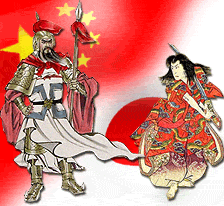 Most commentators agree any thawing of relations between the two regional and global economic giants is a good thing. This one, though, is thought to be high time. After all, one of them is rapidly becoming a military colossal in triple-time and is causing much unease throughout the region and as far as the United States and Australia for its military expansionism. Japan, under yet another neo-nationalist prime minister and a hawk, is now peddling moves to change its American-dictated postwar Constitution. Abe wants one that will allow Tokyo to modernise and expand its military, in equal triple-time.
The Americans want this of Japan. The Chinese do not; neither do the South Koreans nor Taiwanese, all of whom were brutally colonised and pillaged by the Japan's militarist murderers. And they not alone: much of Southeast Asia is also hesitant about Japan's military expansion, although Australia, having just inked a security treaty of sorts with Japan, has decided to let bygones be just that.
The problem for Asia is which devil to trust. Nobody has forgotten Japan's war crimes throughout the region, but the country continues to be a serious economic investor. So, too, now China. And the size of the Chinese market and its export economy will no doubt dictate Asia's foreign policy stance.
War shrine visits
Yet the minnows in the region are worried. And rightly so. Changing the geopolitical balance of power in East Asia will fuel an even bigger arms race and build-up throughout the region if it hasn't already. Worse, given that the Non-Nuclear Proliferation Treaty is looking more like a dog's breakfast every day, and Washington and Canberra are now itching to sell uranium to India the third biggest regional geopolitical actor smaller Asian states will be forced to re-calibrate their strategic alliances whilst playing catch-up politics with military stakes riding higher. That can only mean one thing: other sectors in their national political economies will face severe stress as national budgets are redrawn to ensure funding for the new priorities.
And that's what was behind Wen's flying visit to Tokyo. It was to assuage Japanese political and public opinion as much as the region's about China's and Japan's military plans. Despite having raised their glasses to usher in a new epoch in China-Japan relations, it's a long way yet to warming anything credible. And there's still a lot of nastiness towards one another that underlie their ties, as they have in the past. Take Gao Hong, who wrote in China's Renmin Ribao: 'More sincerity is needed from the Japanese Government and more 'heat' is needed from the (Chinese) government and people of Japan before results of the 'ice-melting' can be expanded'.
In a nominal sense, that ought to say everything about the state of relations between the two neighbors. The historical distrust between China and Japan still cuts deep and sorely. And it will go on for a long time yet. For one thing, Abe hasn't given an undertaking that he would not visit the Yasukuni Shrine to honour not only Japan's war dead but also Japan's war criminals. Like Abe's predecessors, to stop doing so would be tantamount to slitting his own political throat in a one-party Japanese political system dominated by hardcore, diehard nationalists in his Liberal Democratic Party and elsewhere.
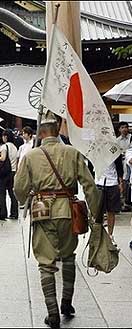 But there's hypocrisy and dishonesty on the Chinese side, too. No doubt Japan had violated international law by its war crimes. And no doubt about Abe's ongoing craven reluctance to acknowledge Japanese soldiers having violated the rights of Korean and Chinese women, who were forced into servicing the Japanese military's propensity for sexual violence. But why was Wen so eager to warm up to Tokyo so quickly?
Recall those Chinese leaders whom Jiang Zemin had boxed in to make their routine anti-Japanese rants? Now they're starting to break free and to speak up. This comes at a time when domestic Chinese politics is increasingly edging towards a state of flux thanks to the centralist regime's eagerness to embrace more market-oriented economic reforms across the Middle Kingdom.
The Chinese citizenry are becoming bolder, too. They're starting to speak up against the Communist regime and in vast areas of the hinterland and though not often reported in the world's media, many more are taking to the streets in open defiance of the Chinese government's authority to press home their historical claims for greater economic and political equality, which has in recent years become the seemingly exclusive preserve of Chinese urbanites.
North Korea factor
Former strongman Mao Zedong once warned of the iron law of lettuces: the Chinese countryside must feed the growing army of Chinese workers in coastal urban centers. And Deng Hsiao-ping issued the Chinese economic 'fatwa' that it didn't matter if the cat was black or white as long as it caught mice. Now more and more of rural China wants more and more cats to catch more and more mice, and they're prepared to give up growing lettuces.
For this the Chinese economy needs to shift into higher gear. To do that, Beijing reckons it needs to lift its international relations game. To be seen to be making friendly overtures to an arch nemesis like Japan is the first move. But Japan is not just China's key economic competitor; it is also one of its top-most important foreign investors. Meanwhile, there's a view in Beijing that the Japanese economy is truly out of its previous parlous state. It has stabilised but, more, the economy is coming back, and strongly.
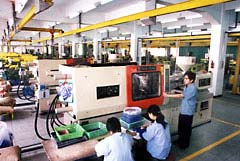 Which means Japanese competition is now more than a truism; it's real. So is China's growing need to entice greater Japanese foreign investments. For China to survive, it has to also compete more directly with Japan's rising appetite for much the same natural resources and markets to grow both their economies. The economic competition will be stiff, and it'll become stiffer, and the margins are not in Japan's favour, given its high production costs. All the gains Japan accrued following the 1986 Plaza Accord have gone out the window. Japan needs to go up the production chain. But so does China.
Down the track, though, both sides may see synergy and virtue in inking a bilateral free trade agreement. This will only come after some tricky regional issues can be brokered by both sides, such as cooperating to resolve North Korea's nuclearisation programme, the increasingly parlous state of the environment, their longstanding dispute of the East China Sea border, and no less Japan's wartime role. None have been easy, and there's nothing in recent regional diplomatic and strategic calibrations to suggest they'll be dealt with swiftly, much less effectively.
Until then, the domestic imperatives in China and Japan towards greater competition and great power rivalry won't go away any time soon. Besides, the normal shelf life of Japanese leaders is about 18 months. Already there are murmurings in some key Tokyo circles that Abe will stay as prime minister for as long as Junichiro Koizumi did. That Koizumi had was purely by luck of Japan's economic circumstances, and the lack of alternative leaders. It's a different ballgame now, however, not just in Japan but also increasingly in China, because the old guard on both sides aren't about to give an inch on their wielding political power.
MANJIT BHATIA is an Australian writer who specialises in international and Asian economics and politics.


Are you sure you want to delete this comment?
This action cannot be undone.