


/file/publisher-c1a3f893382d2b2f8a9aa22a654d9c97/2024/02/b9ca4ed8a53239901b4f296d83ac7ad3.jpg)

COMMENT | Bumiputera congress should focus on the poor
COMMENT | I agree that the economic status of the bumiputera community in Malaysia is still lagging compared to the non-bumiputera community.
This fact is displayed in the figures of total EPF savings by ethnic breakdown, before and after the first Covid-19 movement control order.
These statistics were reported in Dewan Rakyat in early 2023. Because of this reality, it is necessary that we craft measures to handle the economic problems faced by the Malay and other bumiputera communities.
I hope that this Economic Congress will come up with effective policies. This is not to deny that there are also groups of non-bumiputera who are poor and are facing economic problems.
In order to enact accurate and effective policies, it is essential to first understand the causes of poverty in the bumiputera community. Based on my experience as the MP for Sungai Siput for two terms, the causes of poverty in the Malay community are:
COMMENT | I agree that the economic status of the bumiputera community in Malaysia is still lagging compared to the non-bumiputera community.
This fact is displayed in the figures of total EPF savings by ethnic breakdown, before and after the first Covid-19 movement control order.
These statistics were reported in Dewan Rakyat in early 2023. Because of this reality, it is necessary that we craft measures to handle the economic problems faced by the Malay and other bumiputera communities.
I hope that this Economic Congress will come up with effective policies. This is not to deny that there are also groups of non-bumiputera who are poor and are facing economic problems.
In order to enact accurate and effective policies, it is essential to first understand the causes of poverty in the bumiputera community. Based on my experience as the MP for Sungai Siput for two terms, the causes of poverty in the Malay community are:
1. Lack of job opportunities
Although there are many job opportunities in the plantations, the Felda scheme in Lasah, in the factories in Sungai Siput and the adjacent Kanthan Industrial area, unemployment is a major problem for the Malay community in Sungai Siput.
Factory employers are predisposed to hire migrant workers because these migrant workers will work 12-hour shifts continuously. Migrant workers are also easier to control as they are afraid to question the employer, for example, if the overtime payment is wrongly calculated.
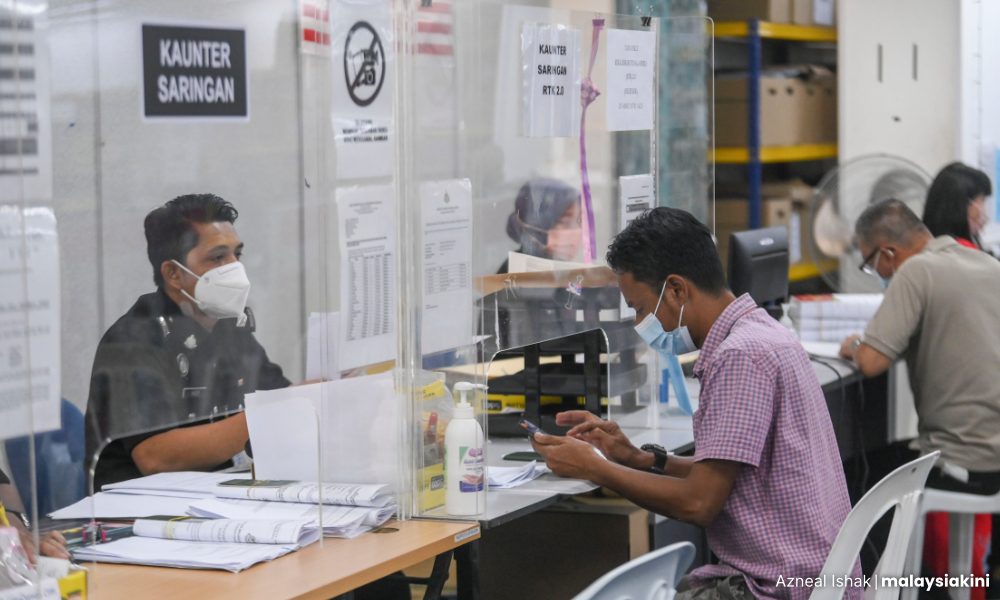
Oil palm harvesting contractors, small farmers, and fish rearers also prefer to hire undocumented migrant workers because this group can be paid much lower wages.
And in Malaysia, there is no short supply of this category - we have three to four million undocumented migrant workers.
The oversupply of undocumented migrant workers pushes wages in the informal sector to below the minimum wage and is a major reason why the Malaysian B40 group faces difficulties in finding decent work with reasonable wages.
The Bumiputera Economic Congress should address this issue.
In my analysis, the main reason for this oversupply of labour is because the migrant labour-importing agencies earn RM5,000 to RM10,000 from each migrant worker they bring in.
So, they utilise their strong cables within the Home Ministry and the Immigration Department to get inflated quotas and thus make good profits but, as a result, the local B40 stratum (Malays and Indians as well) face difficulties in finding work.
2. Weak gross demand among Malays
Entrepreneurship is promoted by several government agencies as a way to escape from poverty.
There are several hundred small traders in Sungai Siput. They run stalls in the night market and on the sides of roads in the village areas. But the majority of them get small and uncertain returns and continue to be enmeshed in poverty. The problems they face are:
a) Their customers, the kampung folk, earn low incomes. Thus, they are unable to buy many products.
b) There are too many stalls selling the same products.
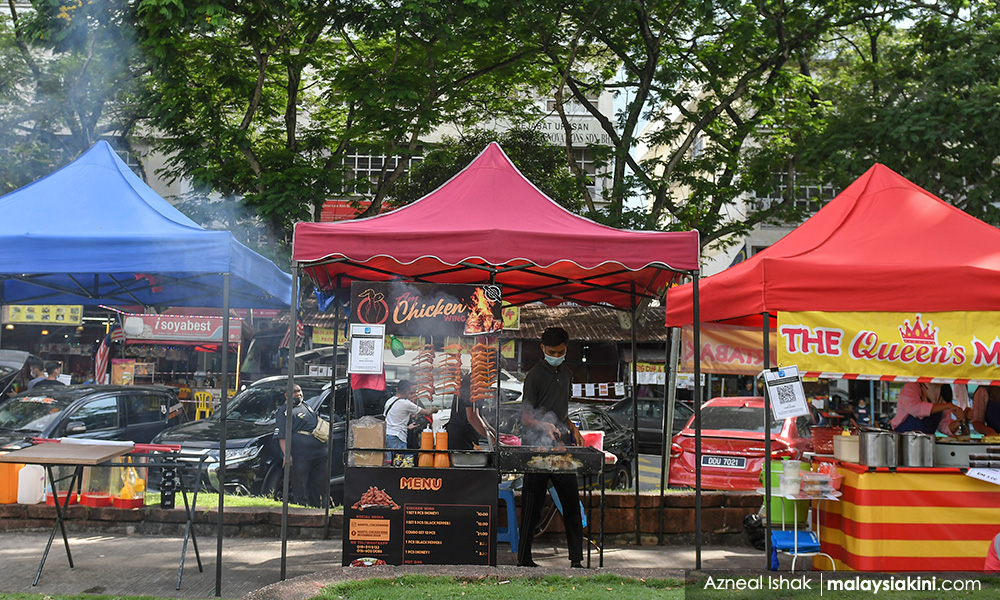
Due to the anaemic demand, the net income of most small traders in Sungai Siput (and I believe in many areas throughout the country) does not even reach RM1,500 per month, and they remain poor.
3. Implementing contractors’ dishonesty
Two examples:
a) The replanting of palm oil has, in many Felda schemes, been “outsourced” to private companies. The agreement between Felda settlers and the replanting company is that
– The company will bear all costs of replanting
– The company will pay a monthly stipend of RM1,500 to the settler until the smallholding is returned to the settler to manage
– The smallholding will be managed by the company and the produce sold to cover the cost of replanting and to settle the Felda settler’s debt to the replanting company
– The smallholding will be returned to the settler to manage once the debt has been paid up.

The problem with this arrangement is fraud in the accounting process - returns from the sale of produce are not recorded in full but the expenses of managing the plantation are fraudulently augmented.
Hence, the settler’s debt takes a long time to be paid back. Felda, a good scheme targeting rural poverty, has been hijacked by replanting companies (with the cooperation of the Felda management).
b) The replanting of rubber plantations has also been outsourced to contractors certified by Risda. These contractors are paid to replant rubber smallholdings using high-yielding clones.
These clones have to be purchased by the contractor. Many rubber smallholders complain that contractors have cheated by using normal rubber seedlings to save costs and increase their profit margins instead of the high-yielding clones that they were supposed to use.
Similar things happen in many of the other programmes that have been enacted to help poor bumiputera, such as the supply of fertiliser to rice farmers, the rice floor price guarantee scheme, the PPR house-building programme in village areas, and many more.
Programmes to help the poor bumiputera have now been turned into a source of quick profits for the contractor group.
Class differentiation in bumiputera community
Delegates at the congress should remind themselves that the bumiputera community has evolved in the past 60 years and now exists as various strata and classes.
At the peak of the community are the millionaires, politicians, and the CEOs of large GLCs. At the second level are the professional groups - lawyers, accountants, doctors, engineers, professors - and government employees with a monthly salary exceeding RM10,000 per month.
The total of these two upper classes is approximately 20 percent of the number of bumiputera in the workforce. They make up the T20.
Below the T20 layer, there is the M40 layer, with monthly incomes between RM3,000 and RM10,000. They consist of government employees, employees of large companies, and small traders.
The next strata is the B40, which is made up of lower-grade government employees, factory workers, GLC and private company workers, gig workers, microbusiness people, contract workers in schools, hospitals and other sectors, farmers, fisherfolk, young people who are looking for work, those who do “village work” (kerja kampung) and the unemployed.

One of the questions I would like to ask the delegates of the congress is - are the economic problems of bumiputera B40 and M40 the focus of this congress, or are the interests of the T20 layer the main focus?
This question should be taken seriously because the interests of the different strata are different and in some cases, there are conflicts of interest. For example:
- A small number of bumiputera control the companies that bring in excess migrant workers and depress the wages of the B40 bumiputera layer, making it difficult for the B40 to find work with a decent salary;
- A small number of bumiputera investors and managers of private hospitals promote the development of private hospitals. This increases the exodus of specialist doctors from government hospitals and affects the quality of treatment for the B40 and M40 bumiputera who depend on government hospitals;
- Several thousand bumiputera businesspersons who get school and hospital cleaning contracts are oppressing bumiputera and other workers by not complying with the minimum wage, cheating in EPF payments and overtime calculations, etc.
Which is the bumiputera category that will get the support of the congress when there is a conflict of interests - the millionaires and contractors or the bumiputera Marhaen? Will such cases of conflicting interests be identified and discussed?
One last question - wouldn’t it be better for the B40 bumiputera if we returned to second prime minister Abdul Razak Hussein’s approach in implementing programmes to help the bumiputera poor through not-for-profit government agencies?
Under Dr Mahathir Mohamad’s administration, almost all schemes to help poor bumiputera were outsourced to private contractors to manage. And as described above, non-transparency and abuse of power have become the norm and the intended assistance does not fully reach the target groups.
I hope the issues raised in this brief letter will be taken into account in the Bumiputera Economic Congress, which starts today, and that the bumiputera marhaen will get some benefits from this congress.
DR MICHAEL JEYAKUMAR DEVARAJ is PSM chairperson and former Sungai Siput MP.
The views expressed here are those of the author/contributor and do not necessarily represent the views of Malaysiakini.
/file/publisher-c1a3f893382d2b2f8a9aa22a654d9c97/2020/12/2642d17287d3fb2c7f5c68f4d2db8bbe.jpg)
/file/publisher-c1a3f893382d2b2f8a9aa22a654d9c97/2021/03/b56a58e8f3b34b70e16718b7f53a57bb.jpg)
/file/publisher-c1a3f893382d2b2f8a9aa22a654d9c97/2024/01/52c2e04198b9ab00bc12978fafcf12d0.jpg)
/file/publisher-c1a3f893382d2b2f8a9aa22a654d9c97/2020/11/e889ff84bfef2ea2faaf697ec1c1c651.jpg)
/file/publisher-c1a3f893382d2b2f8a9aa22a654d9c97/2023/09/09a2c14564c6d39944760ffa413f90e8.jpg)
/file/publisher-c1a3f893382d2b2f8a9aa22a654d9c97/2023/11/5979316e4531945e1a374866e753eca8.jpg)


Report this comment
Are you sure you want to delete this comment?
This action cannot be undone.