


/file/publisher-c1a3f893382d2b2f8a9aa22a654d9c97/2020/11/02ab799b30cc9e950ca85afb8ee0354b.jpg)

COMMENT | Technology advancing, elderly left behind?
Today, we live in a technology-centric world which incorporates digitalisation, whenever it is workable. The rationale is simple – it facilitates speediness and boosts competence. A single person may be able to do more work than five employees at a conventional workplace.
But how does digitalisation affect certain segments of society, particularly older people? Many of them are not computer or internet-savvy or they may even be computer illiterate.
The use of IT among older people increased during the lockdowns. Many had to turn to digital technology to connect socially, access information instantly, and perform everyday tasks.
As the number of older people rises, they will have to adopt and be adept at using computers and the internet. This can have both positive and negative impacts on them...
COMMENT | Digitalisation embraces a system and process to be operated with the use of computers and the internet. It enables companies to market their products online without a physical presence.
Today, we live in a technology-centric world which incorporates digitalisation, whenever it is workable. The rationale is simple – it facilitates speediness and boosts competence. A single person may be able to do more work than five employees at a conventional workplace.
But how does digitalisation affect certain segments of society, particularly older people? Many of them are not computer or internet-savvy or they may even be computer illiterate.
The use of IT among older people increased during the lockdowns. Many had to turn to digital technology to connect socially, access information instantly, and perform everyday tasks.
As the number of older people rises, they will have to adopt and be adept at using computers and the internet. This can have both positive and negative impacts on them.
Positive impacts
Communicating with family members and friends – a recurring concern among older people is isolation. Social media platforms, such as Facebook, WhatsApp, and email, allow them to communicate with family and friends. Some of them have even been able to reconnect with long-lost family members or friends through social media.
The internet enables older adults to conduct their own research on health concerns or any other issue, without having to leave their homes. Internet search activity has also been shown to improve brain activity and function.
Older people living alone can, with a push of a button, alert a caregiver or family member if they stop moving around the house. This increases their safety.
Negative impacts
Distraction happens at any age, but the impact is more pronounced among older people, as it may restrict the brain’s intellectual capability and erode memory.
Older people may be more vulnerable to fraud and risk having their data stolen. If not monitored, their accounts could be hacked.
IT developments have, in the main, failed to address the weakening of faculties with age. Increasing user-friendliness with larger font sizes, bigger buttons, and brighter displays poses a challenge, which should be addressed.
Ensuring digital inclusion for older adults means overcoming five key barriers: access, installation, knowledge, design, and trust. Providing high-speed, low-cost internet and devices, along with installation and support, is key to improving connectedness.

Older people need digital literacy programmes. They need to be kept updated on information about relevant technology. Perhaps mobile phone companies could also provide special rates for older people.
Digital banking
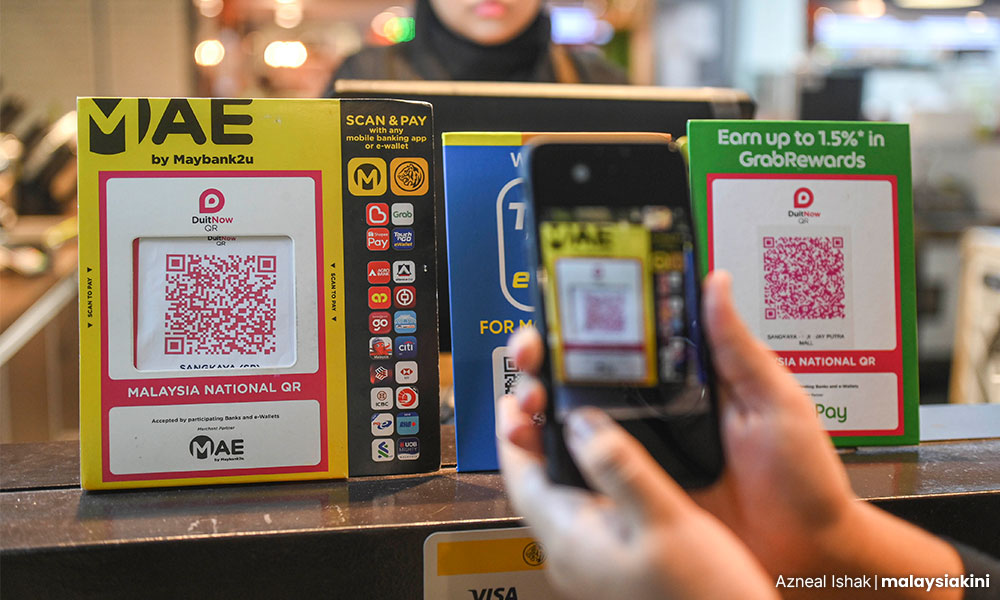
Digital banking is now increasingly emphasised in Malaysia and will eventually become a part of our banking life.
Digital banking is the digitalisation of most aspects of a bank’s operations: from the front-end to the back-end. It covers most of the services a bank offers except that everything is now in a virtual environment – the access, process, and experience are abridged.
Banks need to ensure that staff are assigned to assist older people once digital banking is fully implemented.
Inclusiveness
Digitalisation is one of the most powerful drivers and potential enablers in our daily lives.
The lockdowns we experienced served as an invaluable lesson and opened our eyes to how important digitalisation is.
Access to digitalisation at home is important these days for older people. Many government agencies like Kuala Lumpur City Hall and the Land Office are no longer sending their payment notices through post.
The onus now is on people to access their bills and make payments online. Many people, including older adults, have not yet come to grips with this. Older people who are aware of this new procedure may not have a computer or they may not have internet connectivity.
Staff at government agencies often tell older people to ask their children for help in accessing digital services. But what if their children are not with them or if they live overseas? What if they don’t have children?
These agencies should provide step-by-step guides with illustrated notes on how to access their portals and make payments.
The government has to ensure that older people are prepared for digitalisation.
Digital literacy
The government and NGOs should organise digital literacy courses that target older people especially. Such courses will help ensure that older people are not left behind in the digital era.
Many older adults have kept up with digitalisation on their own, but others need to be educated.
Older people should never be neglected as they are an important segment of society. Having more digitally savvy older adults could have economic spin-offs as well.
Society must play a bigger role in assisting older people to keep abreast of IT developments and ensure they are digitally savvy. Government departments need to open up special counters to assist older people. Banks should also have a designated desk officer to assist them.
Alliance for a Safe Community (Ikatan) chairperson Lee Lam Thye feels that “in our community-centric society, we can also lean on the ‘it takes a village’ philosophy.”
“Neighbours, educators, and friends should be encouraged to look out for one another, offering support or assistance when they notice someone struggling to manage their responsibilities,” he said.
BENEDICT LOPEZ was director of the Malaysian Investment Development Authority in Stockholm and economics counsellor at the Malaysian embassy there from 2010-2014. The above was first published on Aliran.
The views expressed here are those of the author/contributor and do not necessarily represent the views of Malaysiakini.
/file/publisher-c1a3f893382d2b2f8a9aa22a654d9c97/2023/04/009da7e11bf01e771574a8edef38c1bb.jpg)
/file/publisher-c1a3f893382d2b2f8a9aa22a654d9c97/2022/10/400819256d52fcfe2afd6bb08c368d44.jpg)
/file/publisher-c1a3f893382d2b2f8a9aa22a654d9c97/2024/01/70215baab5e8d71d925112b514ef5378.jpg)
/file/publisher-c1a3f893382d2b2f8a9aa22a654d9c97/2023/02/6fa713315bf53a53ce5e4db76a299811.jpg)


Report this comment
Are you sure you want to delete this comment?
This action cannot be undone.