


/file/publisher-c1a3f893382d2b2f8a9aa22a654d9c97/2024/08/9e1e66817a6b50965d90d8d22bb88f49.jpg)

COMMENT | Anwar executes Mahathir's regulation bucket list
COMMENT | Since Pakatan Harapan returned to Putrajaya in November 2022 by forming a coalition government with BN, its achievements have been arguable.
When it comes to policing social media, however, Harapan’s zeal surpasses that of BN, Perikatan Nasional, and even former prime minister Dr Mahathir Mohamad.
Looking back at the evolution of the internet and online media in Malaysia, public access to internet services began in 1994.
In 1996, then prime minister Mahathir aggressively promoted the Multimedia Super Corridor (MSC) and later promised “to ensure no censorship of the internet” in a Bill of Guarantees - a promise that was not part of the MSC’s original launch - before the Western information and communication technology giants in Los Angeles in January 1997.
However, the 1998 Asian financial crisis exacerbated internal flight within Umno, leading Mahathir to dismiss then deputy prime minister and finance minister Anwar Ibrahim, expelling him from Umno, and charging him with corruption and sodomy.
Anwar initiated the Reformasi movement then, which had two major impacts on internet services and online media in Malaysia.
COMMENT | Since Pakatan Harapan returned to Putrajaya in November 2022 by forming a coalition government with BN, its achievements have been arguable.
When it comes to policing social media, however, Harapan’s zeal surpasses that of BN, Perikatan Nasional, and even former prime minister Dr Mahathir Mohamad.
Looking back at the evolution of the internet and online media in Malaysia, public access to internet services began in 1994.
In 1996, then prime minister Mahathir aggressively promoted the Multimedia Super Corridor (MSC) and later promised “to ensure no censorship of the internet” in a Bill of Guarantees - a promise that was not part of the MSC’s original launch - before the Western information and communication technology giants in Los Angeles in January 1997.
However, the 1998 Asian financial crisis exacerbated internal flight within Umno, leading Mahathir to dismiss then deputy prime minister and finance minister Anwar Ibrahim, expelling him from Umno, and charging him with corruption and sodomy.
Anwar initiated the Reformasi movement then, which had two major impacts on internet services and online media in Malaysia.
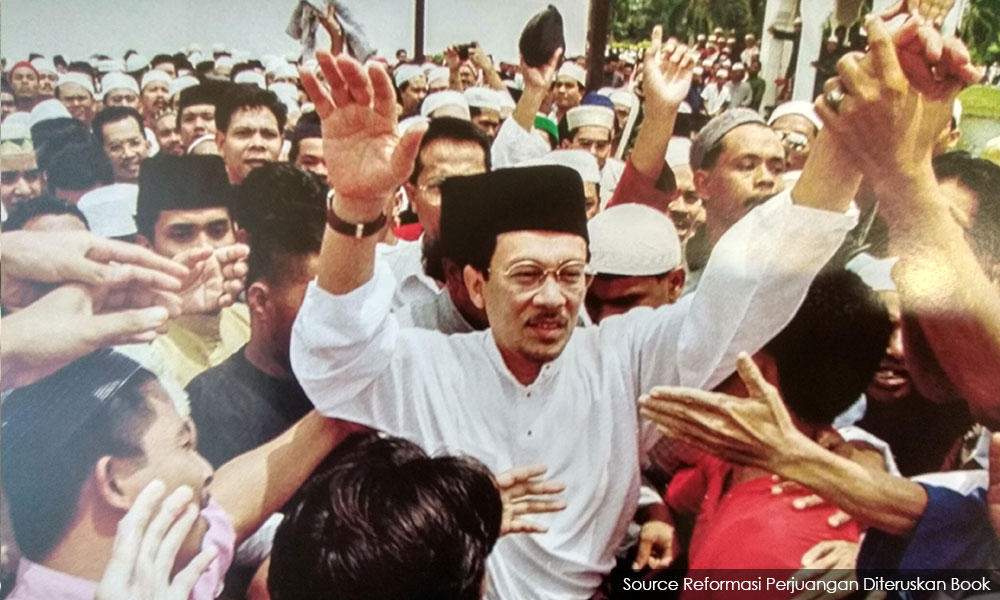
Firstly, it accelerated public acceptance of internet services, resulting in a rapid increase in the number of users. Secondly, it catalysed the birth of online media, albeit initially in the form of anonymous websites.
This in turn enabled Anwar’s camp and Reformasi supporters to utilise internet platforms to break through mainstream media censorship against the movement.
Previous PMs’ track record
Mahathir realised how effectively internet platforms could be used by the opposition to weaken media control and censorship.
During his subsequent tenure, he repeatedly proposed revising the Printing Presses and Publications Act 1984 (PPPA) to extend the home minister’s control over the media to include online media.
However, possibly due to his eagerness to make MSC a success, Mahathir refrained from extending his reach into the internet sphere as recklessly as he had when amending both the Official Secrets Act 1972 and the PPPA twice in the 1980s.
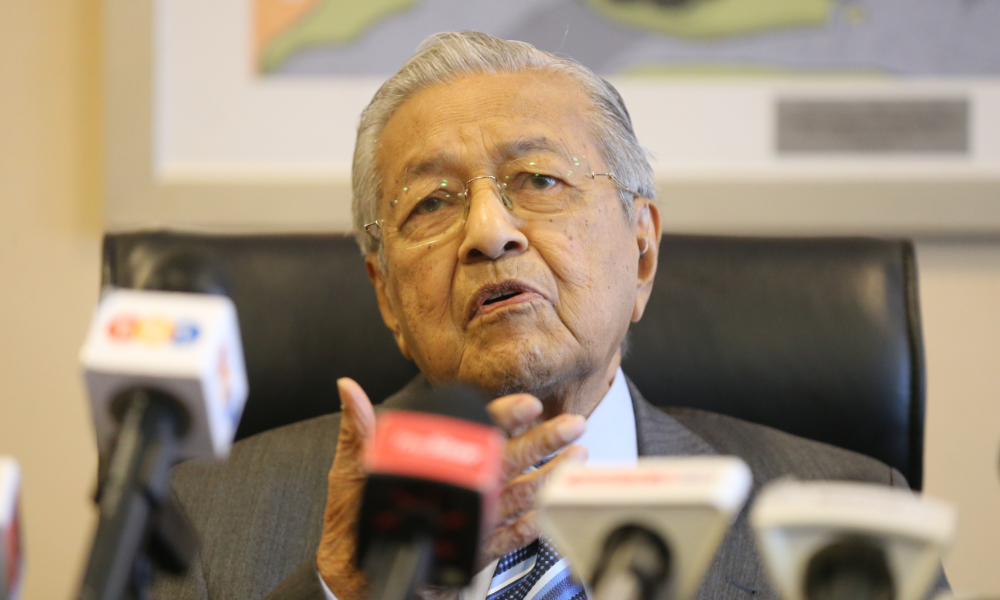
Mahathir’s successor, Abdullah Ahmad Badawi, who had a relatively short tenure (2003-2009), maintained the existing mechanisms of media controls, neither loosening restrictions nor taking significant actions to tighten them.
After suffering a major setback in the 2008 general elections, he introduced some measures favourable to the internet media. However, these measures were short-lived as he was forced out by Mahathir in April 2009.
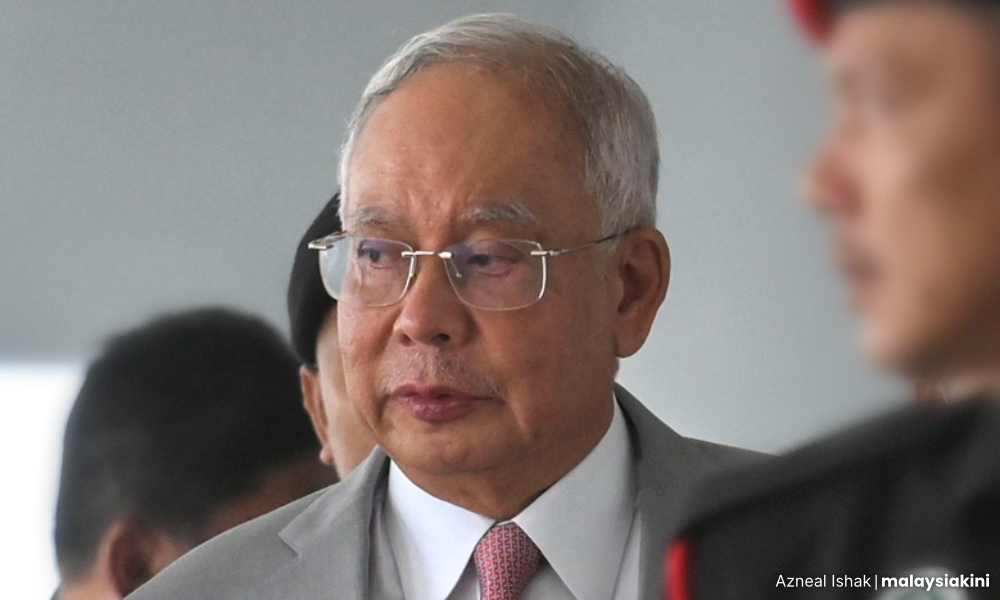
Similarly, Najib Abdul Razak’s media controls aligned with his predecessors but he arguably accomplished one of Mahathir’s unfinished businesses - making legislation targeting the internet and online media.
This included:
(1) Amending the Evidence Act 1950 in April 2012 to introduce Section 114(A), which allows the prosecution in a criminal case or a plaintiff in a civil suit to rely on a presumption of fact to prove the identity of the person responsible for an internet publication;
(2) Amending the Sedition Act 1948 in 2015 to include the interpretation of the term “by electronic means” and introducing provisions for the banning and removing electronic publications;
(3) Hastily enacting the Anti-Fake News Act 2018 during the 1MDB scandal, which threatened Umno’s rule and his leadership.
Harapan first came to power with Mahathir serving as prime minister in 2018. The Harapan government, however, fell after less than two years due to the Sheraton Move.
Subsequently, a coalition government of PN-BN, led by Muhyiddin Yassin and later Ismail Sabri Yaakob, had a similarly brief tenure.
During that period, Malaysia was grappling with the Covid-19 pandemic and it made internet policing less of a priority.
The exception was Muhyiddin’s enactment of the Emergency (Essential Powers) (No 2) Ordinance 2021, which addresses fake news regarding the Covid-19 pandemic.
Unmatched enthusiasm
After the general election of Nov 19, 2022, Harapan once again came to power in alliance with BN.
Since taking office, it has become apparent that the Harapan government is eager to police the internet and social media.
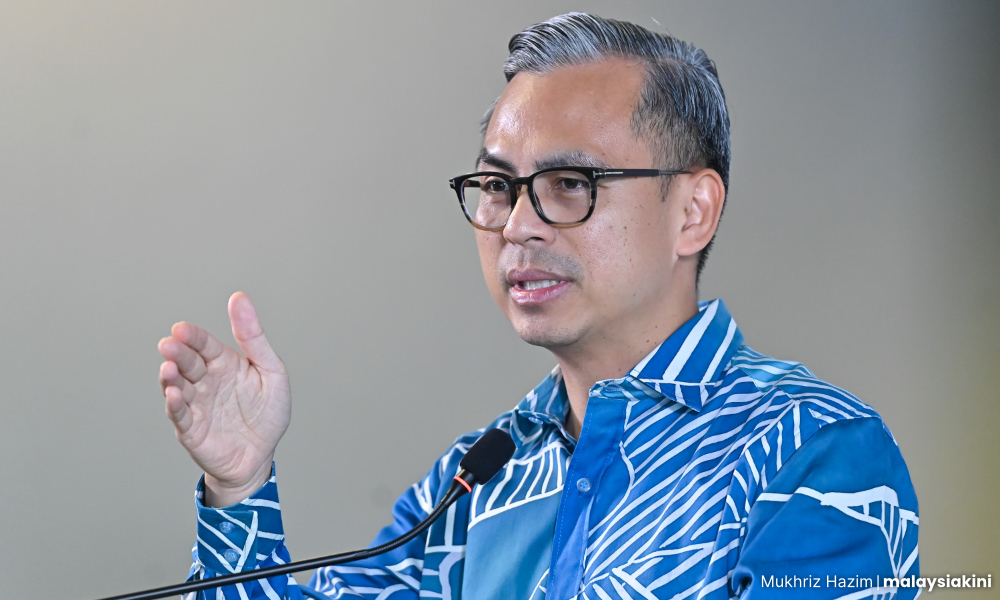
Communications Minister Fahmi Fadzil, on his first day in office on Dec 5, 2022, revealed plans to meet with “several social media service providers”.
On Nov 9, 2023, Fahmi revealed that he met representatives of social media platform providers TikTok and Meta to discuss issues involving content regulation.
It is reasonable to speculate that discussions with these providers involved directives on censorship over social media platforms.
The Harapan-BN government does not stop there. On July 27, 2024, the Malaysian Communications and Multimedia Commission (MCMC) announced that all social media and internet messaging services with at least eight million registered users in Malaysia must apply for an Applications Service Provider Class Licence under the Communications and Multimedia Act 1998 (Act 588) by Jan 1, 2025.
One of the requirements to obtain this licence is by using locally incorporated companies. The new regulations are likely to affect platforms such as WhatsApp, YouTube, Facebook, Instagram, TikTok, Telegram, WeChat, Snapchat and Line.
Furthermore, Fahmi revealed on Aug 8, 2024, that a bill to amend laws on cyberbullying might be tabled to Parliament in October to clarify the definition of cyberbullying and increase penalties.
Two days later, he further warned that social media criticism of athletes competing in the Paris 2024 Olympics could be considered cyberbullying if it negatively affects their mental health.
Fahmi also mentioned that the government is considering banning children under 13 from having social media accounts.
The justification for media controls by Malaysian governments has always been to maintain harmony in a multi-ethnic society and to prevent statements and content that threaten this harmony and stability - recently termed “3R content”. The Harapan government is no exception.
All about control
Under this guise of “political correctness,” the “truthiness” of media reports and the boundaries of public opinion are often determined by the government and enforcement agencies.
Recent incidents include Malaysiakini’s report on a possible Bukit Aman reshuffle, which led to its three journalists being summoned by the police for questioning.
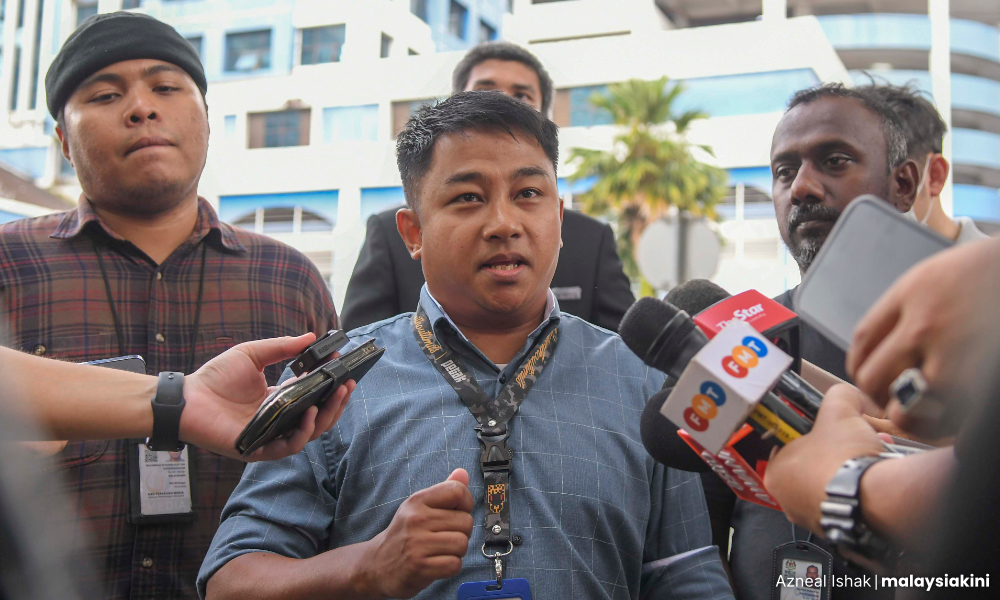
This is in addition to removals of social media accounts or content, with users being investigated or even prosecuted from time to time.
Furthermore, when Facebook and Instagram removed Anwar’s posts on Hamas leader Ismail Haniyeh’s death, the government summoned representatives from Meta, the parent company, to demand an apology and an explanation.
Consequently, Meta apologised for what it called an “operational error” and restored the content. This clearly shows that social media platforms are willing to comply with government demands under pressure from state authorities.
These incidents are enough to raise concerns that the Harapan government’s eagerness to enact new laws on social media will severely infringe upon online discourse, leading to a chilling effect.
Mahathir, during his premiership between 1981 and 2003, tightened the media control to the extreme. Policing online media could be considered his unfinished business. While Najib took some steps in this direction, none have been as comprehensive and vigorous as what Harapan is currently pursuing.
The irony is that after being dismissed and persecuted by Mahathir in 1998, Anwar initiated the Reformasi movement, denouncing Mahathir’s regime for its dictatorial practices, corruption, and suppression of media freedom.
Now, the Harapan government under the leadership of Anwar is doing its utmost to strictly police the internet and social media, effectively helping the dictatorial Mahathir complete his unfinished business.
CHANG TECK PENG is a journalist-turned-academic and leads the postgraduate programmes in Communication at the Tunku Abdul Rahman University of Management and Technology. His research focuses on the political economy of communication, communication law and policies, press freedom, Internet media and Chinese-medium media.
The views expressed here are those of the author/contributor and do not necessarily represent the views of Malaysiakini.
/file/publisher-c1a3f893382d2b2f8a9aa22a654d9c97/2023/10/829ebe2997eba0bec3a4ea20c031ee15.jpg)
/file/publisher-c1a3f893382d2b2f8a9aa22a654d9c97/2024/08/7b301faff9ab5b42a27b406dca0c0a98.jpg)
/file/publisher-c1a3f893382d2b2f8a9aa22a654d9c97/2023/09/2eb9fc3636d1794b3c0e7cc346698ce9.jpg)
/file/publisher-c1a3f893382d2b2f8a9aa22a654d9c97/2023/09/2dedf58ddc2260becaefebf33fe5d73a.jpg)


Report this comment
Are you sure you want to delete this comment?
This action cannot be undone.